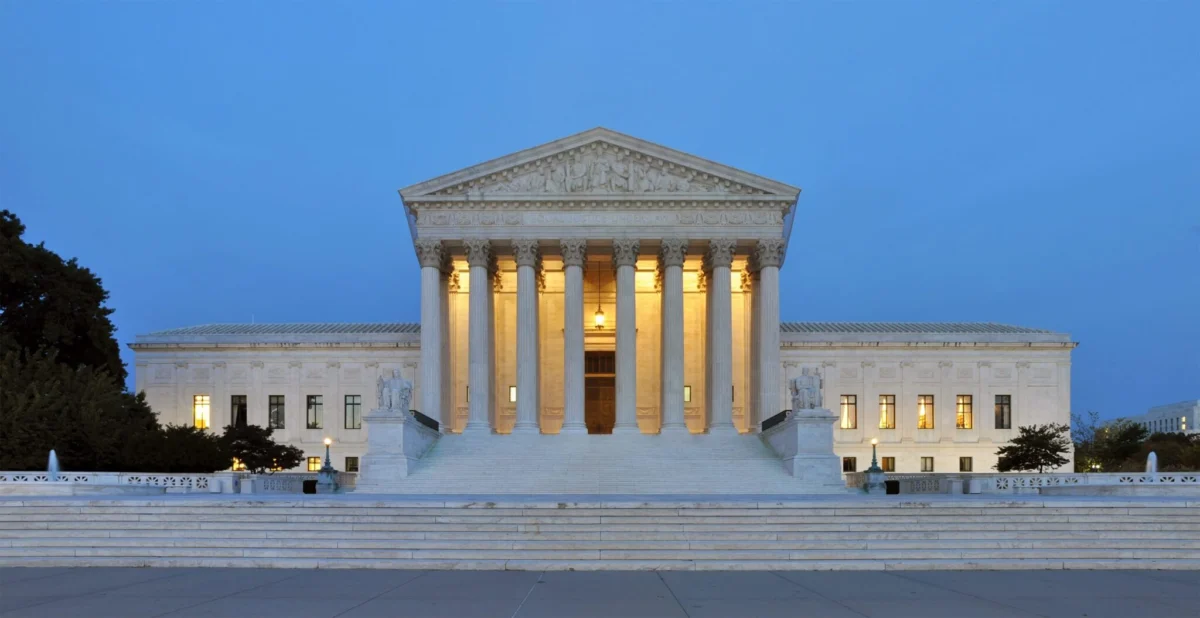
In a significant legal blow to the administration’s efforts to overhaul federal election logistics, the United States Supreme Court on Monday denied an emergency request from the Department of Justice (DOJ) to stay a nationwide injunction. The ruling effectively halts the United States Postal Service (USPS) from enforcing a series of stringent new regulations on mail-in ballots just weeks before the November 2026 midterm elections.
The decision, delivered in a per curiam order in United States Postal Service v. California, leaves in place a September 4 preliminary injunction issued by U.S. District Judge Indira Talwani. The lower court’s ruling, which was subsequently affirmed by the U.S. Court of Appeals for the First Circuit, prevents the USPS from requiring states to adopt specific envelope designs, unique voter-linked barcodes, and mandatory roster uploads to a federal portal.
The Core of the Dispute: Section 705.24
The controversy stems from an executive order issued by President Donald Trump in March 2026, which directed the USPS to implement enhanced security protocols for federal election mail. Following this directive, the agency promulgated a final administrative rule, "Ballot Mail for Federal Elections," in late August.
The rule’s primary mechanism, codified in section 705.24 of the Domestic Mail Manual, sought to fundamentally alter the relationship between state election officials and the federal mail system. Under the new guidelines, any state wishing to use the USPS for election administration would have been required to:
- Standardize all ballot-envelope designs to federal specifications.
- Implement a system of specialized, voter-unique barcodes for tracking purposes.
- Upload exhaustive voter rosters to a centralized USPS electronic portal prior to the initiation of mail delivery.
The administration argued that these measures were essential to bolster the integrity of federal elections and increase the visibility of ballot mail to better detect potential fraud. However, election administrators across the country immediately sounded the alarm, arguing that the logistical burden of re-tooling state-specific ballot systems—many of which were already printed or in production—would be impossible to achieve before the November polls.
A Chronology of Legal Escalation
The path to Monday’s Supreme Court decision has been marked by a rapid succession of judicial challenges and administrative maneuvering:
- March 2026: President Trump issues an executive order mandating new citizenship verification and administrative protocols for federal election mail.
- August 2026: The USPS issues its final administrative rule. A preliminary challenge is brought to the Supreme Court; however, the Court allows the directive to proceed, ruling that the case lacked ripeness because a final rule had not yet been formally codified.
- September 4, 2026: U.S. District Judge Indira Talwani issues a nationwide preliminary injunction in Massachusetts, finding that the rule poses an imminent risk of mass disenfranchisement.
- Mid-September 2026: The U.S. Court of Appeals for the First Circuit denies the government’s request to stay Judge Talwani’s injunction, citing the administration’s failure to demonstrate a high probability of success on the merits.
- September 21, 2026: The Supreme Court officially denies the DOJ’s emergency application, effectively killing the rule’s implementation for the 2026 cycle.
The Judiciary’s Divergent Views
The Supreme Court’s order reflected a nuanced split regarding both the administrative authority of the USPS and the practical realities of election timing.
In a concurring opinion, Justice Brett Kavanaugh acknowledged that while there might be a "fair prospect" that the USPS holds the statutory authority to regulate the federal mail system in such a manner, the timing of the implementation rendered it legally indefensible. Kavanaugh wrote, "Applying the rule in the 2026 elections would be arbitrary and capricious in violation of the Administrative Procedure Act because state and local election officials do not have sufficient time to reasonably implement the rule before the elections."
Conversely, Justice Samuel Alito, joined by Justice Clarence Thomas, dissented from the denial. Justice Alito expressed strong skepticism toward the challengers, dismissing their arguments as an unconvincing "Hail Mary pass." Alito maintained that the USPS possesses broad, inherent statutory authority to dictate the terms of mail usage and argued that the injunction causes irreparable harm to the federal government’s stated goals of increasing transparency and security in the electoral process.
Implications for Election Administration
The immediate impact of the Court’s decision is the stabilization of election procedures for the 2026 midterms. Had the USPS rule been allowed to take effect, millions of ballots currently being prepared by state and local authorities would have been rendered non-compliant, necessitating an eleventh-hour scramble to reprint materials or force voters into alternative, potentially inaccessible, voting methods.
Impact on Voter Access
Critics of the rule, including the coalition of states led by California, argued that the USPS mandate was a "backdoor" attempt to restrict access to the ballot box. By requiring the upload of sensitive voter rosters to a federal portal and demanding specialized barcode integration, the rule would have created significant barriers for smaller jurisdictions with limited technological infrastructure. Judge Talwani’s original injunction emphasized that the "disenfranchisement of millions" was a genuine threat if the mandate were enforced during an active election cycle.
The Question of Federalism
The ruling also touches upon the perennial tension between federal oversight and state-run elections. While the USPS is a federal entity, the administration of elections is historically a decentralized, state-led function. Legal scholars note that Monday’s ruling serves as a warning to federal agencies that even if they possess the statutory authority to regulate certain logistics, they must still adhere to the Administrative Procedure Act’s requirements for reasonable notice and implementation timelines.
Moving Forward: The Future of Election Mail
While the 2026 midterm elections will proceed under existing state-run protocols, the legal battle over the USPS’s role in election administration is far from resolved. The Supreme Court’s decision to block the rule was based largely on the timing and arbitrariness of the implementation, rather than a definitive strike-down of the USPS’s authority to regulate ballot mail.
Legal experts anticipate that the administration may attempt to re-introduce similar regulations through a more standard, non-emergency rulemaking process, which would include longer public comment periods and a phased-in implementation schedule. Such a move would likely lead to further litigation, focusing on whether the USPS has the power to interfere with state ballot designs and verification processes under the guise of "postal efficiency."
For now, state election officials have expressed relief. "This ruling ensures that the systems currently in place—which have been tested and vetted by local authorities—will remain the standard for this election," said a representative for the National Association of Secretaries of State.
As the nation approaches the midterm vote, the Supreme Court has signaled a clear intent to prioritize electoral stability over federal regulatory changes, provided those changes are perceived as disruptive to the established democratic process. Whether this standard will hold in future litigation remains to be seen, but for the current cycle, the status quo has been preserved.