Main Facts: An Unprecedented Urban Encounter
On the morning of Sunday, August 23, 2026, residents in a central Denver neighborhood awoke to an unusual sight: a young black bear perched high in a residential tree near the intersection of Louisiana Avenue and Pennsylvania Street. The location, situated in a bustling metropolitan area miles from the dense forests of the Rocky Mountain foothills, immediately triggered a coordinated emergency response from state wildlife officials and local law enforcement.
The animal was identified by Colorado Parks and Wildlife (CPW) as an approximately 1.5-year-old male yearling, weighing roughly 100 pounds. To resolve the situation safely, wildlife officers administered a tranquilizer to the bear. The subsequent fall from the tree—characterized by authorities as a "rough tumble" through the branches—was caught on video and quickly went viral. Despite the awkward descent, officers successfully secured the yearling, confirmed it suffered no serious injuries, and prepared it for relocation to a more suitable wilderness habitat.
This striking urban encounter is not an isolated incident. Rather, it represents the latest flashpoint in a summer of unprecedented human-wildlife conflict across Colorado. Driven by severe drought conditions and the biological onset of late-summer feeding frenzies, wild bears are increasingly bypassing traditional mountain foraging grounds and venturing deep into municipal centers in search of sustenance.
Chronology of the Denver Rescue Operation
[07:00 AM] - First resident reports of a bear sighting in Platt Park area.
[08:15 AM] - Denver Police and CPW establish a secure perimeter.
[09:30 AM] - CPW officers administer a tranquilizer dart.
[10:15 AM] - Tranquilized bear falls from the tree and is secured.
[11:00 AM] - Bear is medically cleared and loaded for relocation.
Early Morning Discovery and Mobilization
The incident began in the early hours of August 23, 2026, when local homeowners in the Platt Park neighborhood spotted the yearling wandering through alleys before scaling a large mature tree in a residential yard. Recognizing the immediate danger to both the public and the disoriented animal, residents contacted emergency services.
By 8:15 AM, officers from the Denver Police Department (DPD) had arrived on the scene to secure a perimeter, blocking off pedestrian and vehicular traffic near Louisiana Avenue and Pennsylvania Street to prevent crowding, which could further stress the animal. Shortly thereafter, specialized wildlife biologists and officers from Colorado Parks and Wildlife’s Northeast Region arrived to assess the situation.
The Tactical Intervention
Faced with a mobile, frightened 100-pound bear in a highly populated urban zone, CPW officers determined that letting the animal wander down on its own was too dangerous. The proximity to high-traffic streets and residential homes necessitated chemical immobilization.
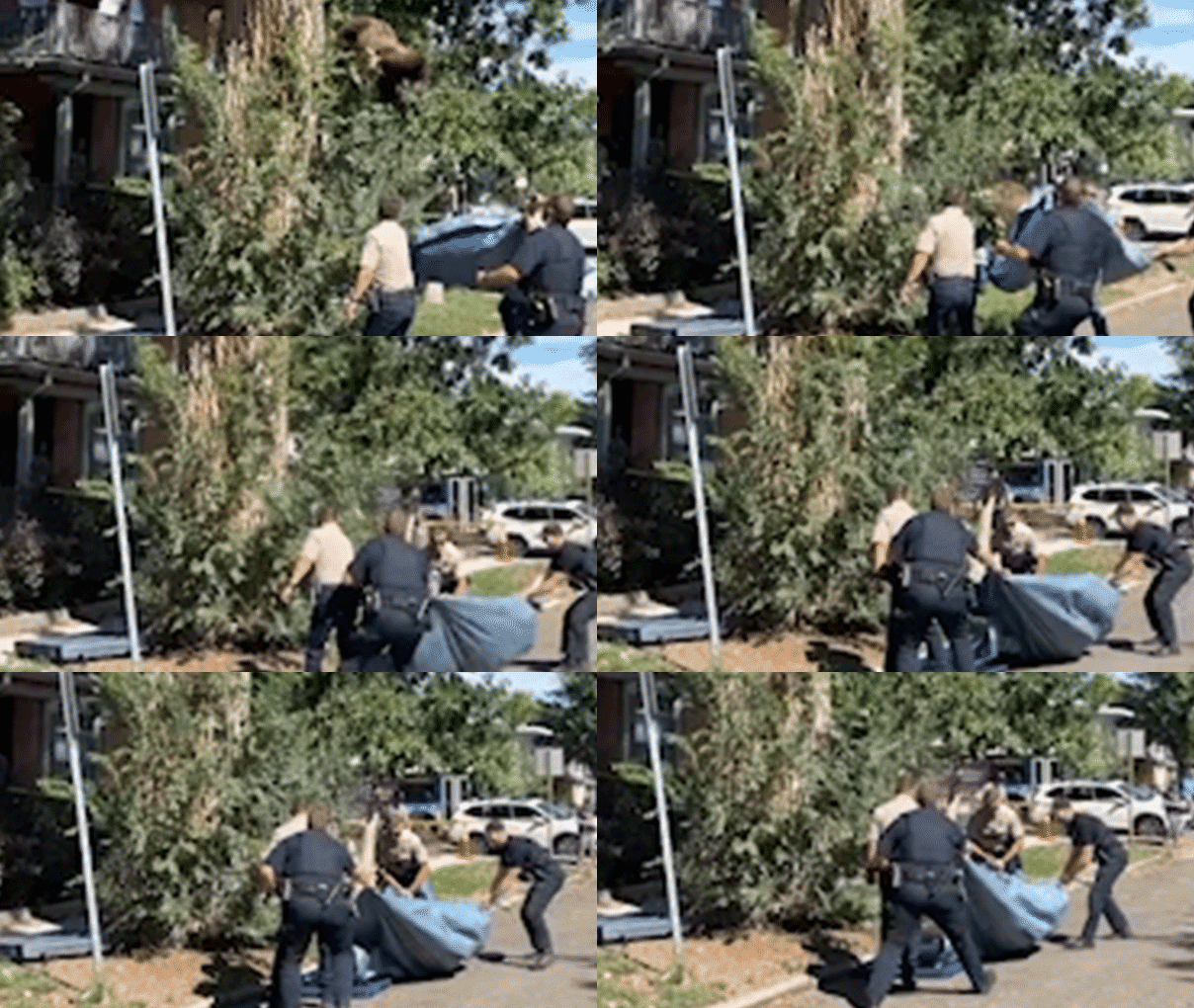
Using a dart gun, a CPW officer successfully administered a calculated dose of sedative. Because the yearling was positioned high up in the canopy, officers prepared for the inevitable descent, positioning themselves beneath the tree to mitigate the impact of the fall.
The Fall and Recovery
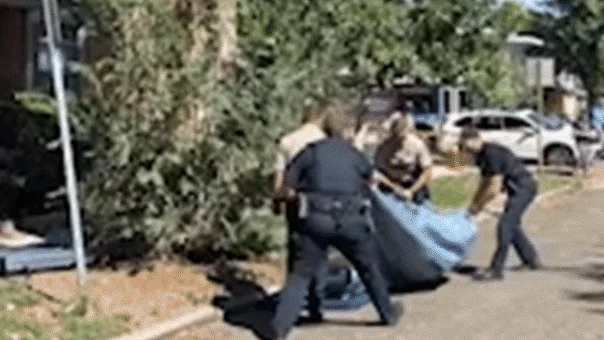
As the tranquilizer took effect, the yearling lost its grip on the branches. Video footage captured by onlookers and shared by CPW showed the bear tumbling rapidly through the tree limbs before hitting the ground.
While the landing was visually jarring, the cushioning effect of the lower branches and the quick intervention of officers on the ground prevented catastrophic injury. DPD and CPW personnel immediately secured the sedated animal, checking its vitals and ensuring its airway was clear.
Once stabilized, the yearling was placed in a specialized, ventilated transport enclosure. CPW confirmed that the bear would be monitored during the recovery phase of the sedation before being transported to a remote, high-quality habitat far from municipal limits.
Supporting Data: Mapping the Surge in Colorado Bear Conflicts
The presence of a black bear in the heart of Denver highlight a broader, highly concerning statistical trend across the state of Colorado. Data released by Colorado Parks and Wildlife reveals that human-bear interactions have nearly doubled over the past year.
| Time Period (Jan 1 – Aug 13) | Total Bear Sightings & Conflicts Reported | Percentage Increase |
|---|---|---|
| 2025 | 3,115 | — |
| 2026 | 6,129 | 96.7% |
This dramatic surge—representing a 96.7% year-over-year increase—is attributed by wildlife biologists to two primary, intersecting factors: severe drought and the physiological phenomenon of hyperphagia.
Environmental Drivers: Drought and the Forage Crisis
Colorado has experienced prolonged periods of below-average precipitation and above-average temperatures throughout the spring and summer of 2026. This sustained drought has devastated the state’s natural soft mast production—specifically the wild berries, acorns, and serviceberries that constitute the bulk of a black bear’s summer diet.
Without these critical natural food sources in the foothills and mountains, bears are forced to expand their foraging ranges, following river corridors and greenways directly into suburban and urban centers where irrigated lawns, fruit trees, and human refuse offer reliable alternatives.
[Drought Conditions] ➔ [Failure of Wild Berry/Acorn Crops] ➔ [Bears Expand Forage Range] ➔ [Migration into Urban Centers]The Biological Engine: Understanding Hyperphagia
The timing of these urban incursions aligns precisely with the onset of hyperphagia. Occurring annually from late August through November, hyperphagia is a biological state during which bears must consume up to 20,000 calories per day—nearly ten times their normal caloric intake—to build up the fat reserves necessary to survive winter hibernation.
During this phase, a bear’s drive to find food is near-insatiable. In an environment stripped of natural forage by drought, the high-calorie allure of household garbage, unsecured pet food, and bird feeders becomes an irresistible draw, overriding the animal’s natural fear of human environments.
Official Responses and Community Directives
The unusual nature of the rescue prompted immediate commentary from state wildlife officials, who used the viral moment to educate the public on the realities of modern wildlife management.
Statements from Colorado Parks and Wildlife
In a thread published on the social media platform X (formerly Twitter), CPW Northeast Region emphasized the rarity of a bear penetrating so deeply into the Denver metro area:
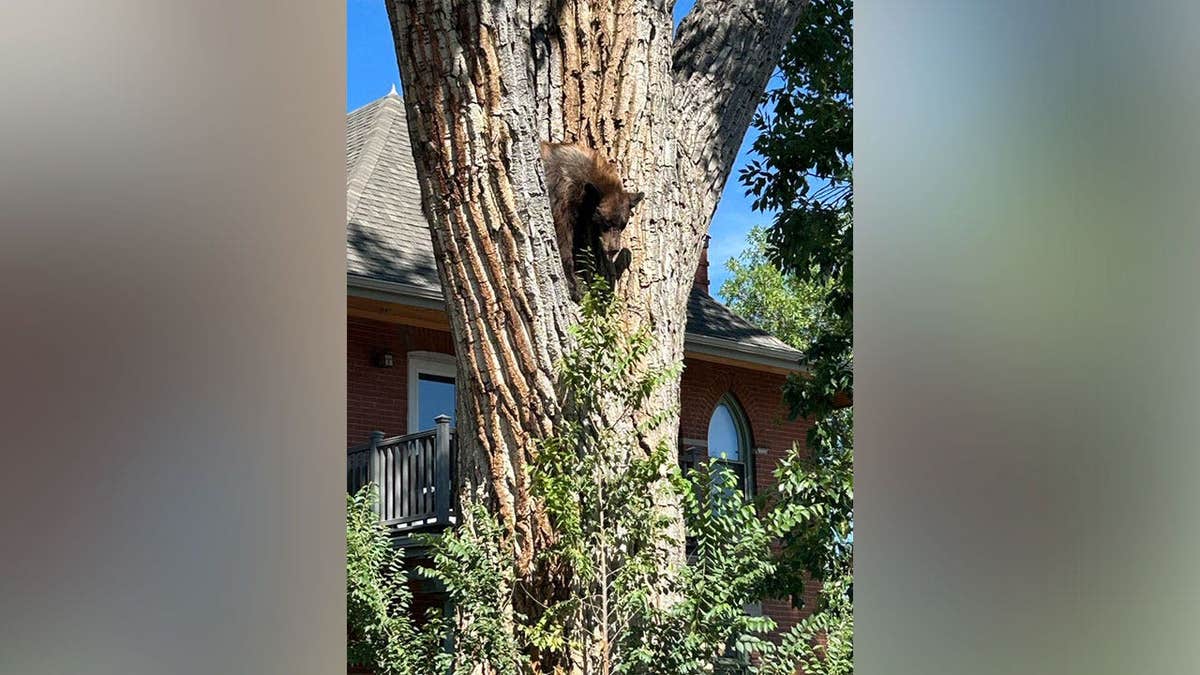
"This morning we responded to a bear in a tree … in Denver. Not a typo. In Denver. It didn’t have the smoothest landing, but the bear is ok!"
CPW officials clarified that while the yearling’s fall appeared dramatic, the physical resilience of young black bears, combined with the soft ground and low branches, prevented any skeletal or internal injuries. The agency emphasized that chemical immobilization and relocation remain the safest tools available to prevent tragic outcomes in dense urban settings.
"You're not crazy, we are seeing more bear conflicts this year. The drought is forcing bears to seek food in our neighborhoods."
— Colorado Parks and Wildlife (CPW) Statement
Public Safety Mandates and Preventative Measures
In light of the escalating conflict data, CPW is urging residents across the Front Range and metropolitan Denver to take active steps to "bear-proof" their properties. Wildlife officials emphasize that preventing bears from obtaining human food is the single most effective way to prevent them from becoming habituated to urban areas—a condition that often results in the animal having to be euthanized.
- Trash Security: Residents are instructed to keep trash cans indoors or in secure garages until the morning of pickup. Utilizing bear-resistant trash cans is highly recommended.
- Removal of Attractants: Bird feeders, which contain highly concentrated fats and calories, should be taken down during active bear seasons. Pet food must never be left outside.
- Securing Property: Homeowners should keep ground-floor windows closed and locked. Furthermore, CPW warns that bears can easily open unlocked car doors if they smell food inside; keeping vehicles locked and free of food wrappers, groceries, or scented items is vital.
Implications: The Complex Future of Human-Wildlife Coexistence
The Platt Park rescue is part of a growing pattern of wildlife encroaching on major metropolitan areas. Just days prior to this incident, CPW officers were called to Denver’s Harvey Park neighborhood, where a mother bear and her cub had wandered. In that instance, the bears remained in the residential area for several days, feeding on local fruit trees before wildlife officers successfully tranquilized and relocated them.
The Expansion of the Urban-Wildland Interface
As cities along Colorado’s Front Range continue to expand, the boundary between urban development and natural wildlife habitats is blurring. Denver’s proximity to natural corridors, such as the South Platte River basin and various trail systems, provides wildlife with direct, shaded pathways from the mountains straight into the heart of the city. When natural resources dry up, these corridors act as highways for hungry animals.
[Mountain Foothills] ===(South Platte River Corridor)===> [Denver Metropolitan Neighborhoods]The Challenges and Limits of Relocation
While the rescue of the yearling on August 23 ended successfully, wildlife biologists caution that relocation is not a permanent solution to systemic ecological pressures. Relocating a bear is resource-intensive, requiring significant staff hours, specialized equipment, and veterinary diagnostics.
Furthermore, moving a bear to a new territory can introduce it to competing predators or place it in another drought-affected area where food is equally scarce. If a relocated bear returns to human-dominated areas and continues to seek out human food, it may be classified as habituated, posing a threat to public safety and leaving wildlife managers with no choice but to euthanize the animal.
Conclusion
The dramatic rescue in Platt Park serves as a stark reminder of the interconnectedness of climate, biology, and urban planning. As drought conditions persist and municipal areas continue to grow, the responsibility falls on urban residents to adapt their behaviors. Only through rigorous attractant management and public education can Colorado protect its expanding human population while preserving the majestic wildlife that defines the state’s natural heritage.