Introduction: A Global Network of Deception
In a scathing new report released this Thursday, Amnesty International has formally accused the Russian Federation of orchestrating a global human trafficking scheme. According to the human rights watchdog, Moscow is systematically targeting socio-economically disadvantaged populations across the globe, luring them into the Russia-Ukraine war through deceptive job offers and exploitative immigration schemes.
The findings suggest that the recruitment process is not merely a military mobilization effort but a calculated operation that weaponizes the desperation of migrants and workers from low-income countries. By promising civilian employment, high wages, and paths to legal Russian citizenship, these networks allegedly deliver vulnerable individuals directly into the hands of military commanders, where they are often sent to the front lines with minimal training, inadequate equipment, and little to no understanding of the conflict they have been coerced into joining.
The Chronology of Conflict: From Annexation to Full-Scale Invasion
To understand the context of these recruitment practices, one must look at the trajectory of the Russo-Ukrainian War. The conflict traces its origins to February 2014, when Russian forces occupied and subsequently annexed the Crimean Peninsula following the Ukrainian Revolution. This initial act of aggression destabilized the region, leading to the rise of Russian-backed separatist groups in the eastern Donbas region. By 2018, the conflict in the Donbas had been formally declared an occupation.
The situation underwent a seismic shift in February 2022, when the Russian Federation launched a full-scale invasion of Ukraine. This escalation transformed a localized territorial dispute into the largest land war in Europe since the Second World War. The resulting violence has triggered one of the most severe refugee crises of the 21st century, displacing millions and resulting in hundreds of thousands of combatant and civilian casualties.
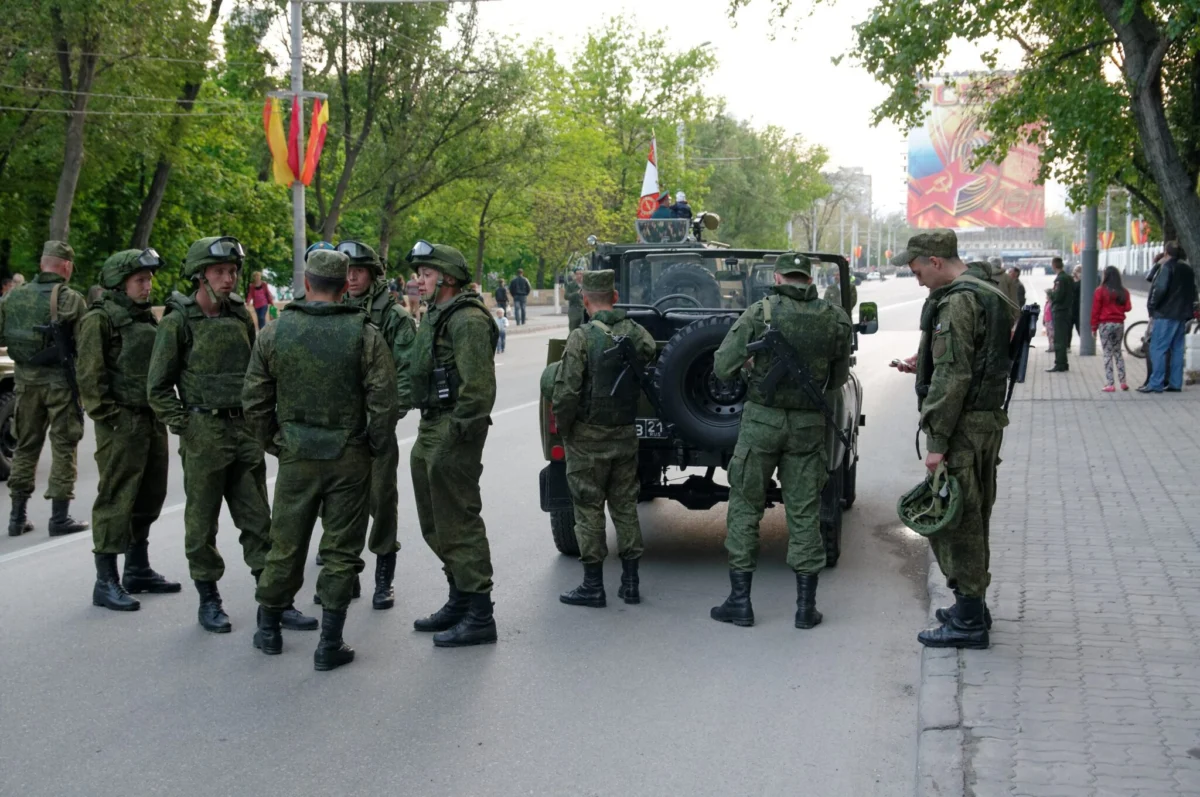
As the war has dragged on, Russia’s military requirements have surged. Facing high attrition rates and the need for significant troop rotations, the Kremlin has turned to increasingly desperate measures to maintain its front-line presence. The recruitment of foreign nationals—a practice that began as a niche effort—has reportedly evolved into a systematic component of Russia’s force-generation strategy.
Anatomy of the Trafficking Scheme
Amnesty International’s investigation details a multi-layered recruitment process that exploits both international labor migrants and refugees already residing within Russian borders. The modus operandi generally follows a consistent pattern:
- The Deceptive Hook: Recruiters utilize social media, local intermediaries, and fraudulent employment agencies in the Global South to advertise high-paying civilian roles in Russia, such as construction work or security logistics.
- Immigration Exploitation: Recruits are often promised legal status or expedited pathways to Russian citizenship. In many cases, their passports are confiscated upon arrival, effectively trapping them in a cycle of dependency.
- Coercive Hand-over: Once in Russia, individuals are often pressured or threatened into signing military contracts, often in a language they do not understand, under the guise of finalizing their employment paperwork.
- The Front-Line Pipeline: Once signed, recruits are moved with startling speed. The report highlights that many enlistees are deployed to active combat zones within just two weeks of their arrival, often with no prior military training.
The lack of preparation is a defining feature of this practice. Foreign recruits are frequently described as being ill-equipped, lacking the necessary protective gear, and suffering from a severe inability to communicate with Russian commanders due to persistent language barriers. Amnesty argues that this indicates the program is not designed for combat effectiveness, but rather to use these individuals as "expendable assets" to bolster troop numbers and absorb enemy fire.
Official Responses and the Call for Accountability
Agnès Callamard, the Secretary General of Amnesty International, did not mince words when addressing the scale of this exploitation. "The human suffering caused by the trafficking of foreign nationals by Russia, or by those it has enabled and incentivized, is not restricted to the front line in Ukraine," Callamard stated. "These recruitment networks reach far and wide, into vulnerable communities across the world, leaving a trail of exploitation, loss, and pain far beyond war-torn Ukraine."
Callamard emphasized that the responsibility for these actions extends beyond the soldiers pulling the triggers. She called for full accountability for all actors involved in the supply chain of human misery, including private recruiters, intermediaries, state officials, and military commanders who knowingly utilize trafficked personnel.
"Wherever human trafficking has occurred, its victims and survivors should be identified and treated as such," she urged, emphasizing the necessity of preserving evidence to ensure that those responsible eventually face justice in international courts.
Legal Implications and the Norms of War
The legal weight of these accusations is significant. The prohibition of human trafficking is considered a jus cogens norm—a fundamental principle of international law that is non-derogable, meaning it cannot be suspended, ignored, or bypassed under any circumstances, even during a declared state of war.
Furthermore, the practice directly violates several international human rights instruments:
- The Palermo Protocol (Article 3): This UN protocol defines human trafficking as the recruitment, transportation, or receipt of persons by means of threat, force, or deception for the purpose of exploitation. Amnesty argues that the Russian recruitment model meets every criterion established in this treaty.
- The European Convention on Human Rights (ECHR): Article 4 of the ECHR prohibits slavery and forced labor. European courts have historically interpreted this article to include various forms of human trafficking, establishing a legal precedent that Russia, as a signatory to international humanitarian norms, is flagrantly disregarding.
Beyond these treaties, the use of foreign nationals in such a manner raises profound ethical questions regarding the sovereignty of the countries from which these recruits are drawn. Many of these nations are currently grappling with their own economic instability, and the loss of young, working-age citizens to a foreign war—under false pretenses—compounds the trauma experienced by these communities.
Supporting Data: The Cost of Indiscriminate Recruitment
While exact numbers are difficult to verify due to the opacity of the Russian military bureaucracy, the evidence gathered by independent researchers and human rights groups suggests the scale is in the thousands.
Recent military force-generation updates indicate that Russia has undergone significant "technological and structural adaptations" to incorporate foreign fighters into existing units. However, the lack of linguistic commonality and the absence of cohesion training often lead to higher casualty rates among these groups compared to domestic Russian units.
The strategy appears to be a cold calculation: by utilizing foreign nationals, the Russian military avoids the domestic political fallout that would result from sending more ethnic Russian citizens to the front lines. The lives of these foreign recruits are treated as "disposable," a policy that fits the broader pattern of Russia’s disregard for international humanitarian law throughout the 2022-2025 conflict period.
Conclusion: A Call for Global Action
Amnesty International has issued an urgent call to the international community, demanding that Russia immediately cease all abusive and coercive recruitment practices. Furthermore, the organization has urged nations with vulnerable populations to proactively dismantle trafficking networks operating within their borders and to provide legal protection and restitution to the survivors of these schemes.
As the war in Ukraine persists, the spotlight on Russia’s recruitment tactics serves as a grim reminder of the human cost of modern warfare. When vulnerable individuals are stripped of their agency and forced into the machinery of death, the international community’s failure to act serves only to embolden those who view human beings as mere pawns in a geopolitical game. Accountability, in this instance, is not just a legal requirement; it is a moral imperative to prevent further exploitation in the name of a war that has already claimed far too many lives.