Introduction: A New Paradigm for Statehood
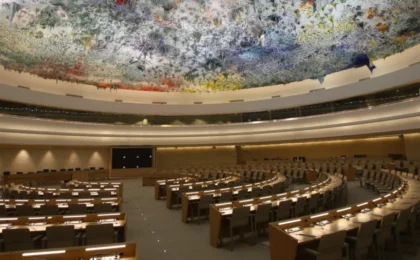
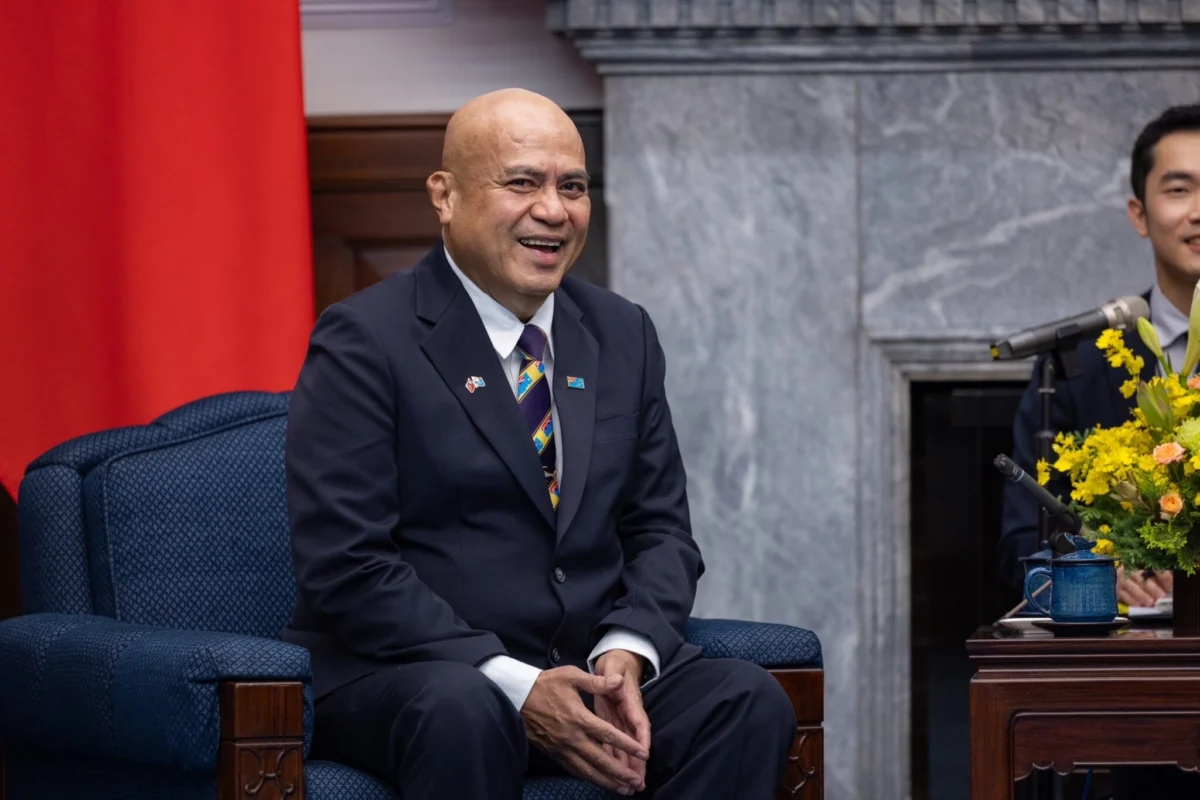
In a historic shift for international law, the United Nations has formally adopted the Political Declaration on Sea-Level Rise, a move that fundamentally reshapes the criteria for national sovereignty. For nations like Tuvalu, where the highest point of land sits a mere two meters above the tide, this declaration serves as an existential lifeline. Addressing the UN General Assembly this past Friday, Tuvalu Prime Minister Feleti Teo heralded the agreement as a victory for justice, declaring that the nation’s identity, legal standing, and maritime rights are no longer tethered to the shifting sands of a disappearing coastline.
The declaration provides a robust legal framework that decouples statehood from the physical possession of habitable land. By affirming that maritime boundaries and sovereignty remain static even as physical territories are submerged, the international community has effectively moved to prevent the legal "extinction" of climate-vulnerable island states.
The Chronology of an Existential Struggle
The path to this UN declaration has been marked by decades of escalating climate data and diplomatic lobbying by the Pacific Island Forum and other coalitions of low-lying states.
- 1982: The signing of the UN Convention on the Law of the Sea (UNCLOS), which established the modern framework for maritime zones. For decades, it remained ambiguous whether these zones would shrink if coastlines receded.
- 2021–2023: As climate models projected accelerated sea-level rise, Pacific leaders began formalizing the concept of "sovereignty in perpetuity."
- November 2023: The signing of the Australia-Tuvalu Falepili Union. This bilateral treaty set the precedent for climate-resilient mobility, allowing Tuvaluans to migrate to Australia while preserving their national legal identity.
- July 2025: The International Court of Justice (ICJ) and the International Law Commission (ILC) signal a broad consensus that statehood remains legally intact regardless of physical territorial loss.
- September 2026: The UN General Assembly formally adopts the Political Declaration on Sea-Level Rise, codifying the rights of nations to retain their sovereignty, UN membership, and maritime resources even in the event of total submergence.
Supporting Data: The Reality of a Rising Tide
The urgency behind Prime Minister Teo’s address is rooted in stark, verifiable environmental data. Tuvalu, an archipelago of nine islands in the central Pacific, is effectively at the front line of the global climate crisis.
The Geography of Vulnerability
- Elevation Constraints: The vast majority of Tuvalu’s landmass sits less than two meters above mean sea level.
- Erosion and Salinity: Saltwater intrusion into freshwater lenses has already devastated subsistence agriculture. Coastal erosion is now a constant, with high-tide flooding events occurring with increasing frequency.
- Displacement Pressures: Under the Australia-Tuvalu Falepili Union, over one-third of the Tuvaluan population has already initiated the application process for climate-mobility visas. This is not merely a policy choice; it is a forced adaptation strategy necessitated by the encroachment of the Pacific Ocean.
Legal Precedents and Economic Rights
The declaration is not merely symbolic. It protects the Exclusive Economic Zones (EEZs) of these nations. Under UNCLOS, a country’s EEZ extends 200 nautical miles from its baseline. If the land disappears, the legal argument previously held that the EEZ might vanish with it, stripping these nations of their rights to fisheries and deep-sea resources. The new declaration establishes that once these boundaries are set, they are permanent, ensuring that sinking states retain the economic assets necessary to sustain their government and people in exile.
Official Responses: A Global Consensus
The adoption of the declaration has been met with a mix of relief and renewed commitment from the international community.
Prime Minister Feleti Teo’s Address
In his keynote speech, Prime Minister Teo delivered a poignant message to the global assembly:
"The Declaration affirms that Tuvalu’s nationhood is not negotiable, that our maritime rights are not erasable, and that our people should never be forced to choose between their homeland and their future."
Teo’s speech served as a stern reminder that while the international community has finally provided a legal safety net, the primary cause—carbon-intensive industrialization by wealthier nations—remains unaddressed.
The UN and International Legal Bodies
Legal experts and UN representatives have framed this as the most significant development in the law of statehood since the decolonization era. By creating a presumption of continuity, the UN has ensured that the "sinking state" is not a legal vacuum. The International Law Commission noted in their 2025 report that there is an overwhelming consensus among member states that the cessation of physical territory does not constitute the end of a state’s personality in international law.
Implications: The Future of "Deterritorialized" Statehood
The ramifications of this declaration extend far beyond the Pacific. It establishes a new international norm: that sovereignty is a political and legal construct, not just a geological one.
1. Protection of Sovereignty in Exile
The declaration effectively safeguards the rights of displaced populations to maintain their government-in-exile. This includes the right to conduct elections, maintain diplomatic relations, and operate as a legal entity within international organizations like the UN and the WTO.
2. A Template for Climate Justice
Small Island Developing States (SIDS) such as Kiribati, the Marshall Islands, and the Maldives now possess a definitive legal shield. This framework provides the leverage required to demand adaptation funding. If a nation is recognized as permanent, international donors are more likely to invest in long-term resilience projects, knowing that the entity they are supporting will not legally "vanish" in the coming decades.
3. Challenges to Implementation
Despite the legal victory, practical challenges remain. Maintaining a state without a physical base requires unprecedented international cooperation. Questions regarding the management of EEZs, the administration of tax revenue, and the preservation of cultural heritage in a digital or diasporic context are the next frontiers of this policy.
4. A Shift in International Law
This consensus marks a decisive departure from the traditional Westphalian model of statehood, which relies on the "three-element theory": a defined territory, a permanent population, and a government. By effectively removing the "defined territory" requirement for climate-impacted states, the international community has acknowledged that the climate crisis necessitates an evolution of legal philosophy.
Conclusion: A Moral and Legal Imperative
As the world looks toward upcoming climate summits, the message from the UN General Assembly is clear: the physical disappearance of land will not signal the end of a nation. The landmark declaration is a testament to the resilience of the people of Tuvalu and their peers in the Pacific.
However, as Prime Minister Teo emphasized, this legal victory is only one half of the equation. While the law now protects the concept of the nation, the international community remains obligated to protect the people and their physical homes through aggressive climate action. The "deterritorialized" state is a necessary legal innovation, but it is a response to a tragedy that the world must still strive to mitigate.
For now, the people of Tuvalu can take solace in the fact that, regardless of how high the tides may rise, their nationhood remains anchored in the firm, unyielding bedrock of international law. As the 21st century progresses, this precedent will undoubtedly serve as the primary legal blueprint for all nations facing the existential threat of a warming, rising planet.