In the pantheon of James Bond adversaries, few have left as indelible a mark as Raoul Silva, the platinum-haired, cyber-terrorist antagonist of 2012’s Skyfall. Portrayed with unsettling charisma and sadistic precision by Javier Bardem, the character transcended the typical "world-domination" archetype, injecting a provocative, homoerotic tension into the franchise that remains a watershed moment in 007 history.
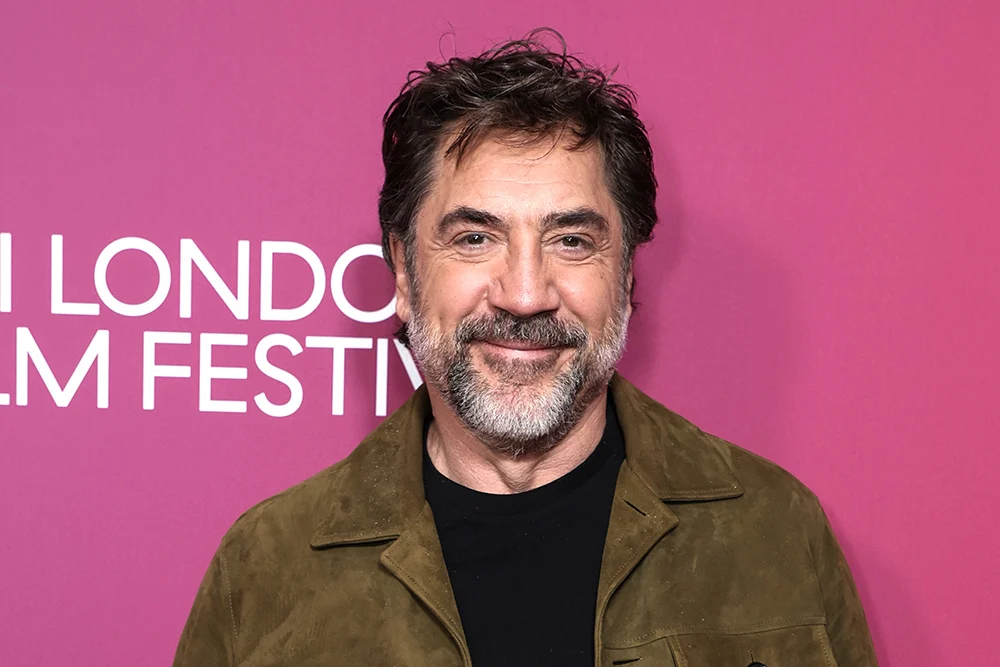
During a candid and wide-ranging Screen Talk at the BFI London Film Festival this past Sunday, the Oscar-winning actor peeled back the curtain on the creative process behind Silva. Bardem revealed that the character’s most iconic, boundary-pushing scene—a tense, sexually charged interrogation—was not merely a product of the script, but a deliberate, collaborative subversion of the Bond formula that he personally championed.
A Calculated Provocation: The Genesis of Silva’s Sexuality
The scene in question remains etched in the memories of audiences worldwide. As Bond (Daniel Craig) sits restrained, Silva approaches him with the predatory grace of a caged animal. "We are the last two rats. We can either eat each other, or eat everyone else," Silva purrs, before tracing his hand down Bond’s thigh and suggesting, "Well, there’s a first time for everything." Bond’s legendary retort—"What makes you think this is my first time?"—solidified the sequence as one of the most daring moments in the history of the franchise.
Bardem explained that the decision to lean into the character’s sexuality was a tactical choice designed to ground the villainy in something deeply personal. "We went through the reading of it and [director Sam Mendes] was so open to what I was proposing to do with the sexuality of the character," Bardem told the BFI audience. "Because I said, ‘Listen, all the villains have done everything to destroy the world, but what about something personal? What about something like, besides destroying the world, he wants to have sex with Bond?’"
The pitch, while radical for a legacy franchise like James Bond, found an unlikely ally in the studio. According to Bardem, Mendes’ initial reaction was one of cautious professional curiosity: "Let me talk to the studio." To the credit of the producers, the studio proved "very brave," allowing the scene to move forward. For Bardem, the impact was clear: the sequence forced Bond out of his comfort zone, creating a dynamic that challenged the character’s traditional stoicism. "It put Bond out of his place in a moment with a situation that he’s not been to before—and the way he comes out of it is brilliant," the actor noted.
The Weight of the 007 Legacy: A Starstruck Moment
Despite his status as one of the most respected actors in world cinema—holding an Oscar for No Country for Old Men, five Goya Awards, and two Volpi Cups from the Venice Film Festival—Bardem admitted that the magnitude of the James Bond universe momentarily paralyzed him.
He recounted a specific, high-stakes scene inside a prison cell, where he was tasked with performing alongside Daniel Craig and the legendary Judi Dench (M). "Sam said action and then [Dench] comes in and nobody talks… I forgot the lines!" Bardem confessed. When a bewildered Mendes asked what was happening, the actor had to come clean. "I’m sorry, I just realized that I’m in a James Bond movie. Excuse me, I just saw Judi Dench as M and James Bond looking at me and thought, ‘Fuck, I’m in a James Bond movie!’ Sorry, let’s do it again!"
This anecdote serves as a reminder of the cultural gravity that the 007 franchise exerts, even on those who have reached the pinnacle of their craft. It also highlights the palpable chemistry on set, with Bardem describing Craig as "adorable" and Dench as "a gift," underscoring the collaborative spirit that allowed Skyfall to become the critical and commercial success it remains today.
Chronology of a Master: From Child Actor to Global Icon
To understand the nuance Bardem brings to roles like Silva, one must look at a career that spans over 65 screen credits and nearly five decades of performance. His journey did not begin in the gritty landscapes of Western thrillers or the glossy sets of spy films, but on a Spanish television set in 1974.
The young Bardem made his debut at age five in the series El Pícaro, starring his mother, the late and revered actress Pilar Bardem. The circumstances of his casting were characteristically unpretentious: a child actor had fallen ill, and his mother stepped in to fill the void. "My mother was in the show and this kid got sick and she said, ‘Don’t worry. I have my kid,’" he recalled.
When the director prompted him to cry for the scene, the young Javier delivered with such conviction that the director was struck by his potential. "I love it, I love it, he’s a dramatic actor!" the director exclaimed. Looking back, Bardem jokes that his professional career began with a slight grievance—he has spent years wondering where his paycheck for that role went. "Still today, I don’t know what she did with my money," he laughed, reflecting on the humor his mother brought to his life until her passing in 2021.
Implications for the Future of Villains
The success of Raoul Silva has had lasting implications for the Bond franchise and cinematic villainy in general. By injecting subtextual and overt complexity into the "Bond villain" archetype, Bardem and Mendes demonstrated that audiences crave depth over caricature. The decision to make the antagonist a mirror image of Bond—both traumatized by the institution of MI6—allowed for a narrative that was as much a psychological thriller as it was an action blockbuster.
In the years since Skyfall, the industry has seen a shift toward more nuanced antagonists. The "sadistic and flirtatious" persona of Silva paved the way for a more psychological approach to high-stakes conflict. Bardem’s performance proved that an actor of his caliber could bring prestige and character-driven stakes to a genre that is often dismissed as purely spectacle.
Beyond Bond: Continuing a Legacy
Bardem’s presence at the London Film Festival is a testament to his continued relevance and versatility. As he navigates a career that bridges the gap between independent European cinema and massive global franchises, he remains committed to the craft of acting as a deeply human, often vulnerable, endeavor.
During the festival, which runs until October 17, Bardem is showcasing two significant projects: Florian Zeller’s Bunker—which features his wife, Penelope Cruz—and Esteban Martinez’s The Beloved. These projects represent the ongoing evolution of a man who, despite having played some of the most terrifying figures in modern cinema, approaches his work with a sense of wonder and, occasionally, a healthy dose of professional nerves.
Whether he is playing a hitman with a questionable haircut or a cyber-terrorist with a grudge against M, Javier Bardem remains an actor who treats every scene—no matter how big the franchise—as a blank canvas for human complexity. His reflection on Skyfall serves as a poignant reminder that even the most "villainous" characters are often defined by their desire to be seen, to be felt, and, in Silva’s case, to challenge the very foundations of the hero standing in their way.