TUCKER COUNTY, W.Va. — High in the Allegheny Mountains along the Blackwater River, the small historic towns of Thomas and Davis have long been defined by winding hollows, grand waterfalls, and a quiet economy anchored by outdoor tourism. Today, however, this conservative pocket of West Virginia sits at the epicenter of a national conflict over the rapid expansion of artificial intelligence infrastructure across rural America.
A proposed 10,000-acre development spanning Tucker and neighboring Grant counties could soon become home to one of the largest data center complexes in the world. Dubbed the "Ridgeline" project by its developer, Virginia-based Fundamental Data LLC, the massive complex calls for a new natural gas-fired power plant, extensive diesel backup generator arrays, and a solar facility to feed the staggering energy demands of hyperscale computing.
Yet as state officials press to fast-track tech investments, a growing grassroots rebellion in Tucker County highlights a widening political fault line: a clash between national ambitions to win the global AI race and local conservative constituents fighting to protect their land, water, and community autonomy.
Main Facts: The Scope of the Ridgeline Proposal
The tension in Tucker County centers on both the immense scale of the project and the perceived opacity of its developers.
- Massive Footprint: The proposed complex encompasses roughly 10,000 acres between the mountain municipalities of Thomas and Davis, extending into Grant County.
- Heavy Energy Infrastructure: To satisfy the continuous, high-megawatt demand of AI workloads, the site plan includes an on-site natural gas power plant, heavy diesel generators for emergency backup, and an adjacent solar farm.
- Shifting Specifications: According to local organizers and reports, public details regarding the exact configuration, water consumption, and environmental mitigation strategies of the complex have changed repeatedly, fueling local skepticism.
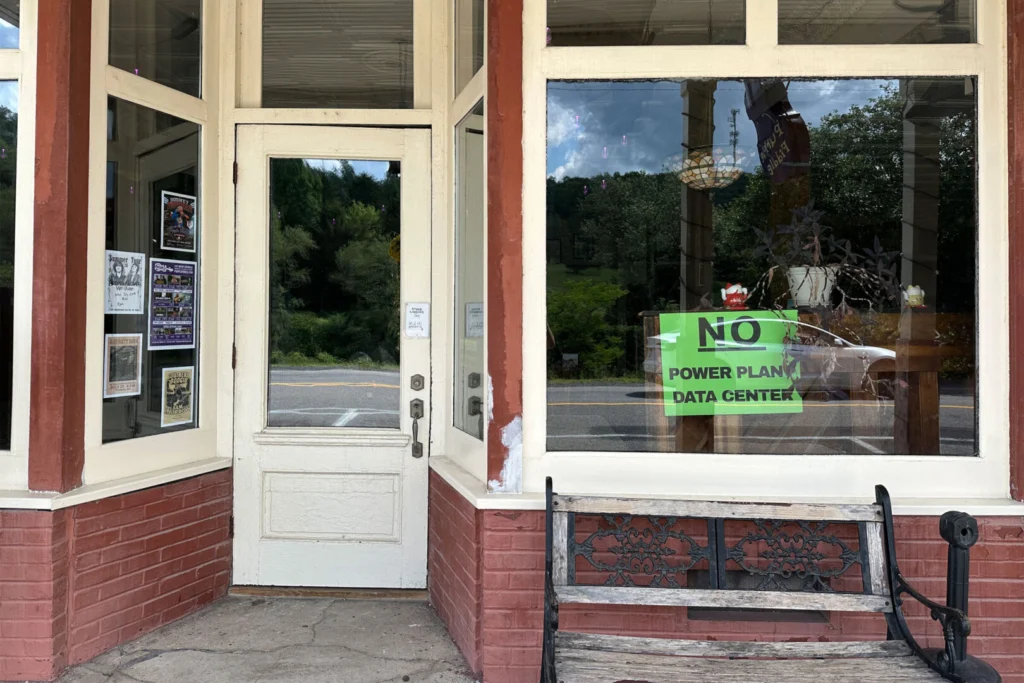
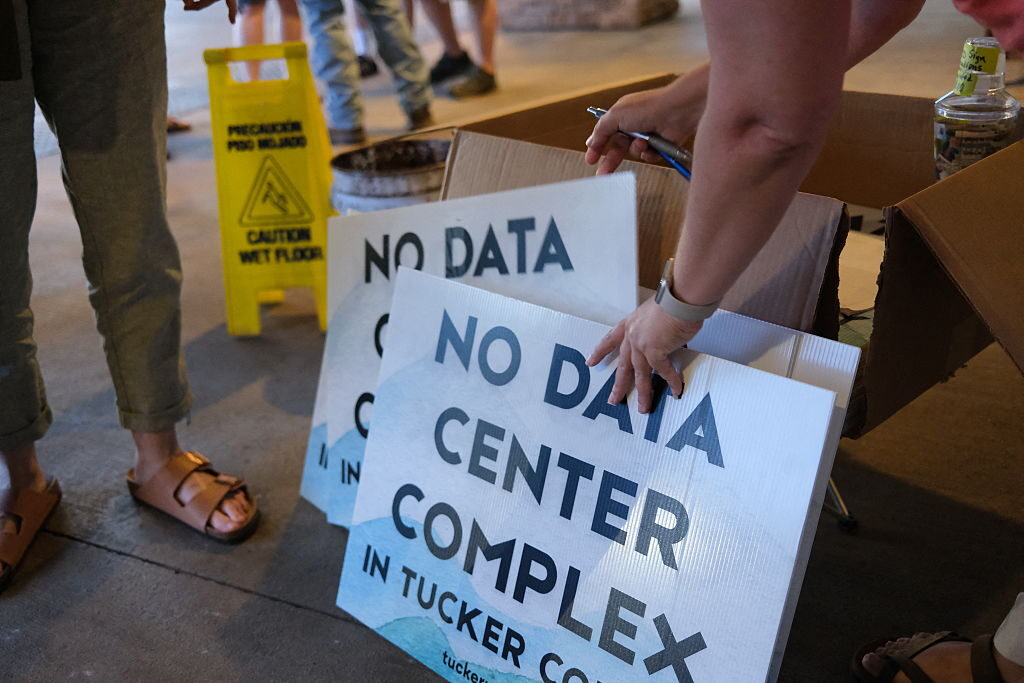
- Community Mobilization: In Thomas—a town situated roughly 1.5 miles from the proposed perimeter—storefronts along the main commercial strip are lined with signs opposing the complex. A community group, Tucker United, has mobilized hundreds of residents citing potential noise, air pollution, grid strain, and water contamination, particularly given the site’s proximity to a local elementary and middle school.
- State vs. Local Control: West Virginia state lawmakers previously passed legislation aimed at expediting data center construction by curtailing local zoning oversight. This has left municipal leaders and residents with limited formal mechanisms to approve or block the development.
Chronology of Development and Opposition
The collision between tech developers and West Virginia residents has unfolded over several months, reflecting a broader trend seen across the country.
[Late 2024 - Early 2025]
Fundamental Data LLC begins acquiring land rights and outlining plans for a 10,000-acre site spanning Tucker and Grant counties.
       │
       ▼
[State Legislative Action]
West Virginia passes streamlined data center development legislation (such as HB 2014), limiting local approval mechanisms to accelerate tech infrastructure.
       │
       ▼
[Spring - Summer 2025/2026]
As project details leak and alter, local residents form "Tucker United." Protests, window signs, and community meetings emerge in Thomas and Davis.
       │
       ▼
[June 2026]
Utah State Senate President J. Stuart Adams is defeated in a Republican primary following intense backlash over a backed data center project near the Great Salt Lake, signaling national political risks.
       │
       ▼
[July 2026]
Tucker United organizers conduct outreach to state and federal lawmakers, raising concerns over utility price spikes, air emissions, and water table depletion, while receiving minimal formal response from developers.
From Quiet Tourist Hub to Resistance Front
Nikki Forrester, a resident and key organizer with Tucker United, noted that opposition grew rapidly as residents realized local boards had been stripped of their authority to veto the project.
"It’s the most energized and unified I’ve seen anyone about an issue before," Forrester said while sitting along downtown Thomas’s main street. "[It’s] been frustrating, but we’re also like, we can’t stop if we are the only line of defense in terms of getting answers… because no one else is."
Forrester emphasized that West Virginians are uniquely sensitive to industrial proposals due to the state’s historical legacy with extractive industries. "People haven’t forgotten what natural resource extraction has done to our communities in West Virginia—we’ve seen this playbook before, we’ve heard all the lines," she said. "It’s like, ‘Oh, we’re going to host a public meeting so we can check the box and say we engaged the community.’ But it doesn’t matter what people say, because it’s the same outcome."
Supporting Data and Energy Demands
The struggle in Tucker County is part of a nationwide surge in data center construction driven by the computational demands of generative AI models.
Rural Concentration and Public Sentiment
According to data from the Pew Research Center, the overwhelming majority of newly proposed hyperscale data centers in the United States are targeting rural and exurban counties. These areas often offer larger tracts of contiguous land and proximity to high-voltage transmission lines or natural gas pipelines. However, these rural areas have also trended heavily conservative over the past decade.
A recent Gallup poll revealed that a majority of Americans oppose the construction of large-scale data centers within their immediate communities. The core concerns cited by residents include:
- Utility Rate Increases: High-density data centers require immense amounts of electricity, leading to concerns that local ratepayers will subsidize necessary grid upgrades through higher monthly electric bills.
- Resource Consumption: Evaporative cooling systems for computer servers can consume millions of gallons of water daily, posing risks to local aquifers and river systems like the Blackwater River.
- Environmental Impact: On-site fossil fuel generation—such as natural gas turbines and diesel backup test runs—raises local air quality concerns.
       TYPICAL DATA CENTER RESOURCE DEMANDS vs. RURAL CONCERNS

  ┌─────────────────────────────┐        ┌─────────────────────────────┐
  │   Tech Industry Needs       │        │   Rural Community Concerns  │
  ├─────────────────────────────┤        ├─────────────────────────────┤
  │ • Constant 24/7 Power       │  VS.   │ • Soaring Utility Bills     │
  │ • Millions of Gallons/Water │        │ • Local Water Depletion     │
  │ • Vast Footprints (10k ac)  │        │ • Loss of Scenic/Rural Land │
  │ • Fast-Track Permitting     │        │ • Eradication of Local Veto │
  └─────────────────────────────┘        └─────────────────────────────┘
The disconnect is further exacerbated by everyday technology usage. "In many ways, this AI tech world feels so distant from our daily lives here—like, we still struggle to get basic internet," Forrester observed, adding that local workers at auto parts stores express confusion over the societal benefit of AI tools versus the tangible disruption of a local power plant and server facility.
Official Responses and Political Fractures
The issue has placed Republican lawmakers in a delicate position. While party leaders strongly endorse national technology dominance and deregulatory policies, their rural constituents are increasingly demanding protections against industrial encroachments.
The Congressional Balancing Act
Rep. Riley Moore (R-W.Va.), who represents Tucker County, acknowledged the deep frustration among his constituents caused by state preemption laws that bypass local input.
"The locals aren’t particularly happy because there’s not local input. They can say something, but there’s not an approval or disapproval process at the local level," Moore said. Pointing to state legislation intended to attract technology investments, he added: "Part of that reasoning was the critical nature of data centers and the AI race between us and China, and the necessity to expedite these projects, which I certainly can understand. But I also understand the frustration of the locals feeling like they don’t have control."
Moore noted in a separate statement that his office has received outreach from hundreds of constituents regarding data center impacts, and he is watching how the state’s newly published data center development framework will handle these conflicts.
Other federal representatives from West Virginia expressed similar caution:
- Sen. Shelley Moore Capito (R-W.Va.): A spokesperson stated that Capito has "emphasized the importance of local involvement, responsible stewardship, and the protection of utility payers along with prospects of job creation and community development," maintaining ongoing communication with local officials.
- Sen. Jim Justice (R-W.Va.): Justice’s office did not respond to requests for comment regarding the Ridgeline proposal.
- Fundamental Data LLC: The developer did not provide answers to submitted inquiries regarding project specifics or community outreach.
Debates Over Foreign Competition and Misinformation
As public pushback intensifies, some lawmakers have attributed the rising opposition to external rhetoric or geopolitical competition.
Rep. Tim Burchett (R-Tenn.) argued that the technology sector has failed to articulate its value proposition to the public. "I think the data center people are totally off their game, they’re terrible at messaging, and there’s talk that the Chinese are putting it out because they’re the ones that want to be in the business of it," Burchett said, suggesting misinformation was distorting the debate.
Similarly, Rep. Derrick Van Orden (R-Wis.)—facing a competitive re-election fight in a rural district featuring a proposed data center—alleged that certain anti-data center campaign narratives were influenced by foreign interests aimed at slowing U.S. technological development. However, Van Orden added that he personally would not support local projects unless developers secured local buy-in and avoided prime farmland.
His Democratic challenger, Rebecca Cooke, has run advertisements accusing Van Orden of favoring AI conglomerates over residents, aligning herself with calls for temporary moratoria on new data center construction.
Democratic Strategy
Democratic lawmakers view the Republican dilemma as a political opening. Rep. Suhas Subramanyam (D-Va.), whose district includes northern Virginia’s "Data Center Alley," noted that while both parties struggle with infrastructure messaging, Democrats have aligned more closely with affected communities.
"Republicans seem to be tied with industry on this, and protective of the industry. And the president himself has called data centers ‘liquid gold,’" Subramanyam said. "On the Democratic side, we have developed more of a platform of being with the communities and with the people affected by them, and that’s a good place to be politically right now."
Subramanyam warned that if tech firms fail to engage meaningfully with local populations, public resistance will stall infrastructure development across the country.
Implications: Electoral Risks and the Future of AI Infrastructure
The tension in Tucker County signals a broader political realignment surrounding infrastructure, energy, and land use in rural America.
                  KEY ELECTORAL & POLICY IMPLICATIONS

 ┌─────────────────────────────┐   ┌─────────────────────────────┐
 │    Primary & General Risks  │   │     Legislative Responses   │
 ├─────────────────────────────┤   ├─────────────────────────────┤
 │ • Primaries: Anti-data      │   │ • Federal bills to restore  │
 │   center voters ousting     │   │   local zoning power.       │
 │   incumbents (e.g., Utah).  │   │ • Rate-stabilization rules  │
 │ • General Elections: Local  │   │   to protect consumers.     │
 │   land/water issues shifting│   │ • Proposed state-level      │
 │   rural margins.            │   │   development moratoria.    │
 └─────────────────────────────┘   └─────────────────────────────┘
1. Political Vulnerability for Incumbents
The primary defeat of Utah State Senate President J. Stuart Adams in June—driven significantly by voter anger over a data center project near the Great Salt Lake—served as a warning sign for state and federal lawmakers. National political operatives acknowledge that while data centers may not dominate every contest today, the issue is poised to become a central voting topic by 2028.
2. Legislative Pushback and Federal Intervention
In response to public outcry, lawmakers from both parties in Washington have introduced preliminary legislation aimed at:
- Restoring local government oversight in the federal permitting and siting process.
- Protecting residential consumers from utility rate surges linked to commercial data center grid connections.
- Mandating stricter environmental reviews regarding water extraction and local power generation.
3. Long-Term Infrastructure Challenges for the AI Industry
For the technology sector, the battle in Tucker County highlights a structural challenge. As compute requirements scale, developers can no longer rely solely on favorable tax incentives or state-level preemptions to clear the path for hyperscale campuses. Without local buy-in, projects face prolonged legal challenges, administrative delays, and intense political friction.
Back in Thomas, residents like Nikki Forrester remain committed to challenging the proposed complex, seeing their fight as part of a national trend.
"Here and across the country, the resistance has grown so much, movements have sprung up everywhere," Forrester said. "There’s a real possibility they could build out all this infrastructure and it’ll be obsolete in a few years… so, it’s like, what is it going to be next?"