WASHINGTON — A escalating confrontation between the executive branch, Congress, and the federal judiciary has reached a critical juncture following an extraordinary threat by the Department of Justice (DOJ) to demolish the John F. Kennedy Center for the Performing Arts.
In legal filings submitted ahead of a pivotal federal court hearing, government attorneys argued that unless the administration is permitted to shut down the iconic 55-year-old venue for a two-year structural overhaul and affix President Donald J. Trump’s name to its exterior, the building could be allowed to deteriorate to the point of structural condemnation and razed entirely.
The threat has provoked fierce condemnation from Capitol Hill, ignited a crisis across the nation’s performing arts sector, and set up a high-stakes constitutional showdown over the control of national monuments and statutory naming rights.
Main Facts
At the center of the dispute is a Department of Justice legal brief filed on Monday in the U.S. District Court for the District of Columbia. In the motion, DOJ attorney Brantley Mayers warned that barring the administration’s planned two-year closure and extensive rehabilitation program would lead to the physical destruction of the landmark institution.
According to the filing, without the proposed renovation plan—which includes prominent structural branding honoring President Trump—the federal government may be forced to tear down the building entirely.
"Without those efforts, the Center will deteriorate further into an unsafe, decrepit structure that will be required to be taken down, with a determination to follow on what to build on the site, such as a large outdoor amphitheater overlooking the Potomac River that has been proposed, by some, for many years," Mayers wrote in the submission.
The administration’s proposal entails a multi-step restructuring of the site:
- Closure and Renovation: Closing the entire performing arts complex for a period of two years to perform structural overhauls.
- Facade Modification: Adding the line "Renovated and Restored by President Donald J. Trump" directly below the original stone inscription reading "John F. Kennedy Memorial Center for the Performing Arts."
- Plaza Renaming: Formally renaming the expansive public plaza surrounding the facility after Donald J. Trump.
- Target Execution Date: Implementing these alterations as early as September 8, pending judicial clearance.
Opponents of the move, led by congressional lawmakers sitting on the center’s board, have characterized the DOJ’s arguments as an unlawful attempt to blackmail the court and bypass prior judicial injunctions.
Chronology of the Dispute
The legal and political battle over the nation’s cultural center has unfolded over several months of aggressive executive maneuvering, board reconfigurations, and court challenges.
+-----------------------------------------------------------------------------------+
| CHRONOLOGY OF THE KENNEDY CENTER NAMING CONFLICT                                  |
+-----------------------------------------------------------------------------------+
| 1. Board Restructuring: Executive order replaces board members; Trump named Chair.|
| 2. May 2026: First effort to carve "Donald J. Trump" on facade blocked by court.  |
| 3. June 2026: Trump's name removed; scaffolding and protective tarp installed.    |
| 4. August 2026: Reconfigured Board votes for secondary inscription & plaza name. |
| 5. Late August 2026: DOJ files motion threatening demolition; emergency motion.  |
+-----------------------------------------------------------------------------------+
Initial Takeover and Early Legal Challenges
The controversy began after President Trump removed several sitting members of the Kennedy Center’s Board of Trustees, replacing them with loyalists and installing himself as chairman of the board. Shortly thereafter, the newly constructed board initiated plans to permanently attach Trump’s name to the structure’s exterior marble facade.
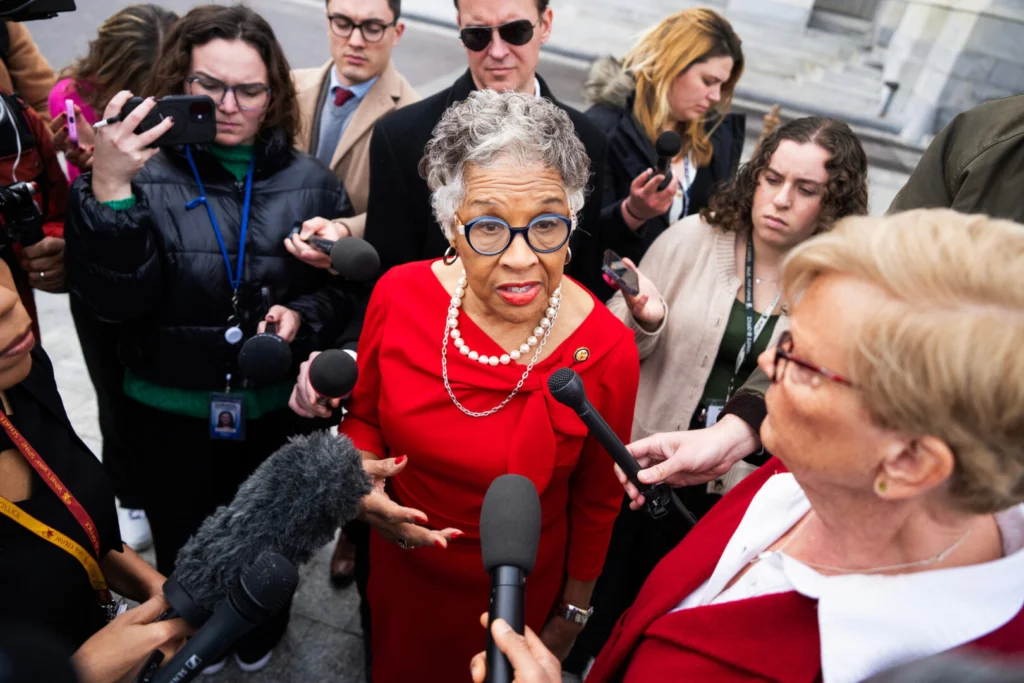
In May, U.S. District Judge Christopher R. Cooper—an appointee of President Barack Obama—issued a preliminary injunction blocking the administration from altering the building’s primary title. Responding to a lawsuit filed by Rep. Joyce Beatty (D-Ohio), an ex-officio member of the board, Judge Cooper ruled that the administration lacked the legal authority to alter the memorial’s name.
"The organic statute makes crystal clear that the Center is to be named for President Kennedy," Judge Cooper wrote in his May decision. "Congress gave the Kennedy Center its name, and only Congress can change it."
The Summer Escalation and Tarp Controversy
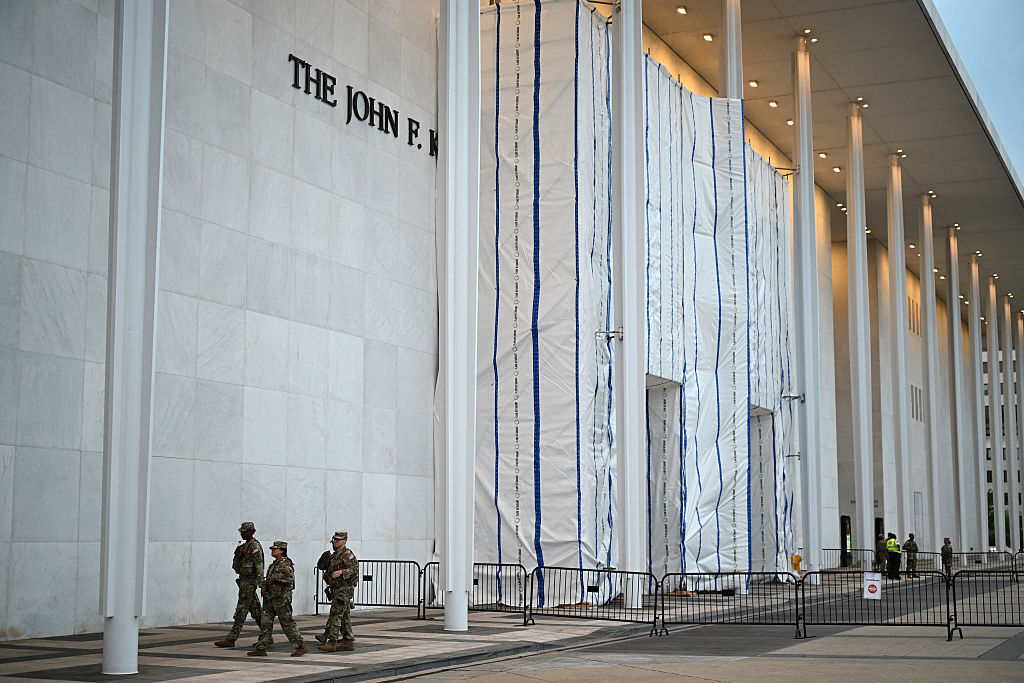
Following the May ruling, workers removed the initial lettering that had been installed. However, the administration immediately ordered extensive scaffolding and heavy grey tarpaulins to be erected over the building’s front portico, obscuring the original John F. Kennedy inscription.
While the DOJ maintained that the scaffolding was strictly necessary for structural water-testing and roof overhang repairs, legal counsel for Rep. Beatty countered that the administration was deliberately hiding the historical facade. Beatty’s legal team filed motions alleging that the board maintained the tarp to "frustrate the intent of the Court’s order that the Center be returned to a memorial exclusively honoring President Kennedy."
August Board Resolution and Emergency Motions
In early August, the Trump-dominated Board of Trustees passed a new resolution attempting to work around the court’s May injunction. Rather than replacing Kennedy’s name outright, the board authorized adding secondary text acknowledging Trump’s renovation work and renaming the exterior grounds as the "Donald J. Trump Plaza."
In response, Rep. Beatty filed an emergency motion seeking an immediate injunction to stop the September 8 implementation plan, describing the board’s persistent maneuvers as "déjà vu all over again." The court scheduled an emergency hearing for Thursday before Judge Cooper to resolve the matter.
Supporting Data: Financial Strain and Artistic Exodus
The governance changes and legal battles surrounding the Kennedy Center have coincided with severe operational disruption, artistic boycotts, and steep revenue declines across the institution.
Plunging Revenues and Patron Defection
According to internal financial records, budget worksheets, and board meeting minutes first disclosed by The Washington Post, ticket sales and private donations have collapsed since the executive takeover of the board.
The DOJ argued in its court filings that preventing the administration from adding Trump’s name would actively harm the facility financially. Mayers claimed that court interference would cause "donors to flee, financial contributions to dry up, and structural rehabilitation to stop," adding that President Trump possesses "unrivaled expertise and experience in real estate and construction" making him uniquely qualified to oversee the site.
However, historical financial tracking indicates that donor flight and patron attrition accelerated after the administration’s intervention:
+-----------------------------------------------------------------------------------+
| IMPACT OF GOVERNANCE DISPUTE ON KENNEDY CENTER OPERATIONS                         |
+-----------------------------------------------------------------------------------+
| • Financial Performance : Ticket sales plunged following board overhaul.         |
| • Resident Companies    : Washington National Opera canceled its residency.        |
| • National Symphony     : NSO dispersed upcoming season across 6 regional venues. |
| • Broadway Tours        : Major productions (including "Hamilton") canceled runs. |
+-----------------------------------------------------------------------------------+
Cancellations and Operational Dispersal
The uncertainty and political turmoil surrounding the venue have prompted flagship cultural organizations to sever ties or alter their schedules:
- Washington National Opera (WNO): The prestigious company formally ended its decades-long residency at the Kennedy Center, citing structural uncertainty and governance disputes.
- National Symphony Orchestra (NSO): The NSO announced it would split its upcoming season among six different venues across the Washington metropolitan area to accommodate both the legal uncertainty and the planned closure.
- Touring Broadway Productions: High-profile commercial tours, including the Tony Award-winning musical Hamilton, canceled scheduled runs at the center, resulting in millions of dollars in lost box-office revenue.
Official Responses
The Department of Justice’s assertion that the Kennedy Center could be demolished if the administration does not get its way has sparked intense reactions from constitutional scholars, political leaders, and board members.
Congressional Lawmakers Condemn Demolition Threat
Democratic leaders on Capitol Hill reacted with fury to the DOJ’s court brief, characterizing the demolition proposal as an authoritarian threat against a national monument.
Rep. Rick Larsen (D-Wash.), the ranking member of the House Transportation and Infrastructure Committee and an ex-officio board member, issued a stern rejection of the administration’s posture.
"No one is going to be allowed to demolish the Kennedy Center," Larsen said in an official statement. "We should leave the Kennedy Center theatrics to the performers. Yes, the John F. Kennedy Center for the Performing Arts needs structural renovations. No, the administration cannot use that need to strong-arm the board into putting the president’s name on the facade; the courts already ruled against that."
Sen. Chris Van Hollen (D-Md.), a former member of the center’s board of trustees, delivered an even harsher assessment of the administration’s legal strategy.
"We are dealing with a narcissist who, if he can’t have his name on the Kennedy Center, wants to destroy it," Van Hollen stated. "It is a metaphor for his presidency—if Trump can’t have his way, the American people will pay the price. The Kennedy Center and every monument across America belong to the people, not to any one person—and we must keep fighting back against this Administration’s disturbing attempts to undermine that."
+-----------------------------------------------------------------------------------+
| KEY STATEMENTS FROM CONGRESSIONAL LEADERS                                         |
+-----------------------------------------------------------------------------------+
| Rep. Rick Larsen (D-Wash.):                                                       |
| "We should leave the Kennedy Center theatrics to the performers... No, the       |
| administration cannot use that need to strong-arm the board."                    |
|                                                                                   |
| Sen. Chris Van Hollen (D-Md.):                                                    |
| "We are dealing with a narcissist who, if he can't have his name on the Kennedy  |
| Center, wants to destroy it."                                                     |
+-----------------------------------------------------------------------------------+
The SERVE Act Legislative Response
In response to repeated attempts by the executive branch to place the president’s name on public infrastructure, Sen. Van Hollen, alongside Sen. Angela Alsobrooks (D-Md.) and Sen. Bernie Sanders (I-Vt.), introduced Senate Bill 3622, titled the Stop Executive Renaming for Vanity and Ego (SERVE) Act.
The proposed legislation would explicitly prohibit:
- Renaming federal buildings, structures, or public lands after a sitting president.
- Utilizing federal funds or official board positions to alter statutory memorial designations.
- Installing secondary commemorative signage honoring current executive branch officials on national cultural assets.
Despite gaining strong support among Senate Democrats, the SERVE Act faces virtually insurmountable hurdles in the current legislative session due to Republican majorities in both the House of Representatives and the Senate.
Implications
The legal clash over the Kennedy Center carries significant ramifications that extend beyond the immediate structural conflict on the banks of the Potomac River.
Separation of Powers and Statutory Limits
At its core, the lawsuit tests the boundaries of presidential authority over federal property established by acts of Congress. The John F. Kennedy Center Act of 1964 explicitly designated the facility as the sole national memorial to the assassinated 35th president.
Legal scholars note that if the court permits the executive branch to alter the memorial’s character—or threaten its demolition as leverage in litigation—it would establish a broad precedent:
- Executive Overreach: Future administrations could potentially alter, rebrand, or threaten long-standing national monuments (such as the Lincoln Memorial or Smithsonian institutions) under the guise of facility maintenance.
- Statutory Integrity: A ruling in favor of the administration could erode Congress’s constitutional authority under the Property Clause (Article IV, Section 3) to manage and control federal territory and assets.
Preservation of National Cultural Heritage
From an arts administration perspective, the ongoing legal conflict poses existential questions regarding how national cultural institutions operate. Historically maintained through a bipartisan public-private partnership, the Kennedy Center now faces deep operational instability.
If the court grants Rep. Beatty’s motion for an emergency injunction on Thursday, the administration will be legally blocked from proceeding with its September 8 rebranding schedule. However, if the court accepts the DOJ’s argument regarding executive prerogative over infrastructure maintenance, the center could face an extended two-year dark period—leaving the future of America’s flagship performing arts center uncertain.