Every year, seasonal influenza imposes a staggering burden on global public health, precipitating between three and five million cases of severe illness and claiming up to 650,000 lives annually. Beyond its seasonal toll, the influenza A virus remains a perennial candidate for global pandemic disruption, a grim legacy cemented by the 1918 Spanish Flu. Despite its ubiquity, the precise molecular mechanics the virus employs to hijack human cellular machinery have long remained shrouded in mystery.
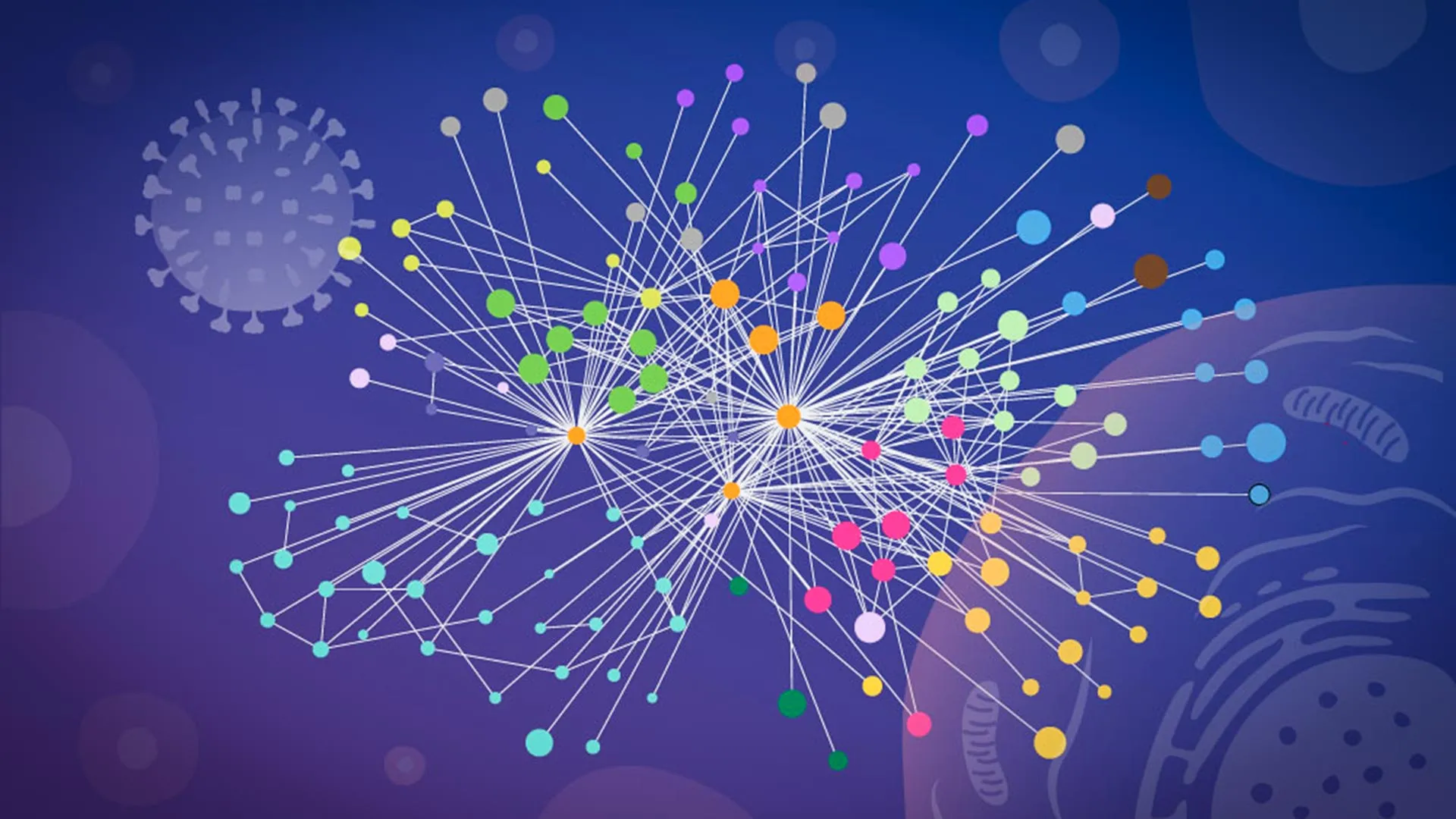
Now, a collaborative breakthrough by researchers at EMBL Hamburg and the Leibniz Research Institute for Molecular Pharmacology (FMP) has fundamentally altered our understanding of this viral siege. By developing a customized, high-precision workflow, the team has successfully mapped the protein-protein interactions of influenza A directly inside intact, infected human cells. This achievement marks a transition from viewing the virus as a static object to observing it as a dynamic, structural strategist in its native environment.
The Challenge of the "Broken Cell" Paradigm
To understand why this study represents a paradigm shift, one must first recognize the limitations of traditional virology. Historically, tracking the "molecular handshake"—the moment a viral protein latches onto a host protein—has been an exercise in destruction. Scientists typically relied on biochemical techniques that necessitated breaking open, or lysing, the cell to analyze its contents.
This method, while informative, introduces significant artifacts. When a cell’s internal compartments are ruptured, proteins that were spatially segregated in life are suddenly forced into contact. Conversely, weak, transient, or location-specific interactions that are critical to the viral life cycle often vanish the moment the cell’s architecture is compromised. As a result, researchers have long struggled to distinguish between legitimate biological interactions and "laboratory noise."
"Tracking protein-protein interactions during an active infection is extremely difficult," notes Jan Kosinski, Group Leader at EMBL Hamburg and the Centre for Structural Systems Biology (CSSB). The team realized that to truly map the influenza takeover, they needed a methodology that preserved the spatial integrity of the cell.
A Breakthrough in Cross-Linking Mass Spectrometry
The solution emerged through a sophisticated application of cross-linking mass spectrometry (XL-MS). Working with colleagues Boris Bogdanow and Fan Liu at FMP Berlin, the research team refined XL-MS to function specifically within the crowded, chaotic environment of a virus-infected cell.
XL-MS works by using chemical "linkers" to create covalent bonds between proteins that are in close proximity. These links act as molecular anchors, preserving the interaction even when the cell is eventually processed for analysis. By integrating this with mass spectrometry, the researchers could identify exactly which proteins were interacting and, crucially, where those interactions were occurring within the cell’s intricate architecture.
"XL-MS allows us to capture protein-protein interactions directly in infected intact cells, while also providing structural information about how these interactions are happening," explains Boris Bogdanow, now a Junior Research Group Leader at the Institute of Virology, Charité – Universitätsmedizin Berlin. "This gives us insight into the interface between the virus and the human cell and may, through structural modeling, help identify actionable targets for future pharmaceutical interventions."
Integrating the "AlphaFold" Revolution
The raw data generated by XL-MS provided the "what" and "where," but to visualize the "how," the team turned to the frontier of computational biology: AlphaFold. Originally developed to predict the 3D structure of isolated proteins, the researchers utilized a modified version of this Nobel-prize-winning algorithm to build high-fidelity models of the virus-host interface.
By feeding their experimental cross-linking data directly into the AlphaFold pipeline, the researchers created a structural map that was constrained by reality. "The key advantage of the modified AlphaFold approach is that it allowed us to feed our experimental cross-linking data directly into the structural modeling," says Kosinski. "This tells the model which parts of the viral and host proteins are close to each other inside infected cells. This was especially useful for virus-host complexes, which are often difficult to predict reliably."
Chronology of the Takeover: Two Key Strategies
The study, published in Nature Microbiology, illuminates two distinct strategies that Influenza A uses to command the host cell.
1. The Hemagglutinin Processing Network
The first strategy centers on hemagglutinin, the viral surface protein responsible for cellular entry. Once inside, the virus must fold and modify this protein to ensure it is functional for future infections. The team observed that the virus hijacks the host’s internal transport and processing network—a series of compartments that normally manage protein quality control.
The mapping revealed that influenza A actively recruits specific human proteins to assist in the folding of hemagglutinin. Many of these host proteins were previously obscure, with functions largely unknown to the scientific community. By repurposing these cellular workers, the virus ensures that its "keys" to enter new cells are forged to perfection.
2. The Dissolution of Paraspeckles
The second, and perhaps more surprising, finding involves the nucleus. The team discovered that influenza A infection causes the consistent dissolution of paraspeckles—droplet-like nuclear organelles that store RNA-binding proteins.
"What surprised us most was the paraspeckles," admits Iuliia Kotova, the study’s first author and a former predoctoral fellow at the Kosinski Group. "Watching these tiny organelles in the nucleus dissolve, consistently across every cell line and every flu strain we tested, told us this isn’t a side effect of infection—it might be a strategy."
By forcing the dissolution of these structures, the virus releases the stored RNA-binding proteins, potentially co-opting them to facilitate the replication of the viral genome. Furthermore, because paraspeckles play a vital role in the host’s stress response and antiviral signaling, their destruction likely serves a dual purpose: it provides the virus with tools for replication while simultaneously sabotaging the cell’s internal alarm system.
Implications for Pandemic Preparedness
The collaborative effort involved a massive logistical undertaking, with cross-linking mass spectrometry performed at Charité, glycoproteomics handled by the EMBL Proteomics Core Facility, and structural modeling powered by the EMBL Compute Cluster.
The implications of this research extend far beyond seasonal flu. By successfully mapping the "native" interaction landscape of a virus, the researchers have provided a blueprint for studying other pathogens. "While the exact host factors and mechanisms often differ from virus to virus, we think our overall approach—combining in-cell cross-linking, structural modeling, and targeted cell-biology follow-up—remains broadly applicable," says Kosinski.
The research team is already looking toward the future, with aspirations to apply these methodologies to viruses with higher pandemic potential, such as H5N1. Understanding the precise molecular "hubs" where these viruses interact with human proteins could reveal vulnerabilities that have remained hidden for decades.
A New Era of Rational Drug Design
Ultimately, the ability to model the virus-host interface with such high resolution provides a new horizon for pharmacology. Traditional antiviral drugs often target the virus itself, which can lead to the rapid emergence of drug-resistant strains. By mapping the specific human proteins that the virus relies on for survival, researchers may soon be able to develop "host-directed" therapies.
If scientists can identify the human proteins that facilitate the folding of hemagglutinin or the degradation of paraspeckles, they might develop drugs that stabilize these pathways, effectively "locking the door" on the virus rather than trying to hit a moving, mutating target.
As the scientific community continues to grapple with the evolving threat of respiratory viruses, this study provides more than just a map; it provides a new way of seeing. By observing the influenza virus not as an isolated entity, but as an active participant in the complex, structural life of the cell, researchers are gaining the upper hand in the microscopic arms race that defines our battle against infectious disease.