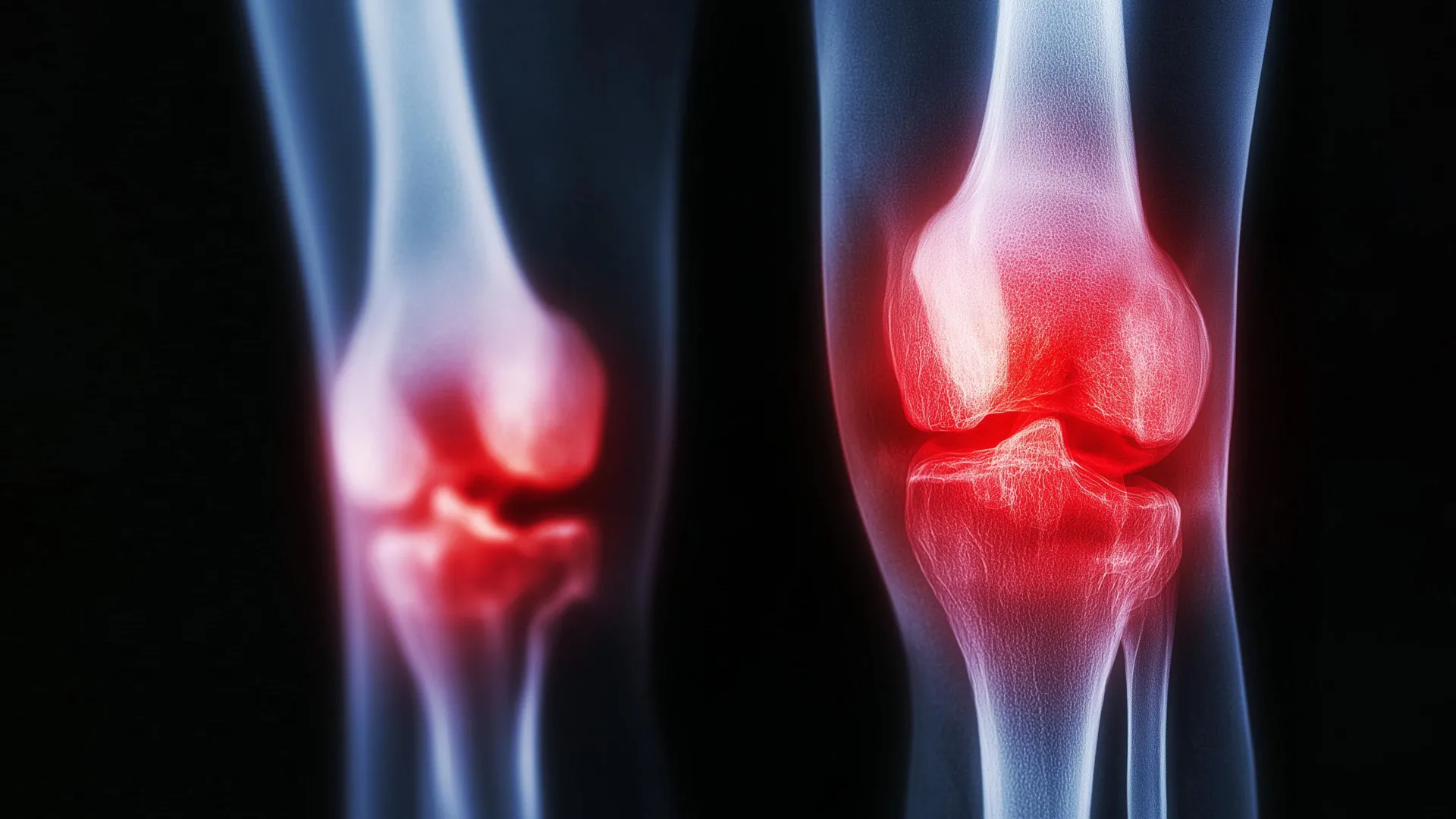
For the millions of adults worldwide suffering from the relentless ache of knee osteoarthritis, the clinical pathway has historically been a binary choice: manage the pain with injections and physical therapy until they no longer work, or undergo the major, invasive procedure of total joint replacement. However, a revolutionary minimally invasive technique known as Genicular Artery Embolization (GAE) is emerging as a compelling "middle-ground" solution. A significant new study suggests that by targeting the abnormal blood vessels fueling joint inflammation, patients may achieve lasting relief without the need for surgery.
The Chronic Burden: Why Knee Arthritis Defies Simple Treatment
Osteoarthritis (OA) is far more than the simple "wear and tear" of cartilage. According to the World Health Organization, it affects over 365 million adults globally, acting as a leading cause of long-term disability. While the gradual deterioration of the protective cartilage cushioning the knee joint is the hallmark of the disease, the underlying pathology is significantly more complex.
In a healthy joint, the synovium—the membrane lining the joint—is relatively quiescent. In an arthritic knee, however, the environment becomes hyper-inflamed. This inflammation triggers a process called hypervascularity, where the body creates an excessive, abnormal network of microscopic blood vessels. These vessels do not just nourish the tissue; they serve as a conduit for inflammatory cells and are often closely associated with the growth of new sensory nerves. These nerves become hyper-sensitive, transforming a mechanical joint issue into a persistent, chronic pain syndrome.
For the patient, this means the end of simple pleasures. Walking to the mailbox, climbing a flight of stairs, or standing for a social engagement becomes a calculation of discomfort. When conservative measures—such as non-steroidal anti-inflammatory drugs (NSAIDs), physical therapy, and intra-articular corticosteroid or hyaluronic acid injections—fail, the next step has traditionally been knee replacement surgery. Yet, for many, this is not an ideal solution. Age, comorbidities, and personal preference often leave a "treatment gap" where patients are left to suffer with limited options.
The Mechanism: Targeting the Pathological Environment
Genicular Artery Embolization (GAE) approaches this crisis from an unconventional direction. Instead of replacing the joint, interventional radiologists intervene at the micro-vascular level. Using a thin catheter guided by real-time fluoroscopy, doctors navigate to the specific small arteries feeding the inflamed synovium.
Once the target vessel is isolated—a process called "superselective embolization"—the physician injects microscopic particles to block the flow of blood through these abnormal vessels. By disrupting this blood supply, the procedure aims to "starve" the inflammation, reduce the density of pain-signaling nerves, and restore a more normalized neurovascular environment within the knee. Crucially, the procedure does not impede the healthy circulation required for joint maintenance; it merely trims back the pathological overgrowth.
A Chronology of the Recent Breakthrough Study
The latest research, published in the journal Radiology, provides the most comprehensive data to date on a specific iteration of this technique using rapidly resorbable, gelatin-based microspheres.
The Study Parameters
The study was a prospective, single-center investigation that tracked 194 patients (114 women and 80 men) with a median age of 69. All participants had exhausted conventional treatments for at least three months. Between July and November 2024, the team performed 239 GAE procedures—meaning many patients with bilateral knee involvement received treatment in both legs.
The Findings
The results, monitored at six weeks, three, six, and 12 months, were striking.
- Pain Reduction: Median pain scores on the Numeric Rating Scale (0-10) plummeted from a 7 before the procedure to a 4 at six weeks, further declining to a 3 by the six-month mark. This score held steady through the one-year follow-up.
- Functional Gains: Standardized scores for daily activities, sports, and recreation showed significant improvements. Patients reported that the "friction" of daily movement—climbing stairs, kneeling, and walking—had been reduced significantly.
- Quality of Life: Perhaps most importantly, the self-reported quality of life scores doubled, rising from 19 to 40 by the 12-month mark.
Supporting Data and Safety Metrics
One of the primary concerns with any vascular intervention is safety. In this cohort, the safety profile was exemplary. There were no moderate or severe adverse events reported. Minor, transient complications occurred in only 6.7% of the 239 procedures, primarily consisting of localized skin discoloration or minor hematomas at the catheter insertion site. All such complications resolved spontaneously, highlighting the low-risk nature of the procedure compared to the recovery-intensive profile of orthopedic surgery.
The use of "resorbable" microspheres represents a technical evolution. Unlike permanent embolic agents, these gelatin-based particles dissolve within hours after they have successfully blocked the targeted vessels. This allows for a controlled, precise delivery that mitigates the risk of long-term tissue ischemia while achieving the desired clinical "reset" of the joint’s inflammatory state.
Official Responses and Clinical Perspectives
Dr. Florian Nima Fleckenstein, deputy head of Interventional Radiology at Charité – Universitätsmedizin Berlin, has been a leading voice in advocating for this treatment. "For many patients with knee osteoarthritis, there is a real treatment gap," Dr. Fleckenstein noted. "Conservative measures no longer provide sufficient relief, but joint replacement is not an option for medical or personal reasons."
According to Dr. Fleckenstein, the strength of this study lies in its "real-world" design. "These participants are exactly the patients that physicians encounter every day in their practices," he stated. By demonstrating that 80% of patients achieved a clinically meaningful reduction in pain at the one-year follow-up, the study provides a robust argument for the efficacy of GAE in the right clinical context.
The Society of Interventional Radiology (SIR) has echoed this optimism in its 2026 position statement. The society supports GAE for appropriately selected patients, emphasizing that it serves as a valuable tool for those looking to delay or avoid major surgery. However, the society also stresses the need for rigorous, standardized training for practitioners to ensure that the "superselective" nature of the procedure is maintained.
Implications: The Road Ahead for Orthopedic Medicine
While the data from Dr. Fleckenstein’s team is promising, the medical community remains cautious, calling for continued research to delineate the exact role of GAE in the standard of care.
The "Sham" Debate
The most significant hurdle for GAE is the interpretation of results in the context of sham-controlled studies. A 2026 study published in European Radiology found that while GAE patients experienced significant relief, so did patients in a sham-treatment group, leading to questions about the placebo effect in pain management. Further analysis in the European Journal of Radiology suggested that when multiple trials are pooled, the evidence for GAE’s superiority over placebo remains "low to very low" in terms of certainty.
Is It a Disease-Modifying Treatment?
A critical question remains: does GAE actually change the course of the disease? While the reduction of inflammation is a positive, there is currently no evidence that GAE reverses cartilage loss or prevents the long-term progression of structural joint damage. It is, at present, a symptom-management tool rather than a cure.
The Future of Knee Care
Despite these academic debates, the practical implications for patients are undeniable. For an individual who is medically unfit for surgery or simply unwilling to undergo a total knee replacement, the prospect of a one-day, minimally invasive procedure that provides a year or more of improved mobility is life-changing.
As the medical field moves forward, the focus will shift toward longer-term longitudinal studies to see if the benefits of GAE can be extended beyond 12 months and if repeat procedures can safely maintain that relief. Furthermore, researchers are looking to identify "biomarkers" or imaging patterns that might predict which patients will be "super-responders" to the treatment.
For now, Genicular Artery Embolization stands as a beacon of hope—a bridge between the limitations of current conservative care and the finality of surgery. As Dr. Fleckenstein concluded, "For the right patient, it can mean lasting relief from a single, minimally invasive procedure—a meaningful new option between injections and joint replacement." Whether it will eventually become a standard component of the orthopedic toolkit remains to be seen, but for the hundreds of thousands of people struggling with the "pain of the everyday," the future of arthritis care is beginning to look significantly brighter.