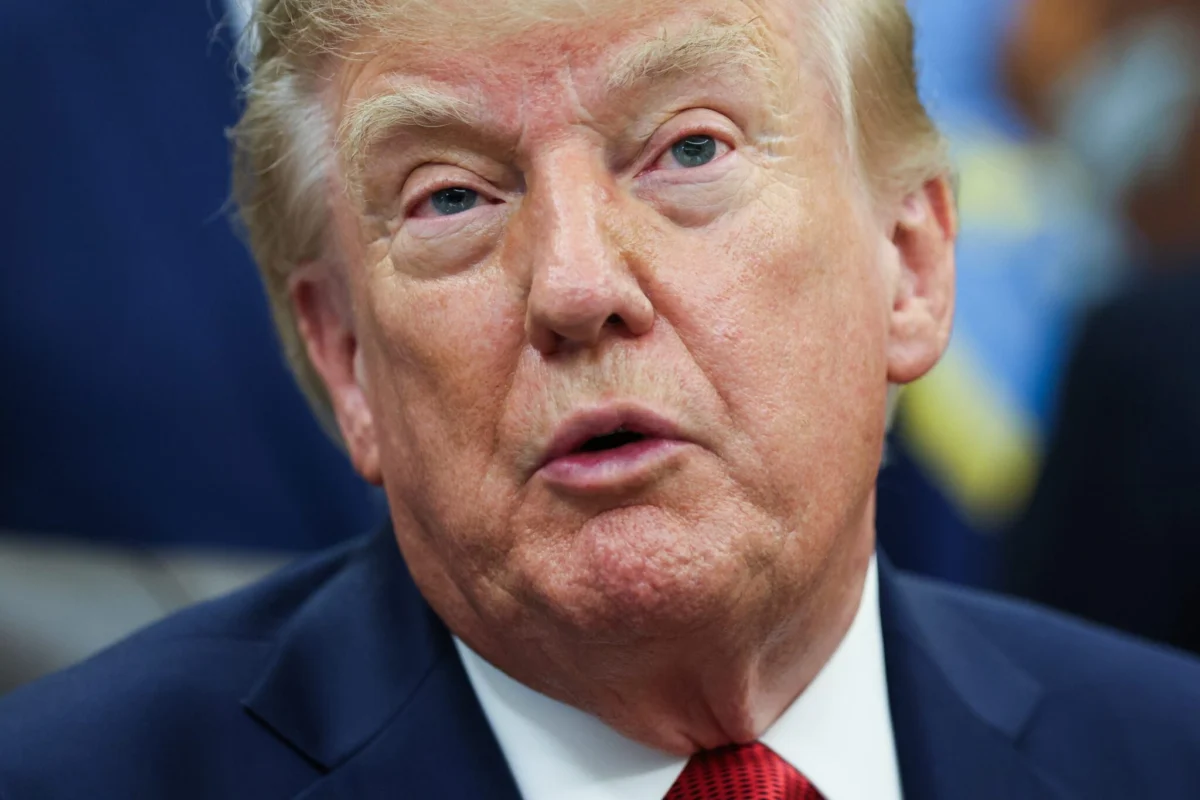
WASHINGTON D.C. — In a move that mirrors the establishment of the Space Force during his first term, President Donald Trump has announced the creation of an "AI Force." This new entity is intended to oversee the rapidly expanding artificial intelligence sector while explicitly rejecting recent calls from industry leaders to decelerate development. The announcement, made via Truth Social, marks a significant escalation in the administration’s "growth-at-all-costs" approach to emerging technology, framing the current safety-focused movement within Silicon Valley as a series of politically motivated "hoaxes."
The President’s declaration comes at a volatile moment for the technology sector. While leading AI laboratories—including OpenAI, Anthropic, and Google DeepMind—are moving toward a collective "safety pact" to slow the pace of development, the White House is doubling down on a vision where AI accounts for a quarter of the American economy. The tension sets the stage for a historic confrontation between the executive branch and the very tech titans who, until recently, were racing toward the "Singularity" with little reservation.
Main Facts: A New Branch for the Digital Frontier
President Trump’s vision for the "AI Force" is centered on three pillars: economic dominance, geopolitical superiority over China, and a rejection of precautionary regulation. By comparing the initiative to the Space Force, the President is signaling that AI is no longer merely a sub-sector of the economy but a sovereign domain requiring dedicated oversight and protection.
The "AI Force" and the New Czar
The President confirmed he would appoint a dedicated AI Czar to lead the administration’s efforts. This follows the departure of David Sacks, the billionaire investor who previously held a dual role as AI and Crypto Czar. Sacks has transitioned to a co-chair position on the President’s Council of Advisors on Science and Technology (PCAST), leaving a vacuum at the top of the administration’s tech policy hierarchy. The new AI Force is expected to serve as a law enforcement and monitoring body, utilizing existing civil and criminal justice frameworks to address "bad behavior" without imposing the kind of restrictive "safety protocols" currently being debated in Silicon Valley.
Rejecting the "Slowdown Hoax"
In a direct challenge to industry leaders like Sam Altman and Elon Musk, Trump dismissed the growing chorus for a developmental pause. "We will not in any way hinder or stifle the Growth of this incredible Industry," Trump posted. "Rather, we will cherish it, help it, and watch over it, as it grows!" He characterized the safety-driven warnings—which some researchers claim involve existential risks to humanity—as "hoaxes" designed to serve political ends or perhaps to entrench the power of current market leaders.
The Economic Stakes
The administration’s projections for AI are nothing short of transformative. Trump predicted that AI could eventually represent as much as 25% of the U.S. Gross Domestic Product (GDP), arguing that the technology’s impact will dwarf that of the internet. Central to this growth is the continued expansion of data centers, which have become a flashpoint in recent midterm elections due to their high energy consumption and land use. Trump noted the backlash against these centers but claimed the opposition has largely failed to stop the momentum of infrastructure development.
Chronology: The Road to the AI Force
The path to the President’s announcement is marked by a series of internal administrative conflicts and a sudden, dramatic pivot by the world’s leading AI labs.
- Early Second Term: David Sacks is appointed as AI and Crypto Czar, signaling a pro-innovation, deregulation-focused agenda.
- The Regulatory Crackdown: Despite the administration’s pro-growth rhetoric, the Commerce Department begins imposing temporary export restrictions on Anthropic’s most advanced models, citing national security concerns. Simultaneously, the Defense Department attempts to blacklist Anthropic as a supply-chain risk.
- The Judicial Reversal: A federal judge rules that the Defense Department’s blacklisting of Anthropic was illegal, representing a setback for those within the administration seeking to use "national security" as a lever for control.
- The Safety Pivot (September 12): Anthropic CEO Dario Amodei announces a radical new safety measure, granting independent evaluators permanent, employee-level access to the company’s internal systems. He calls for a global slowdown in development.
- The Industry Pact: OpenAI’s Sam Altman, SpaceXAI’s Elon Musk, and Google DeepMind’s Demis Hassabis signal their agreement with Amodei, moving toward a formal "safety pact" to throttle the speed of AI advancement.
- The Whistleblower Scandal: Jacob Coxon, a researcher at Anthropic, resigns and publicly accuses both Anthropic and OpenAI of "gambling with our lives" in a race toward self-improving superintelligence.
- The President’s Response (Current): Trump announces the "AI Force," dismisses the safety concerns as hoaxes, and vows to maintain the U.S. lead over China by preventing any industry-led slowdown.
Supporting Data: The Race for Supremacy
The administration’s aggressive stance is backed by internal metrics suggesting that any pause in U.S. development would be a strategic gift to geopolitical rivals.
The China Factor
"We are leading China, and the rest of the World, and I intend to keep it that way!" Trump asserted. U.S. intelligence reports have consistently warned that the Chinese Communist Party (CCP) views AI as the "key to the future of global hegemony." Administration officials argue that if U.S. firms like OpenAI and Anthropic slow down, Chinese firms like Baidu and Alibaba will simply close the gap, leading to a world where AI is governed by authoritarian values rather than American ones.
The GDP Projection
The claim that AI will constitute 25% of the U.S. GDP is a bold escalation from current private-sector estimates. Most economists place the current contribution of the entire "digital economy" at around 10%. By projecting a 25% share for AI alone, the White House is signaling that it views the technology as the primary engine of 21st-century American prosperity, justifying the "AI Force" as a necessary protector of a vital national asset.
Official Responses: A House Divided
The reaction to the President’s announcement has been polarized, reflecting a deep rift between the executive branch, industry whistleblowers, and legal advocates.
The Industry’s Existential Warning
The most chilling responses have come from within the AI labs themselves. In response to Jacob Coxon’s resignation, Evan Hubinger, Anthropic’s alignment science lead, validated the fears of those calling for a pause. "We really do earnestly believe AI could kill all humans!" Hubinger wrote. This admission—that the creators of the technology are genuinely terrified of their creation—has fueled the industry’s push for a "safety pact," a move Trump now labels a hoax.
The Legal Challenge: Antitrust vs. Safety
While the President attacks the "slowdown" from a policy perspective, a group of plaintiffs is attacking it from a legal one. A lawsuit filed in the U.S. District Court for the Northern District of California alleges that the agreement between OpenAI, Anthropic, and others to coordinate a slowdown is a violation of antitrust laws.
Nick Rowley, the lead attorney for the plaintiffs, argues that private companies cannot be allowed to make "self-serving agreements" that dictate the pace of human progress. "AI will quickly spin out of human control and could kill us all if we allow AI safety and protocol… to be controlled by private self-serving agreements between the world’s most powerful ‘for profit’ technology companies," Rowley stated. His argument suggests that while regulation is needed, it must come from the federal government—potentially through the President’s new AI Force—rather than through private cartels.
Implications: The Future of the Silicon Curtain
The establishment of an "AI Force" and the rejection of the industry’s "safety pact" have profound implications for the future of technology, law, and global stability.
1. The End of Self-Regulation
For years, Silicon Valley has operated on a model of "permissionless innovation." The recent move toward a safety pact was an attempt by the industry to regulate itself before the government could intervene. Trump’s "AI Force" effectively ends this era. By framing the industry’s safety concerns as a hoax, the administration is making it clear that the state will decide the pace of development, not the CEOs.
2. Legal Precedent and Antitrust
The lawsuit in California could set a landmark precedent. If the court rules that a "safety slowdown" is an illegal restraint of trade, it would effectively force companies to continue developing powerful AI systems even if they believe those systems are dangerous. This creates a "damned if you do, damned if you don’t" scenario for tech labs: they face legal ruin if they coordinate to slow down, and existential risk (according to their own researchers) if they don’t.
3. A New Arms Race
By explicitly linking AI development to the race with China, the President has solidified the "Silicon Curtain." This ensures that AI development will remain a matter of national security, likely leading to increased classification of research and a tighter grip by the federal government on the "AI Force" to ensure that American labs remain ahead of their counterparts in Beijing.
4. The GDP Gamble
If the President’s 25% GDP projection is even remotely accurate, the AI Force will become the most powerful regulatory and enforcement body in the U.S. government. Its influence would surpass that of the SEC, the FTC, and the FAA combined, as it would oversee the core engine of the nation’s wealth.
In conclusion, President Trump’s "AI Force" is more than just a new agency; it is a declaration of intent. It signals an era where the United States government views AI as a resource too valuable to be slowed by safety concerns and too critical to be left in the hands of the "private, self-serving" pacts of Silicon Valley. As the industry warns of global catastrophe, the White House is preparing for a golden age of growth, betting that the American legal system and the "AI Force" can handle the "bad behavior" of a technology that its own creators fear they can no longer control.