Imagine arriving on Mars as a member of the fourth human expedition. Your mission is not merely to explore, but to endure. You are tasked with establishing the first self-sustaining food supply for a permanent settlement—a necessity for humanity’s survival on a world that has never known a harvest. Your plan does not rely solely on high-tech hydroponics or imported soil; it relies on the microscopic, ancient wisdom of beneficial fungi. Success here could mean the difference between a fragile outpost and a thriving colony, potentially securing your place in history.
While such a scenario feels like the stuff of science fiction, the scientific groundwork is being laid today. Researchers from the United States and Brazil have recently published a landmark review in Frontiers in Astronomy and Space Sciences, positing that fungi may be the missing link in turning the hostile, irradiated regolith of the Moon and Mars into fertile, life-sustaining soil.
The Main Facts: Transforming Dust into Life
At the heart of the challenge is the regolith—the layer of loose, heterogeneous superficial deposits covering solid rock. Unlike Earth’s nutrient-rich topsoil, which is teeming with organic matter, microorganisms, and weathered minerals, extraterrestrial regolith is essentially pulverized rock. It is devoid of the biological "memory" required for plant growth.
Specifically, lunar and Martian regolith suffer from critical deficiencies in nitrogen, potassium, and phosphorus—the "big three" nutrients essential for photosynthesis and structural development in plants. Furthermore, the regolith is often toxic, containing perchlorates on Mars and sharp, glass-like dust on the Moon that can damage delicate root systems.
The research team, led by experts in space biology, suggests that beneficial fungi could act as a biological bridge. By introducing these microorganisms into the regolith, astronauts could initiate a process of "bioremediation" and "pedogenesis" (soil formation). Fungi do not just occupy space; they actively modify their environment, cycling nutrients and creating a rhizosphere—a zone of root influence—where plants can thrive despite the harsh extraterrestrial conditions.
Chronology: From Earth’s Soil to the Final Frontier
The marriage of mycology and space exploration is a logical evolution of botany, a field that has seen significant breakthroughs over the last two centuries.
- Mid-19th Century: The discovery of arbuscular mycorrhizal fungi (AMF) revolutionized botany. Scientists began to understand that plants do not live in isolation; they exist in a symbiotic dance with fungal networks.
- The Space Age (1960s–1990s): Early space experiments focused on whether plants could grow in microgravity at all. While successful, these tests relied on Earth-based fertilizers and hydroponic systems, which are unsustainable for long-term colonization due to the massive weight of supplies.
- 2000–2015: Experiments aboard the International Space Station (ISS) began to test the resilience of various microbes in space. Scientists observed how fungi responded to radiation and cosmic rays, noting that some species showed remarkable adaptability.
- 2018–2023: As space agencies shifted focus toward the Artemis program (returning to the Moon) and eventual Mars missions, the focus shifted to "In-Situ Resource Utilization" (ISRU). The goal became clear: we must grow food using what is already there.
- 2024: The publication of the Frontiers review marks a critical milestone, moving the conversation from theoretical possibility to a proposed roadmap for integrated space agriculture.
Supporting Data: Why Fungi?
The research highlights several key fungal candidates, most notably Trichoderma and various species of the phylum Glomeromycota (AMF). The data supporting these choices is compelling:
Nutrient Mobilization
Fungi function as an extension of a plant’s root system. AMF, in particular, form a network of hyphae—thin, thread-like filaments—that can reach deep into the microscopic pores of regolith particles. These hyphae secrete organic acids and enzymes that "unlock" locked-up minerals, making phosphorus and potassium bioavailable to the plant.
Mitigating Abiotic Stress
Plants in space face extreme abiotic stressors: high levels of ultraviolet radiation, dramatic temperature fluctuations, and the absence of a natural microbiome. The study notes that fungi provide a protective barrier. They help regulate plant water uptake and improve the plant’s physiological response to salinity and heavy metal toxicity, both of which are common in lunar and Martian substrates.
Structural Improvement
Beyond chemistry, fungi improve the physical structure of the substrate. As they grow and die, they deposit organic carbon into the regolith. This creates a more stable, porous structure, which is essential for oxygenating the roots and preventing the "compacting" effect that often kills crops in non-organic media.
Official Responses: The Scientific Community’s View
The scientific community has reacted with cautious optimism. Dr. Maria Elena Rossi, a lead contributor to the review, stated, "We are not talking about simply planting seeds in dirt. We are talking about engineering a new, functional ecosystem from scratch. The fungi are the architects of this transition."
However, the team is quick to temper expectations. "While our review provides a strong theoretical framework, the jump from laboratory simulations to the actual surface of Mars is a chasm," the authors note. "We have worked primarily with ‘regolith simulants’—Earth-based materials that mimic the chemical and physical properties of Martian soil. We have yet to see how these fungi interact with the genuine article, which carries unique mineralogical and radiation-hardened properties."
NASA and ESA researchers have echoed these sentiments, emphasizing that while the strategy is sound, the next phase must involve "precursor missions." These missions would involve sending automated fungal-culture pods to the lunar surface to test if these microorganisms can survive the transit and initial deployment in a vacuum-adjacent environment.
Implications: The Path to Human Settlement
The implications of this research are profound, touching on everything from mission logistics to the psychology of the first Martian settlers.
1. Logistics and Sustainability
The "tyranny of the rocket equation" dictates that every kilogram sent from Earth costs thousands of dollars. Reducing the reliance on imported fertilizers and soil-substitutes by even 20% would save billions in mission costs. By empowering astronauts to grow their own food, missions become longer, safer, and more capable of true exploration.
2. Psychological Well-being
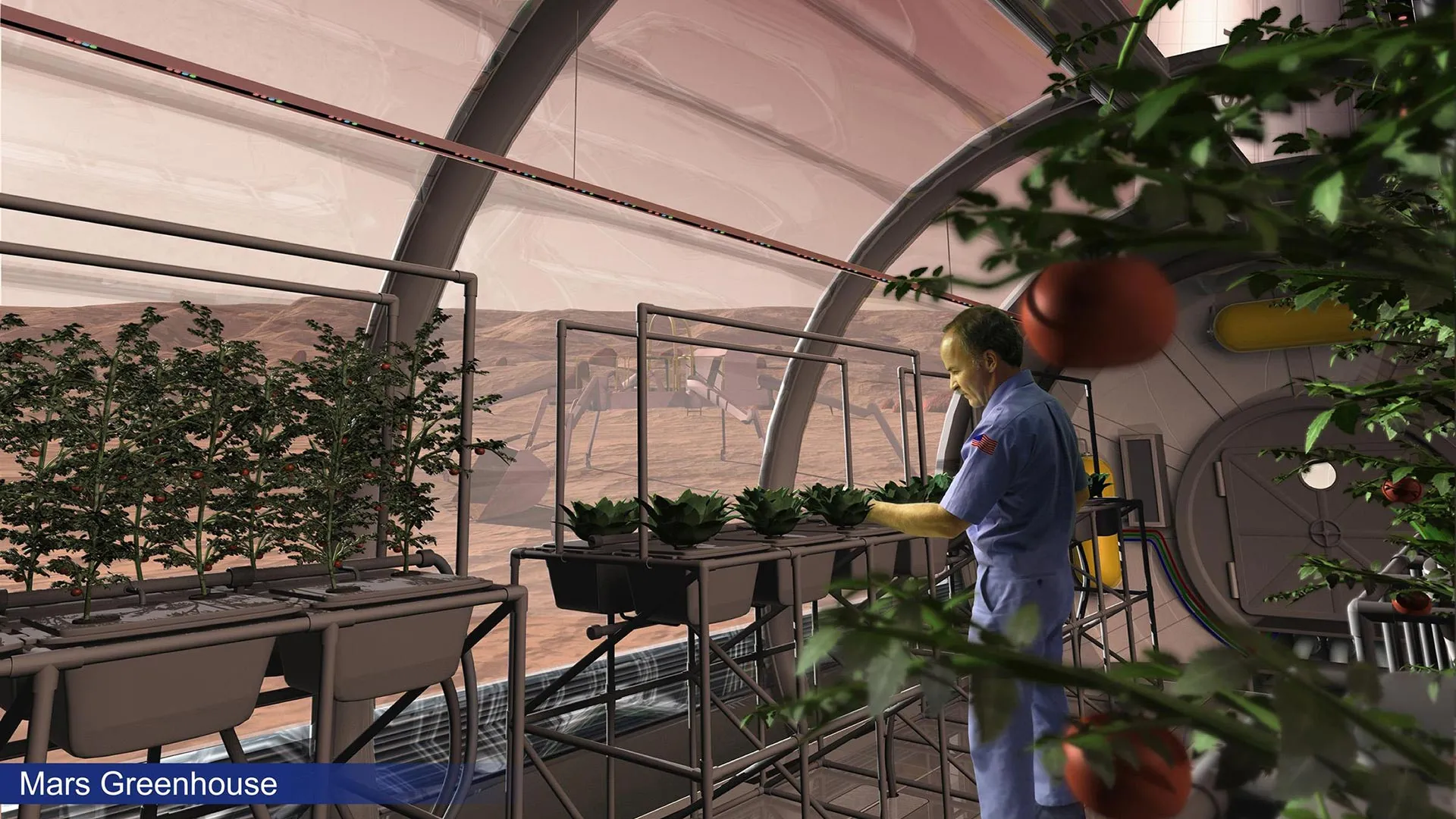
There is an intangible value to gardening in space. The psychological benefit of caring for living, growing things in the sterile, metallic environment of a space habitat cannot be overstated. A "greenhouse" on Mars is not just a food source; it is a vital connection to the biological heritage of Earth.
3. Ethical Considerations
The study also touches upon the "engineered microbiome." By introducing Earth-based fungi to Mars, we are effectively engaging in a form of planetary engineering. While the primary goal is local agriculture, scientists must carefully consider the risk of "forward contamination"—the accidental spread of Earth organisms to the Martian environment, which could complicate the search for indigenous life. The researchers argue that these fungi would be contained within sealed, controlled agricultural environments, minimizing the risk to the broader Martian ecosystem.
4. A Strategic Enhancement
The concluding remarks of the study serve as a manifesto for the next generation of space explorers: "Including plant growth-promoting fungi into lunar or Martian regolith-based agriculture systems would present a strategic enhancement to space crop production and the establishment of human settlements beyond Earth."
This isn’t just about growing a salad; it’s about the fundamental chemistry of life. The fungi mentioned—Trichoderma and Glomeromycota—are not just microbes; they are the frontline infantry in humanity’s bid to become a multi-planetary species.
Looking Forward: The Harvest of Tomorrow
As we look to the coming decades, the dream of a "Mars-grown" meal is moving closer to reality. The research serves as a reminder that the most advanced technologies of the future may be those that have existed for millions of years on Earth. By harnessing the symbiotic power of fungi, we may be able to turn the red, desolate plains of Mars into a vibrant, living garden.
For the future astronaut, this means the mission will not be defined merely by the hardware they pilot, but by the living soil they help create. It is a testament to the resilience of life and the ingenuity of the human spirit—that even on a world millions of miles from home, we will bring the earth with us, one fungal spore at a time. The road to colonization is paved with many challenges, but with the right biological partners, the prospect of a permanent, sustainable human presence in the stars is no longer a question of "if," but "when."