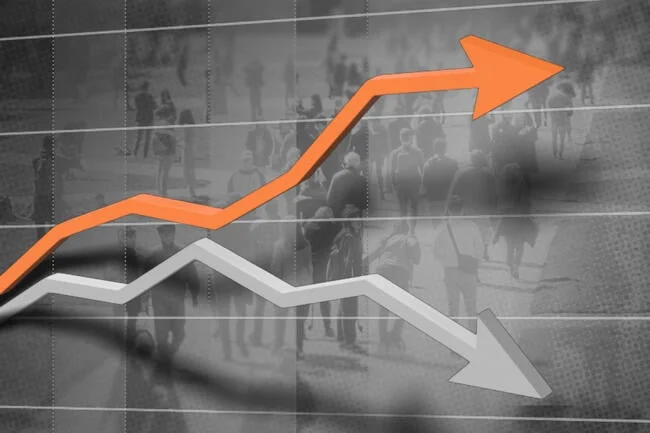
The American higher education sector is currently navigating a period of profound volatility. According to the latest end-of-season report released by the Common App, the 2025–26 application cycle has revealed a stark divergence in enrollment trends: while domestic interest continues to show resilient, albeit modest, growth, the pipeline for international students has suffered a significant, historic contraction.
The report, which aggregates data from 1,146 member institutions—representing a substantial cross-section of U.S. public and private four-year colleges—indicates that total first-year applicants reached 1.5 million. This represents a 2 percent year-over-year increase. However, beneath this headline figure lies a troubling trend for global outreach efforts: international applications have plummeted by 10 percent, amounting to a loss of approximately 16,000 prospective students.
A Decisive Break from a Decade of Growth
For the better part of the last ten years, international enrollment was one of the most reliable growth engines for American universities. Between the 2016–17 and 2024–25 cycles, the number of international applicants to Common App institutions surged from roughly 90,000 to nearly 165,000 annually.
The 2025–26 data marks a sharp reversal, with the applicant pool shrinking to 148,000. This is not merely a statistical fluctuation; it is a structural break from a long-standing upward trajectory. The impact is geographically broad, with the regions that typically feed the largest cohorts of international talent—Asia and Africa—experiencing the most dramatic pullbacks. Applications from students in Asia fell by 11 percent, while those from Africa dropped by 17 percent.
The Policy Backdrop: Immigration and Uncertainty
Industry experts and policy analysts point to the current geopolitical climate and the Trump administration’s immigration stance as the primary catalysts for this decline. The administration has implemented a series of rigorous policies that have fundamentally altered the landscape for prospective international students.
A Chronology of Policy Pressure
- Increased Visa Scrutiny: Throughout 2025, the administration ramped up efforts to revoke existing student visas, citing national security and administrative oversight concerns.
- The "Duration of Status" Conflict: A contentious move to end "duration of status" for student visas has created widespread anxiety. This policy seeks to limit the time international students can remain in the U.S., forcing them to apply for extensions more frequently—a process that is both costly and unpredictable.
- Reduced Approvals: Reports from the Department of Homeland Security indicate that the approval rate for new student visa applications has tightened significantly, creating a "chilling effect" on prospective applicants who fear the sunk costs of application fees and tuition will be wasted if their entry is denied.
Rodney Hughes, a senior data scientist at Common App, emphasized that the decline is rooted in student psychology. "We have to differentiate between applications and enrollments," Hughes explained. "If a student perceives that obtaining a visa will be an arduous or unlikely process, they will simply choose not to apply. The barrier to entry has become a barrier to ambition."
Economic and Institutional Implications
The consequences of this decline extend far beyond campus demographics. International students are a critical source of revenue for many institutions, often paying full tuition rates that subsidize research and operations.
Recent projections suggest that the loss of international talent could result in a $34 billion hit to the U.S. economy. Furthermore, the Department of Homeland Security’s own metrics from the 2025–26 academic year show an average 13 percent decrease in international enrollment, with current estimates suggesting that 112,000 fewer international students will grace U.S. campuses this coming fall. For universities already struggling with rising operational costs, this "international brain drain" threatens the financial viability of many graduate programs and specialized departments.

Domestic Resilience: The Changing Face of the Applicant Pool
While the international outlook remains grim, the domestic picture offers a more nuanced, and in some ways optimistic, story. As colleges scramble to recruit from a shrinking pool of traditional-age high school graduates, the Common App data reveals that institutions are successfully reaching previously underserved demographics.
Growth in Underserved Populations
The increase in applicants is being driven by specific segments of the domestic population:
- Low-Income Students: The number of students qualifying for application fee waivers increased by 6 percent. Furthermore, applications from students residing in ZIP codes below the national median income level rose by 8 percent—four times the rate of growth seen in other applicant groups.
- Black and Latinx Representation: Among racial and ethnic groups, Black applicants saw the most significant growth at 8 percent. In contrast, applications from white students grew by 2 percent, and Latinx applicants saw a 3 percent increase.
- The Rural/Small Town Push: There is a distinct shift toward geographic diversity. Applications from small towns increased by 9 percent, while rural applications grew by 8 percent. This suggests that targeted recruitment efforts toward non-metropolitan areas are beginning to yield results.
The "Yield" Challenge
Despite these gains, the 2 percent overall increase in domestic applicants masks a hyper-competitive environment. On average, each student applied to seven colleges, resulting in more than 10 million total applications processed through the Common App. This "application inflation" creates a complex problem for admissions offices: they are seeing more applications, but the "yield"—the percentage of accepted students who actually enroll—remains difficult to predict.
For university administrators, the mandate is clear: they must find ways to balance the lost revenue from international students with the rising costs of recruiting and supporting a more diverse domestic student body. The shift in demographics, while positive for access and equity, requires significant investment in financial aid, support services, and specialized outreach.
Looking Ahead: The Future of Global Higher Education
The 2025–26 cycle serves as a cautionary tale for American higher education. The sector has long relied on its status as a global destination for talent, but that status is increasingly threatened by a combination of restrictive immigration policies and the growing attractiveness of alternative study-abroad destinations.
As universities head into the next cycle, the challenge will be two-fold. First, they must advocate for policies that clarify the path for international students, ensuring that the U.S. remains a competitive destination for the world’s brightest minds. Second, they must continue to refine their domestic recruitment strategies to reach the students who, despite the demographic downturn, are eager to pursue higher education.
The Common App data is a mirror reflecting a nation in transition. While domestic growth provides a foundation for stability, the retreat of international interest is a warning sign that the global connectivity of American universities—and their resulting economic and intellectual vitality—cannot be taken for granted. In the coming years, the institutions that thrive will be those that can successfully navigate the delicate balance between domestic accessibility and global engagement.