By Global Affairs Desk
Updated: July 21, 2026 – 07:46 GMT
The Middle East stands on the precipice of a full-scale regional conflagration following a dramatic escalation in hostilities between the United States and the Islamic Republic of Iran. In the early hours of Tuesday, July 21, 2026, Iran’s Islamic Revolutionary Guard Corps (IRGC) announced that it had successfully executed a series of precision strikes against U.S. military installations across the Persian Gulf.
The move marks a direct response to a coordinated overnight offensive launched by U.S. forces, which targeted Iranian command-and-control centers. As the diplomatic landscape fractures, the Strait of Hormuz—a vital artery for global energy supplies—has become the focal point of the most dangerous military standoff in decades.
Main Facts: The Night of Fire
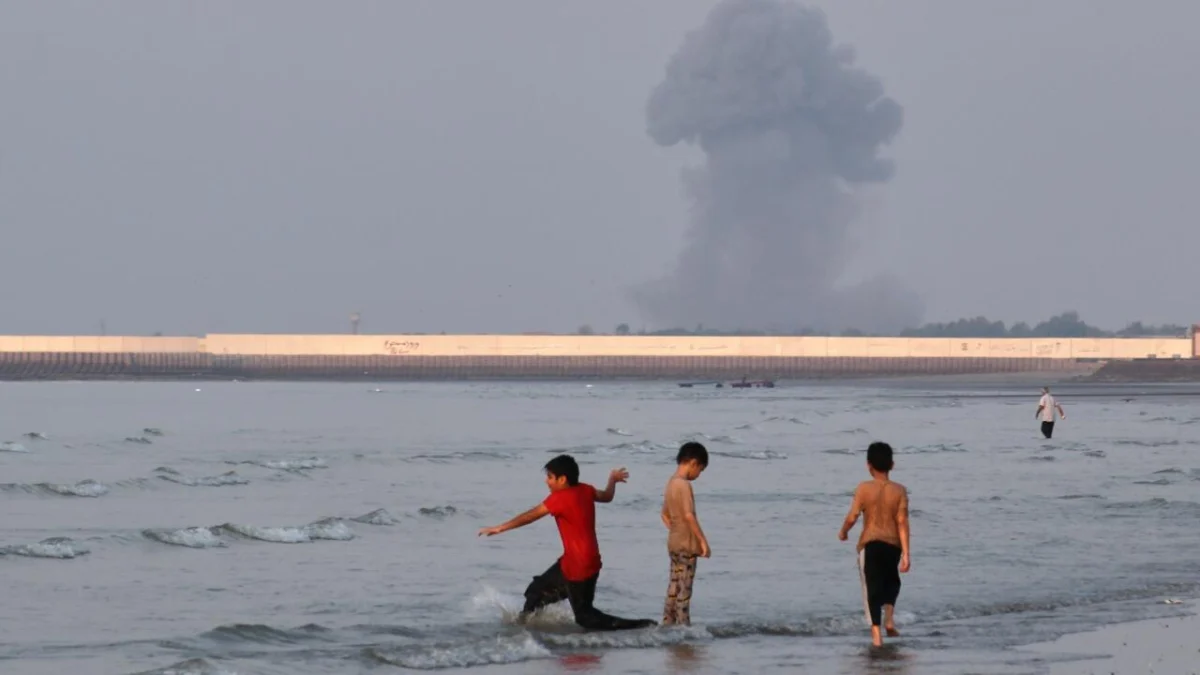
According to reports from the state-run IRNA news agency, the IRGC claimed credit for launching a barrage of ballistic missiles and long-range drones against U.S. air defense systems and radar installations stationed in Bahrain and Kuwait. The strikes, which reportedly occurred in the pre-dawn hours, represent a significant expansion of the theater of war, extending beyond Iranian soil into the sovereign territory of U.S. treaty allies.
Pentagon officials have confirmed that their facilities in the region were subjected to "significant hostile action," though they have yet to release a full accounting of casualties or the extent of the infrastructure damage. The U.S. military, however, maintains that its initial overnight strikes were a necessary "punitive measure" following the deaths of U.S. service members in a prior engagement earlier this week.
"We are currently assessing the impact of these strikes," a senior U.S. defense official stated under condition of anonymity. "Make no mistake: the United States will defend its personnel, its allies, and its interests with overwhelming force."
Chronology of the Crisis: A Rapid Descent
To understand the gravity of the current situation, one must look at the sequence of events that has dismantled regional stability over the last 72 hours:
- July 18, 2026: Tensions peak following an incident in the Strait of Hormuz involving a U.S. naval vessel and Iranian fast-attack craft, resulting in the loss of U.S. personnel.
- July 19, 2026: Washington announces a policy of "calculated retribution," signaling that a military response is imminent. Regional allies in the Gulf Cooperation Council (GCC) express deep concern over the potential for collateral damage.
- July 20, 2026 (Night): U.S. Air Force and Navy assets launch a series of surgical strikes targeting IRGC command centers, intelligence hubs, and missile storage facilities within Iran.
- July 21, 2026 (02:50 GMT): Iran officially announces its retaliation, claiming strikes on U.S. infrastructure in Bahrain and Kuwait.
- July 21, 2026 (05:46 GMT): Markets react with extreme volatility as oil prices surge amidst fears of a prolonged blockade of the Strait of Hormuz.
Supporting Data: The Strategic Calculus
The geography of this conflict is defined by the Strait of Hormuz, through which roughly 20% of the world’s total petroleum consumption passes daily. The decision by the IRGC to target radar installations in Bahrain and Kuwait—home to the U.S. Fifth Fleet and Camp Arifjan, respectively—is a calculated attempt to blind U.S. air defense umbrellas (such as the Patriot and THAAD systems) before any subsequent waves of attacks.
Military analysts point out that Iran’s reliance on "swarming" drone tactics and short-to-medium-range ballistic missiles is intended to overwhelm conventional defense systems. By targeting the "eyes" of the U.S. military—its radar arrays—Iran is attempting to level the playing field against a superior conventional air force.
Conversely, the U.S. strategy appears focused on decapitating the IRGC’s ability to command its regional proxies. By targeting command-and-control nodes, Washington is attempting to disrupt the chain of command that links Tehran to its various allied militias throughout the Levant and the Gulf.

Official Responses: A Diplomatic Vacuum
The international community has reacted with a mixture of alarm and urgent calls for de-escalation.
- The United States: President Joe Biden (or the sitting administration) has convened an emergency meeting of the National Security Council. The White House press secretary stated that the President is being updated in real-time and that "the security of the American people is the paramount objective."
- Iran: The Iranian Foreign Ministry issued a statement via IRNA asserting that the strikes were a "legitimate exercise of the right to self-defense" under Article 51 of the UN Charter. Tehran warned that any further U.S. aggression would lead to an "uncontrollable regional catastrophe."
- Regional Allies: Saudi Arabia, the UAE, and Qatar have urged both parties to exercise maximum restraint. There is a palpable fear in these capitals that their own critical infrastructure could become accidental casualties of a wider U.S.-Iran conflict.
- Global Powers: Both Beijing and Moscow have called for an immediate ceasefire, with Russian diplomats emphasizing that the current situation is the result of years of "failed containment policies."
Implications: The Long Shadow of Conflict
The implications of these strikes are profound and extend far beyond the immediate military theater.
1. Energy Security and Economic Fallout
The immediate rise in oil prices is only the tip of the iceberg. Should the Strait of Hormuz be closed or even partially restricted by mining or naval combat, the global economy faces a supply-side shock not seen since the 1970s. Businesses worldwide are bracing for a period of extreme inflationary pressure.
2. The Future of the "Gray Zone"
For years, the U.S.-Iran conflict has been fought in the "gray zone"—cyber warfare, proxy attacks, and maritime harassment. The transition to direct, state-on-state kinetic warfare marks a fundamental shift. Both nations have effectively crossed the Rubicon, making a return to the status quo ante significantly more difficult.
3. Domestic Political Stakes
In Washington, the administration faces immense pressure to project strength without inviting a wider war that the American public is likely to oppose. In Tehran, the regime faces the challenge of maintaining internal cohesion and economic stability while managing a high-intensity military confrontation that could threaten its hold on power.
4. Humanitarian Concerns
As the rhetoric of "total victory" replaces diplomacy, the civilian population of the region remains the most vulnerable. Humanitarian organizations are warning of a potential refugee crisis and the disruption of essential services should the conflict expand into urban areas or result in a sustained campaign of bombardment.
Conclusion: The Path Ahead
As the sun rises over the Persian Gulf on July 21, the world watches with bated breath. The situation remains fluid, and the risk of miscalculation is at an all-time high. With communication channels between Washington and Tehran largely severed, the potential for a localized skirmish to spiral into a global war of attrition is the defining challenge of the current geopolitical era.
The coming hours will be critical. If the U.S. responds with a second, larger wave of strikes, or if Iran decides to escalate by targeting commercial shipping, the international community may find itself unable to pull the region back from the brink. For now, the "live" status of this conflict serves as a grim reminder that in the volatile waters of the Strait of Hormuz, peace is often as fragile as the glass-calm surface of the sea.
This report will be updated continuously as more information becomes available. Follow our liveblog for real-time updates from our correspondents in Bahrain, Kuwait, and Washington.