Introduction: A Call for Accountability
Amnesty International issued a stern, urgent appeal on Friday, calling upon authorities and forces affiliated with Hamas in the occupied Gaza Strip to immediately cease the practice of extrajudicial executions. The organization’s latest intervention highlights a harrowing trend of summary killings targeting individuals suspected of collaborating with Israel. As the Gaza Strip continues to navigate the aftermath of three years of intense conflict, the erosion of judicial oversight has left a power vacuum that armed factions are filling with lethal, extrajudicial violence.
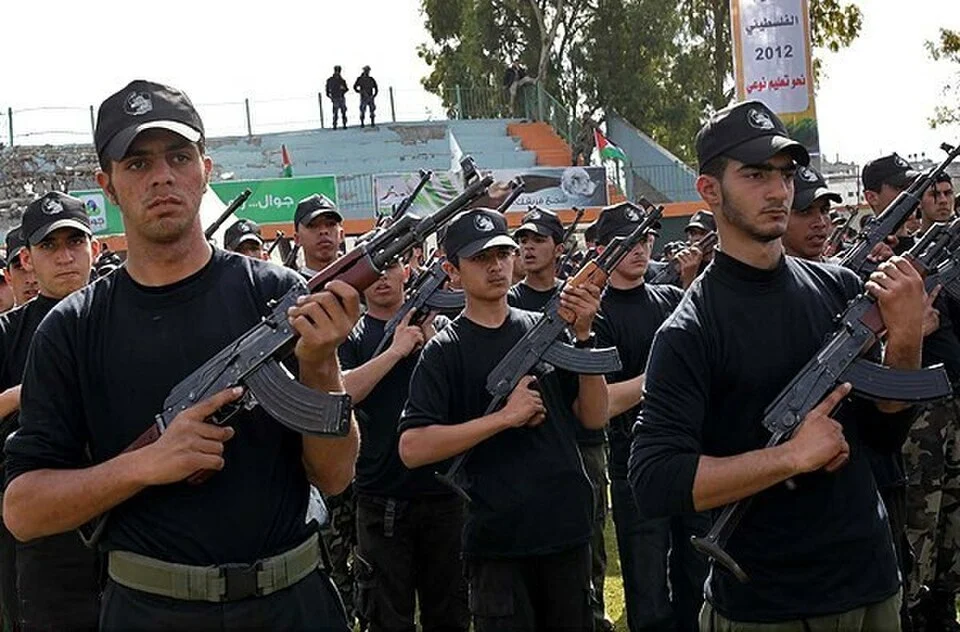
Amnesty’s call follows a series of public announcements by the Al-Qassam Brigades—the military wing of Hamas—confirming the summary execution of individuals accused of collaboration. The organization warns that these actions represent a severe violation of international human rights standards and underscore a broader, systemic failure to protect civilians from arbitrary violence and reprisal.
The Escalating Crisis: Recent Developments
In recent months, the security situation in Gaza has deteriorated, with Hamas security officials utilizing "large-scale security" campaigns to consolidate control. These campaigns have frequently targeted individuals labeled as "informants" or collaborators.
The Al-Qassam Brigades have taken the unusual step of publicizing their lethal operations. In several instances, the group has openly announced the summary execution of detainees, while simultaneously signaling their intent to execute others within a matter of days. These announcements are framed by Hamas as necessary measures to restore law and order in a territory where the traditional judiciary has been decimated by the ongoing conflict.
Despite Hamas officials asserting that they have launched "preliminary investigations" into these incidents, Amnesty International reports that there is zero evidence of genuine accountability. No perpetrators have been arrested, tried, or punished for these killings, creating a climate of total impunity that encourages further abuses.
A Pattern of Violence: Chronology and Data
The current wave of executions is not an isolated phenomenon but rather the continuation of a pattern documented over several years.
Key Milestones in the Human Rights Crisis
- August 2024 – Early 2026: A United Nations report published in June 2026 provided a chilling statistical breakdown of the violence in Gaza. The UN identified at least 249 cases of extrajudicial executions and severe physical violence occurring within this 20-month window. Significantly, at least 60 of these cases were directly linked to Hamas-affiliated forces.
- October 2025 (Post-Ceasefire): Following the October 2025 ceasefire between Israel and Hamas, there was a surge in domestic violence and settling of scores. Amnesty International documented at least nine distinct extrajudicial executions and unlawful killings during this period.
- October 2025 (The Dughmush Case): One of the most documented and harrowing instances involved members of the Dughmush family. These individuals were publicly executed in Gaza after being accused of collaboration. According to family members, the men had surrendered to Hamas authorities under the express guarantee that they would be granted a fair trial. Instead, Amnesty verified video evidence showing the men—blindfolded and shackled—being shot at close range in a public square.
The data suggests that as the formal state apparatus in Gaza has weakened, the reliance on extrajudicial, military-led "justice" has become a normalized tool for enforcing control and punishing perceived dissent or betrayal.
Official Responses and Justifications
The response from Hamas authorities to these allegations has remained consistent: they frame these killings as the regrettable but necessary price of security in a war-torn territory.
The Hamas Perspective
Hamas officials argue that the near-total collapse of police forces, civilian courts, and the public prosecution system—caused by nearly three years of sustained bombardment and urban warfare—has left them with few options to maintain public order. From their viewpoint, "collaborators" represent an existential threat that undermines the group’s resistance efforts and jeopardizes the safety of the entire population. They contend that the summary nature of these punishments serves as a deterrent in a lawless environment.
The Amnesty International Rebuttal
Human rights organizations, led by Amnesty International, flatly reject this justification. Erika Guevara-Rosas, Senior Director for Research, Advocacy, Policy, and Campaigns at Amnesty International, issued a powerful rebuke of the Hamas strategy:
"Nearly three years into Israel’s ongoing genocide against Palestinians in the occupied Gaza Strip, the traumatized civilian population has already endured unimaginable suffering and cannot be subjected to further killings, abuses, and cruelty. The Hamas authorities must immediately halt all unlawful killings, acts of vigilantism, and arbitrary arrests."
Guevara-Rosas emphasized that the absence of a functioning court system is not a legal or moral license to bypass due process. "Restoring law and order must never serve as a cover to commit grave human rights violations, carry out reprisals, or to collectively punish entire families," she added.
Legal and Ethical Implications
The fundamental issue at the heart of this crisis is the question of international obligations. Regardless of the internal collapse of governance or the state of the conflict with Israel, Hamas-affiliated forces remain bound by international human rights standards.
The Failure of Due Process
International law is clear on the matter of life and liberty. The right to a fair trial is a non-derogable right, particularly when a person’s life is at stake. The systematic bypass of judicial procedures—where individuals are detained, tried by non-judicial military wings, and executed without an opportunity to present a defense—constitutes a clear breach of international humanitarian law.
The Danger of Collective Punishment
The use of these executions often targets not just individuals, but their extended families, serving as a form of collective punishment. When a faction executes someone accused of collaboration, the stigma and the threat often extend to the family members, who may face further harassment, detention, or expulsion. This practice creates a cycle of vengeance that further destabilizes an already fragile social fabric.
The Role of Independent Investigation
Amnesty International is calling for more than just a cessation of hostilities; they are demanding:
- Impartial Oversight: The establishment of independent and impartial investigations into all extrajudicial killings conducted since 2024.
- Accountability Mechanisms: The identification and prosecution of those who ordered and carried out the summary executions.
- Restoration of Rule of Law: A commitment to rebuilding a transparent judicial system that adheres to basic human rights, ensuring that accusations of collaboration are handled through legal channels rather than through the barrel of a gun.
Conclusion: A Future at Stake
The situation in the Gaza Strip remains a catastrophic humanitarian emergency. While the international community remains largely focused on the external violence of the ongoing war, the internal violence being perpetrated by local authorities is creating a secondary, domestic crisis that is equally devastating.
As Amnesty International warns, the efforts to restore order in Gaza must not come at the expense of the basic legal protections that define a civilized society. If Hamas continues to prioritize summary retribution over the rule of law, they risk losing the very legitimacy they claim to be defending. The international community is being urged to keep pressure on all actors in Gaza to ensure that the "traumatized civilian population" is not left to the mercy of vigilante groups and paramilitary violence. The call for justice is not merely a legal request; it is an urgent plea for the survival of the human rights culture in a region that has seen far too much death.