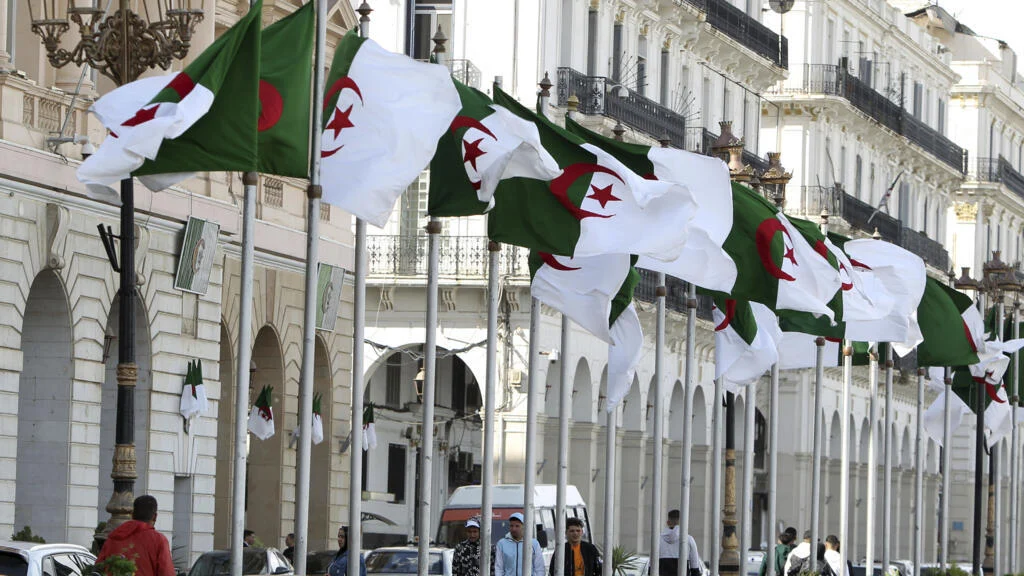
In a move that marks a tectonic shift in North African and Middle Eastern diplomacy, Algeria announced on Thursday the formal severance of diplomatic relations with the United Arab Emirates (UAE). State media reported that Algiers had reached the “exhaustion of all means” to preserve bilateral ties, citing a persistent pattern of what it termed “provocative and hostile actions” emanating from Abu Dhabi. The decision, which includes a 48-hour ultimatum for the UAE ambassador to depart Algerian soil, represents the culmination of years of escalating friction, mutual suspicion, and public rhetoric that has brought the two nations to a definitive breaking point.
The Breaking Point: A Diplomatic Ultimatum
The Algerian Ministry of Foreign Affairs issued the directive on Thursday, signaling a total suspension of formal diplomatic interaction. By mandating that the UAE’s representative vacate the country within 48 hours, Algeria has effectively closed the door on immediate de-escalation efforts.
The announcement, carried by Algerian state media, described the move as a necessary response to the UAE’s alleged interference in Algerian sovereignty. While the specifics of the “provocative actions” were not detailed in the initial announcement, the narrative provided by Algiers focuses on a perceived pattern of destabilization. For the UAE, the sudden expulsion of its top diplomat presents a significant challenge to its regional influence, particularly as Abu Dhabi has sought to position itself as a central broker in Middle Eastern and North African (MENA) affairs. As of the time of publication, the UAE Foreign Ministry has remained notably silent, with no immediate response to requests for comment regarding the diplomatic rupture.
A Chronology of Declining Relations
The collapse of Algerian-UAE relations did not happen overnight; it is the result of a long-term erosion of trust that can be traced back several years.
2013–2019: The Foundation of Friction
While the two nations signed an air services agreement in Abu Dhabi in May 2013—an agreement that Algeria recently moved to formally cancel—the underlying geopolitical visions of the two states began to diverge shortly thereafter. As the UAE pursued an aggressive foreign policy involving interventionism in regional conflicts, Algeria maintained its traditional stance of non-interference and strict adherence to sovereign neutrality.
2022–2023: The Rhetoric Sharpens
The friction moved from behind-the-scenes diplomatic cables to the public stage under the administration of President Abdelmadjid Tebboune. Throughout 2023, Tebboune began to signal that the UAE was an outlier in his administration’s Gulf policy. In various public addresses, he pointedly contrasted the “brotherly” relations Algeria enjoys with Saudi Arabia, Kuwait, Oman, and Qatar against a “fifth” unnamed Gulf state, which he accused of sowing discord within the Arab world.
2024: The Final Descent
The escalation reached a fever pitch in February 2024, when the Algerian government initiated the formal cancellation of the 2013 air services agreement. This was viewed by political analysts as a symbolic precursor to the current diplomatic break. Tebboune’s rhetoric, which frequently characterized the UAE as a “micro-state” or “statelet” with a “very negative impact” on regional stability, signaled that the Algerian leadership was no longer interested in diplomatic niceties. His assertion in a July televised interview—that “wherever they [the UAE] set foot, blood flows”—served as the rhetorical point of no return.
The Geopolitical Context: Why the Rift?
The reasons behind this schism are multi-faceted, rooted in ideological differences, regional competition, and divergent views on the role of Arab states in the global order.
Sovereignty and Non-Interference
Algeria, shaped by its history of anti-colonial struggle, places a premium on national sovereignty and the principle of non-intervention. In contrast, the UAE has, over the past decade, utilized its significant financial and military resources to shape outcomes in regional conflicts, from Libya to the Horn of Africa. For Algiers, this interventionist policy is viewed as an existential threat to regional stability and an affront to the concept of the nation-state.
The Libyan Proxy Conflict
A significant, though often understated, driver of the tension is the situation in Libya. Algeria and the UAE have historically supported different factions and visions for the future of their shared neighbor. While Algeria has consistently pushed for an inclusive, intra-Libyan dialogue, it has frequently accused the UAE of backing specific military actors and fueling instability, thereby undermining the Algerian-led peace initiatives.
Differing Visions for the Arab World
President Tebboune has positioned himself as a defender of the traditional Arab order, often criticizing the UAE’s normalization efforts with regional rivals and its willingness to bypass traditional Arab consensus mechanisms. Tebboune’s public statements suggest that Algeria views the UAE’s foreign policy as a disruptive force that creates "deep divisions" within the Arab world—a sentiment he cited as the primary reason he had delayed this diplomatic break until now.
Implications for the Region
The severance of ties between two significant Arab nations carries profound implications for the geopolitical landscape of the MENA region.
A Fractured Arab League
The move will undoubtedly create ripples within the Arab League. With Algeria, a key player in the Maghreb, now in open confrontation with one of the most influential Gulf states, the prospect of a unified Arab foreign policy becomes increasingly remote. This rift may force other Arab nations to choose sides, potentially leading to a more polarized regional bloc.
Economic and Trade Consequences
While the immediate focus is on diplomatic status, the economic fallout is likely to follow. The cancellation of the air services agreement is merely the first step. Further restrictions on trade, investment, and cross-border cooperation are anticipated. Given the UAE’s role as a major investor and logistics hub, the rupture could disrupt supply chains and investment flows that have been established over the last decade.
The Regional Security Paradigm
In terms of security, the departure of the UAE ambassador means the loss of critical, albeit strained, lines of communication between Algiers and Abu Dhabi. In an environment where regional security is increasingly fragile, the absence of a formal diplomatic channel increases the risk of miscalculation. Furthermore, it creates a vacuum that other regional powers—such as Turkey, Qatar, or Saudi Arabia—may feel compelled to fill, thereby altering the existing balance of power.
Analysis: A Dangerous Precedent
The language used by the Algerian government—specifically the charge of “hostile actions”—is a serious diplomatic escalation. In international relations, such accusations are rarely made without the expectation of severe consequences. By framing the UAE as a force of destabilization, President Tebboune has effectively locked his administration into a policy of confrontation.
For the UAE, this is a rare public rebuke. While Abu Dhabi is accustomed to geopolitical criticism, the total severance of diplomatic relations by a North African power of Algeria’s size is a significant blow to its prestige. The UAE’s silence may be a tactical move to avoid further inflaming the situation, or it may indicate that Abu Dhabi views the relationship as no longer worth the political capital required to maintain it.
Conclusion: Uncertain Horizons
As the 48-hour deadline for the UAE ambassador approaches, the international community watches with concern. The rift between Algiers and Abu Dhabi is more than a bilateral disagreement; it is a symptom of a deeper, systemic crisis in regional diplomacy.
The core question remains: What comes next? If the current trend continues, we may see a domino effect where other states are drawn into this friction. However, if back-channel diplomacy—perhaps mediated by mutual partners like Saudi Arabia—can eventually open a window for reconciliation, there may be a path back to normalcy. For now, the bridge is burned, and the two nations have entered a period of cold, calculated isolation from one another, leaving the region to contend with the consequences of a significantly weakened diplomatic architecture.