Introduction
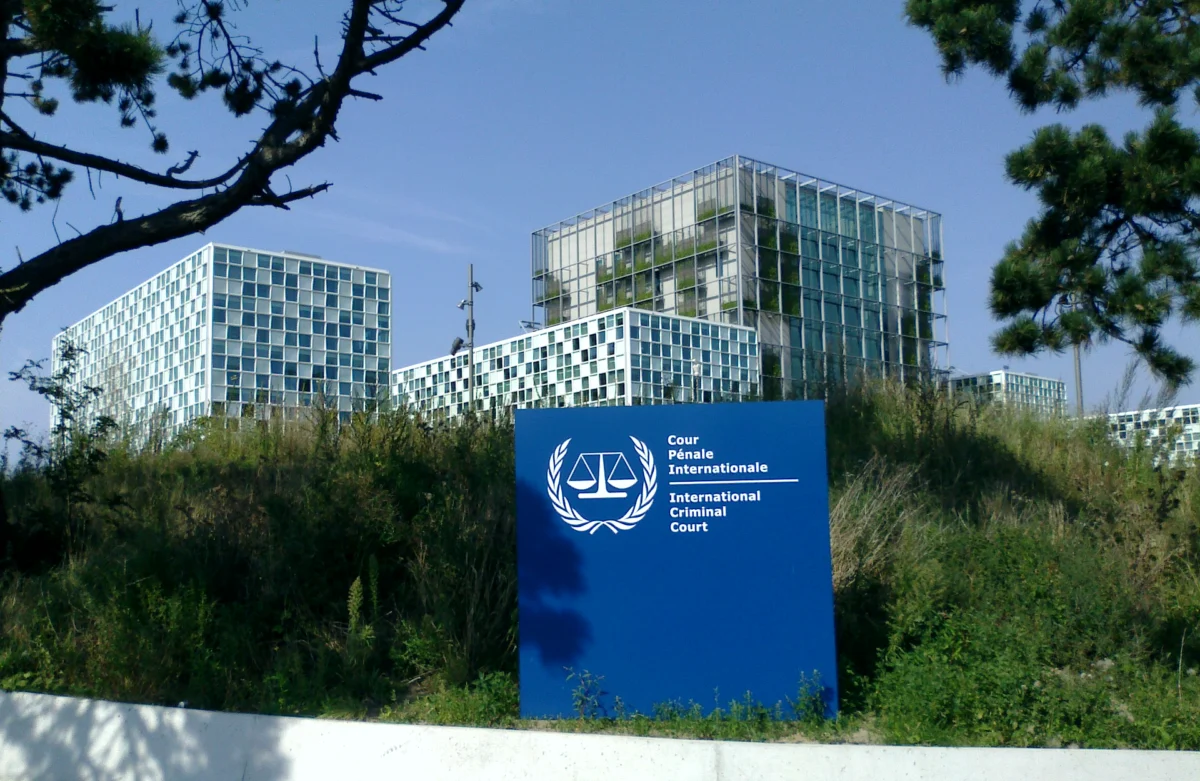
The international legal order faces its most significant existential threat since the dawn of the 21st century. The International Network of Civil Liberties Organizations (INCLO), a global alliance of 15 prominent human rights groups, issued a forceful defense of the International Criminal Court (ICC) this past Friday. This mobilization comes in direct response to an aggressive and unprecedented campaign by the United States Department of State—spearheaded by Secretary of State Marco Rubio—to effectively dismantle the Hague-based tribunal. As the world watches, the standoff between the global judiciary and the geopolitical weight of the United States threatens to undermine decades of progress in international human rights law.
Main Facts: The Battle for Judicial Independence
The conflict centers on the jurisdictional reach of the ICC and the US government’s staunch refusal to accept its authority over non-member states. Established by the 1998 Rome Statute and operational since 2002, the ICC serves as a court of last resort, designed to prosecute individuals for the gravest of crimes: genocide, war crimes, crimes against humanity, and the crime of aggression.
Secretary of State Marco Rubio recently signaled a radical escalation in US policy, declaring in a Wall Street Journal op-ed that the United States is prepared to take the Court apart "brick by brick, if necessary." The American administration, under President Donald Trump, asserts that the ICC’s pursuit of officials from non-member nations—most notably the issuance of an arrest warrant for Israeli Prime Minister Benjamin Netanyahu—constitutes an illegal overreach of sovereign authority.
INCLO, which includes heavyweights such as the American Civil Liberties Union (ACLU) and the Canadian Civil Liberties Association (CCLA), maintains that the ICC remains the indispensable anchor of the international rule of law. While the coalition acknowledges that the Court is not without flaws—citing its often-protracted judicial processes, limited enforcement mechanisms, and occasional accusations of selectivity—they argue that these shortcomings are reasons for reform, not destruction.
Chronology of Escalation
The current friction is the culmination of years of mounting tension between The Hague and Washington.
- 2002: The Rome Statute enters into force, creating the ICC. The US refuses to ratify the treaty, maintaining a policy of "non-participation."
- June 2024: The US House of Representatives passes legislation mandating that the executive branch impose sanctions on the Court, signaling a shift toward more aggressive legislative obstruction.
- February 2025: President Trump officially authorizes a suite of sanctions against ICC judges and prosecutors, specifically targeting those involved in investigations into US allies.
- November 2025: The ICC Appeals Chamber affirms its jurisdiction to investigate war crimes in Gaza, drawing sharp condemnation from the White House.
- June 2026: Three ICC judges initiate a lawsuit against the Trump administration in a US domestic court, challenging the constitutionality of the sanctions and arguing that the executive branch has exceeded its constitutional authority.
- July 2026: Two US-based advocacy groups file a separate suit, alleging that the sanctions violate the First Amendment rights of human rights advocates by preventing them from engaging in legitimate international legal discourse.
- Late July 2026: Secretary of State Marco Rubio vows to dismantle the court, prompting INCLO’s formal defense statement.
Supporting Data and Historical Context
The ICC has spent over two decades building a body of case law that has held some of the world’s most notorious perpetrators accountable. Its track record is substantial, even amidst the current political maelstrom.
Notable Jurisprudential Achievements:
- Dominic Ongwen (2021): The former commander of the Lord’s Resistance Army was sentenced to 25 years in prison for war crimes and crimes against humanity committed in the Democratic Republic of Congo.
- Ali Muhammad Ali Abd-Al-Rahman (2025): The Sudanese militia leader received a 20-year sentence for his role in the atrocities committed during the Darfur conflict.
- Ongoing and Upcoming Cases: In July 2026, the Court confirmed jurisdiction over Khaled Mohamed Ali El Hishri for his role in Libyan war crimes. Furthermore, the international community is bracing for the November 2026 trial of former Philippine President Rodrigo Duterte, who faces charges related to his "war on drugs"—a campaign that resulted in thousands of extrajudicial killings.
Despite these successes, the Court relies heavily on the cooperation of member states for arrests and evidence gathering. When a global superpower like the United States actively encourages member states to withdraw or ignore the Court’s mandates, the entire infrastructure of international justice begins to destabilize.
Official Responses and Legal Challenges
The pushback against the US administration is occurring on two primary fronts: international diplomacy and domestic litigation.
The Domestic Legal Front
The lawsuits filed by the ICC judges and US advocacy groups are landmark cases. By bringing the battle into the American court system, the plaintiffs are effectively forcing a constitutional debate: Does the President of the United States possess the unchecked power to sanction international judicial officials for performing their professional duties? The plaintiffs argue that these sanctions are not merely foreign policy decisions, but infringements upon the First Amendment rights of those who wish to advocate for international human rights—a form of "chilling effect" on global legal participation.
International Diplomacy
The 125 state parties to the Rome Statute have twice issued statements of "unwavering support" for the Court. However, the diplomatic pressure from Washington is real. The US has threatened to impose travel restrictions and expand financial sanctions against any organization—including non-governmental organizations (NGOs) and academic institutions—that provides support or assistance to the ICC. INCLO’s recent statement serves as a rallying cry, urging these states to move beyond rhetoric and adopt concrete legal measures to shield the Court from US-imposed economic and personal sanctions.
Implications for the Future of International Law
The campaign to dismantle the ICC carries profound implications for the global order.
1. The Erosion of the "Last Resort" Principle
If the ICC is successfully neutralized, the world loses its primary mechanism for accountability in regions where domestic courts are either unwilling or unable to prosecute high-level leaders. This creates a "justice vacuum" that invites further impunity for war criminals.
2. The Normalization of Anti-Internationalism
By framing the ICC as an existential enemy, the current US administration is normalizing the rejection of international treaties and institutions. This signals a broader retreat from the post-WWII multilateral framework, encouraging other nations to prioritize nationalist interests over the collective international rule of law.
3. Impact on Human Rights Advocacy
The threat of sanctions against ICC-affiliated organizations strikes at the heart of the global civil society. If lawyers, human rights monitors, and researchers are forced to choose between their professional mandates and personal safety/financial security, the capacity for documentation and advocacy in conflict zones will wither.
4. Future Challenges
The November 2026 trial of Rodrigo Duterte will likely be a litmus test for the Court’s resilience. If the Court can proceed with the trial despite the ongoing US efforts to paralyze its operations, it may signal that the institution has enough support among its 125 member states to survive the current political onslaught. Conversely, if the Court bows to pressure or fails to secure the necessary cooperation, it may signal the beginning of a long, slow decline toward obsolescence.
Conclusion
The defense of the ICC by INCLO is more than a procedural statement; it is a declaration of the necessity of global accountability. As the United States pivots toward a policy of aggressive unilateralism, the international community finds itself at a crossroads. The future of the International Criminal Court—and by extension, the international legal system—depends on whether the global coalition of states and civil society can withstand the pressure of a superpower determined to dismantle the very institutions it once helped to define. The outcome of this struggle will dictate whether the 21st century is defined by the rule of law or the return of unrestrained power.