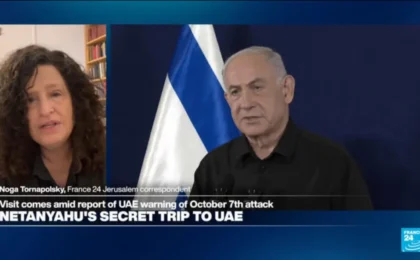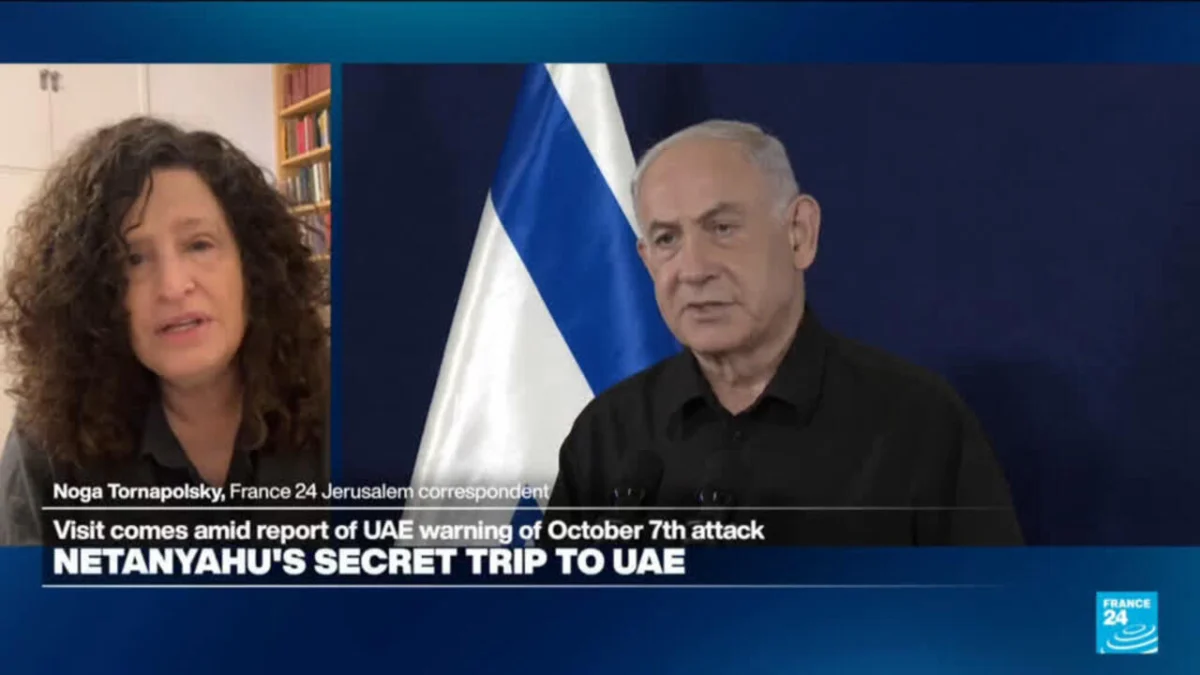
The geopolitical landscape of the Middle East is currently reeling from revelations that suggest the groundwork of the Abraham Accords—the historic normalization of ties between Israel and the United Arab Emirates—may have been strained by an overlooked intelligence warning. Reports have emerged detailing a clandestine visit by Israeli Prime Minister Benjamin Netanyahu to the UAE, a trip that occurred against the backdrop of mounting regional tensions and, more significantly, purported warnings from Abu Dhabi regarding the security stability of the Gaza envelope.
This article examines the intersection of high-level diplomacy and intelligence failures, analyzing how a secret visit intended to solidify regional alliances may have been overshadowed by the looming specter of the October 7, 2023, attacks.
Main Facts: The Clandestine Summit
The revelation of a secret, high-stakes meeting between Benjamin Netanyahu and senior Emirati officials has sent shockwaves through the diplomatic corridors of Washington and the Middle East. While Netanyahu’s administration has long championed the Abraham Accords as his crowning foreign policy achievement, this specific meeting underscores the complex, often fragile nature of the Israel-UAE relationship.
Sources indicate that the primary objective of the trip was to discuss the accelerating security cooperation between the two nations, specifically concerning regional threats posed by non-state actors and the Iranian proxy network. However, the timing of the visit is what has invited intense scrutiny. Reports suggest that during this encounter, Emirati leadership—keenly aware of the volatility within the Palestinian territories—raised alarms about the deteriorating situation on Israel’s southern border.
The meeting highlights a profound dissonance: while Israel viewed the UAE as a strategic partner in an anti-Iranian bloc, the UAE appeared to view the Palestinian issue as a "ticking time bomb" that threatened to destabilize the very regional integration that Netanyahu was seeking to build.
Chronology: A Timeline of Strained Ties
To understand the gravity of these revelations, one must examine the timeline of events leading up to the October 7 catastrophe:
- September 2020: The signing of the Abraham Accords at the White House, establishing formal diplomatic ties between Israel and the UAE.
- Late 2022 – Early 2023: Netanyahu returns to power, leading a right-wing coalition. The UAE expresses private concern over the inclusion of far-right ministers in the Israeli cabinet and their rhetoric regarding the West Bank.
- The "Secret" Visit (Date undisclosed): Netanyahu conducts a quiet trip to Abu Dhabi to reassure Emirati leadership of Israel’s commitment to regional stability.
- Mid-2023: Intelligence reports suggest that the UAE intensified its warnings regarding the potential for a massive escalation emanating from the Gaza Strip, citing regional intelligence gathering that pointed to Hamas’s growing operational confidence.
- October 7, 2023: The Hamas-led attack on southern Israel occurs, resulting in the largest loss of Jewish life in a single day since the Holocaust.
- Post-October 2023: The diplomatic fallout. The UAE remains a formal diplomatic partner but adopts a vocal stance criticizing the intensity of Israel’s military campaign in Gaza.
Supporting Data: The Intelligence Gap
The intelligence failure of October 7 is often framed as a strictly domestic oversight—an error of the Israeli Defense Forces (IDF) and the Shin Bet (Israel’s domestic security agency). However, the revelation that international partners, specifically the UAE, may have flagged these concerns shifts the narrative from a "local failure" to a "failure of communication" within the regional security architecture.
Data regarding regional security indicates that the UAE possesses one of the most sophisticated surveillance and signals intelligence (SIGINT) networks in the Arab world. Their proximity to regional actors and their sophisticated monitoring of regional social media and communication channels provided them with a vantage point that, at times, superseded Western intelligence capabilities.
If, as reported, Abu Dhabi conveyed warnings of a "major operation" or a "significant escalation" from Gaza, the failure to integrate this intelligence into the Israeli security apparatus represents a critical breakdown. Analysts point to the "conception" (a term used in Israel to describe the prevailing, flawed assumption that Hamas was deterred) as the primary culprit. Even when external warnings arrived, the Israeli security establishment was psychologically primed to dismiss them, viewing them as secondary to the perceived threat from Hezbollah in the north or Iran’s nuclear program.
Official Responses: Navigating the Fallout
The official reaction to these reports has been one of controlled obfuscation.

The Israeli Stance
The Prime Minister’s Office (PMO) has consistently declined to comment on the specifics of private meetings, citing national security protocols. However, government spokespersons have emphasized that "cooperation with regional partners remains at an all-time high." The strategy appears to be one of minimizing the impact of the leak, fearing that acknowledging an ignored warning would further erode public trust in Netanyahu’s security credentials.
The Emirati Perspective
For the UAE, the leak is highly inconvenient. Abu Dhabi prides itself on its role as a regional mediator and a pragmatic diplomatic actor. By publicly associating themselves with a warning that Israel seemingly ignored, the UAE risks being seen as either complicit in the regional crisis or ineffective in their influence over Jerusalem. Consequently, the Emirati foreign ministry has largely remained silent, focusing instead on humanitarian aid shipments to Gaza and calls for a ceasefire—a policy of "strategic neutrality."
Implications: The Future of the Abraham Accords
The revelations surrounding the secret UAE trip have profound implications for the future of Middle Eastern diplomacy.
1. The End of the "Security-Only" Paradigm
For years, the Abraham Accords were predicated on the idea that economic and security cooperation could bypass the Palestinian issue. The October 7 attack—and the intelligence warnings that preceded it—proves that the Palestinian conflict is not a peripheral nuisance, but the central pivot of regional stability. Future regional integration will likely require a robust, credible path toward a Palestinian state, or at the very least, a significant de-escalation of the status quo in the West Bank and Gaza.
2. The Credibility of Intelligence Sharing
The most damaging long-term effect of this saga is the potential chilling effect on intelligence sharing. If regional partners feel that their sensitive warnings are being ignored or used for political posturing rather than preventative action, they may hesitate to share critical intelligence in the future. Trust is the currency of intelligence; once devalued, it is notoriously difficult to restore.
3. Netanyahu’s Political Survival
Domestically, these reports serve as a rallying point for Netanyahu’s critics. The opposition argues that the Prime Minister’s focus on personal political survival and his reliance on a divisive coalition led to the isolation of Israel from its most pragmatic allies. Whether this will lead to a change in government remains a question for the Israeli electorate, but the historical record of his premiership is increasingly being defined by this divergence between his public promises of security and the private realities of his diplomatic engagements.
4. Regional Realignment
Finally, the UAE is likely to recalibrate its relationship with Israel. While the formal ties will likely remain, the "warm peace" that was envisioned at the signing of the Accords has effectively cooled. The UAE is now looking toward a multi-aligned strategy, maintaining ties with Israel while simultaneously strengthening its relationships with China, Russia, and, significantly, Iran, to ensure that it is not caught in the crossfire of a future regional war.
Conclusion
The secret trip by Benjamin Netanyahu to the UAE was meant to be a symbol of a new, integrated Middle East. Instead, it has become a case study in the dangers of ignoring the warnings of one’s own allies. As the dust settles on the ongoing conflict, the lessons from this episode are clear: regional security cannot be built on the back of diplomatic shortcuts. The intelligence failure that allowed October 7 to occur was not just a failure of sensors or analysts; it was a failure of vision—a refusal to see the world as it was, rather than how one wished it to be.
The road ahead for the Abraham Accords is steep. To survive, the alliance must evolve from a security pact into a genuine diplomatic framework that addresses the core grievances of the region. Without such a transformation, the secret meetings and high-level handshakes will remain nothing more than empty gestures in a region that demands, above all else, the hard, uncomfortable work of genuine peace.