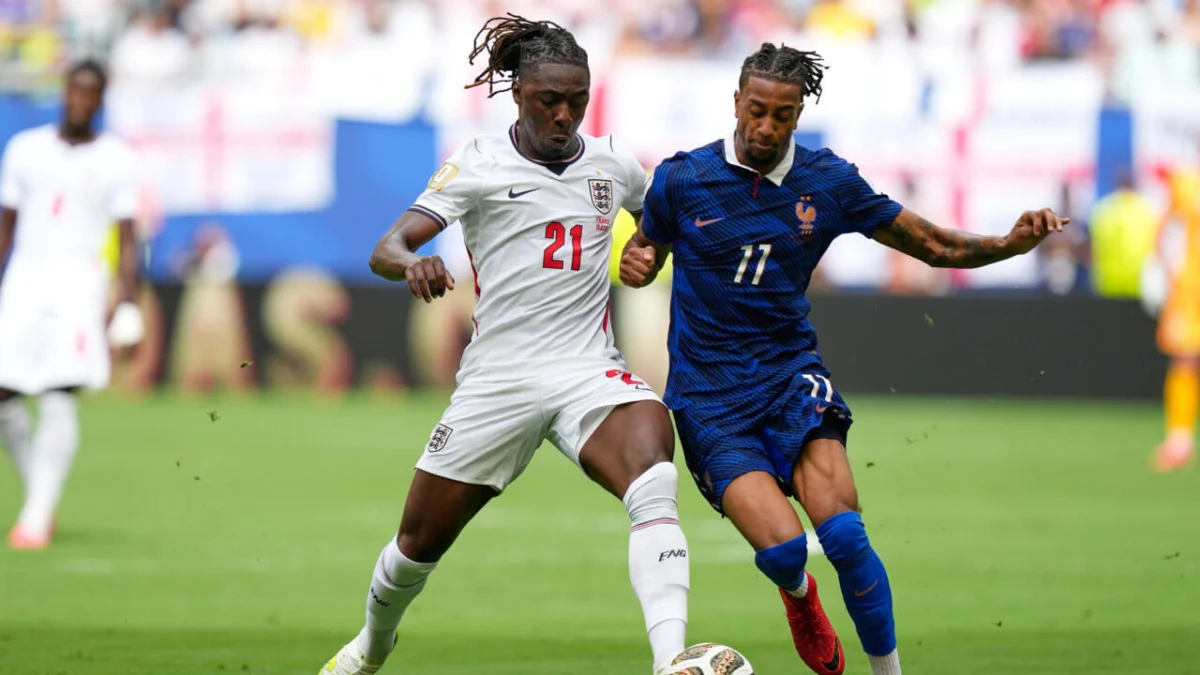
In a high-octane spectacle that offered a breathtaking coda to the 2026 World Cup, England secured the bronze medal with a 6-4 victory over France in Miami. The encounter, played under the oppressive Floridian sun, was a wild, defensive-optional affair that served as both a consolation for two disappointed European giants and a stage for historic individual milestones. While the result handed England their best finish since their 1966 triumph, the match will be remembered primarily for Kylian Mbappé’s ascension to the summit of the all-time World Cup scoring charts.
For both nations, the third-place playoff was a bittersweet finale. Having arrived in North America with designs on the trophy, both were forced to reconcile with semifinal exits—France falling to a tactical masterclass by Spain, and England suffering a heartbreaking, late-game collapse against Argentina. Yet, in the humid air of Miami, the two sides chose to throw caution to the wind, delivering a ten-goal thriller that will linger in the memory of the 2026 tournament far longer than most standard bronze-medal games.
The Chronology of a Ten-Goal Rollercoaster
The match began with an intensity that defied the typically subdued nature of third-place playoffs. England, eager to assert dominance after their semi-final heartbreak, wasted no time. Just three minutes into the contest, Arsenal’s Declan Rice unleashed a venomous strike from distance, silencing the French contingent and setting the tone for a frantic first half.
England’s momentum was relentless. Ezri Konsa doubled the advantage with a clinical header, and as France struggled to find their footing in the sweltering heat, Bukayo Saka turned the screw. The Arsenal forward exploited the gaps in a disorganized French backline, firing home to make it 3-0. By the time Saka struck again in first-half stoppage time, the scoreline read 4-0, and a sense of embarrassment began to settle over the Les Bleus bench.
The Second-Half Resurgence
Didier Deschamps, coaching France for the final time, did not mince words during the interval. Describing the first-half display as "catastrophic," the legendary manager demanded a shift in mentality. He immediately introduced Ousmane Dembélé and Bradley Barcola, a move that paid dividends within seconds.
Kylian Mbappé, hunting for individual glory, surged into the fray. He found the net early in the second half, a strike that secured his ninth goal of the 2026 tournament and moved him clear of Lionel Messi in the Golden Boot race. Moments later, Barcola capitalized on renewed French pressure to claw another back.
The turning point for history arrived in the 65th minute. Following a delicate pass from Michael Olise, Mbappé slotted home his second of the match—his 22nd career World Cup goal. The strike cemented his place as the greatest goalscorer in the history of the tournament, surpassing the long-standing records of previous legends.
However, the French comeback was short-lived. A clumsy challenge by Malo Gusto on Djed Spence inside the penalty area granted England a lifeline. Jude Bellingham, demonstrating the maturity that has defined his tournament, ceded the spot-kick duties to Saka. The winger converted with ease, completing a magnificent hat-trick. While Dembélé managed to claw back a fourth for France, the final word went to Bellingham, who capped his stellar tournament with a brilliant individual effort, sealing the 6-4 victory.
Supporting Data: By the Numbers
The statistics from the Miami encounter highlight the sheer offensive output of the two teams:
- Total Goals: 10 (Highest-scoring match of the 2026 World Cup).
- Bukayo Saka: The Arsenal man recorded a hat-trick, becoming the first Englishman to do so in a modern World Cup match of this stature.
- Jude Bellingham: With his goal, Bellingham became the first English player in history to score seven goals in a single World Cup tournament.
- Kylian Mbappé: His two goals brought his career World Cup tally to 22, officially making him the highest-scoring player in the history of the competition.
- England’s Standing: This third-place finish represents England’s best result in 60 years, finally eclipsing the "near-misses" of recent cycles.
Official Responses and Tactical Reflection
The post-match discourse centered on the duality of the result: pride in the performance, contrasted with the lingering pain of "what could have been."
Bukayo Saka, the man of the hour, was candid about the emotional weight of the tournament. "When you lose there’s always going to be noise, when you win there’s going to be noise," Saka remarked. "It’s how you react to it, how you use it as fuel. Today we finished strong, and that’s all we could really do." He admitted that the semi-final defeat to Argentina "hurt a lot," echoing the sentiment of a generation of English players who feel the weight of expectation.
For France, the mood was dominated by the farewell of Didier Deschamps. The man who led Les Bleus to the 2018 title and a 2022 final appearance leaves the post after a period of unparalleled success. Despite the defensive collapse in the first half of the finale, his players acknowledged the standard he set. Deschamps’ halftime intervention prevented a complete rout, and his willingness to rotate the squad in the second half showcased his tactical pragmatism, even in his final hour.
The Broader Implications for International Football
England: A Foundation for the Future
For the Three Lions, the 2026 World Cup was a testament to the growth of a young, dynamic squad. Jude Bellingham’s performance throughout the tournament—marked by his record-breaking scoring tally—confirms his status as one of the elite talents in global football. By securing the bronze medal, England has successfully cleared the psychological hurdle of the "semifinal barrier" that has plagued them for decades. The challenge for the FA moving forward will be maintaining this momentum into the next European qualification cycle.
France: The End of an Era
France enters a period of uncertainty. With Deschamps stepping down, Les Bleus must navigate a managerial transition. While the tournament ended in disappointment—falling to Spain in the semis and conceding six in the bronze match—the legacy of the Mbappé era remains secure. Mbappé’s record-breaking goal count serves as a reminder that even when France fails to lift the trophy, they remain the focal point of the global game.
The Global Landscape
The 2026 tournament, hosted across North America, has been a whirlwind of high-scoring matches and tactical evolution. With Argentina and Spain set to clash in the final in East Rutherford, the conclusion of this match in Miami acts as a bridge between the old guard and the new. Argentina, seeking to cement their dynasty, and Spain, playing a brand of football that dismantled the French defense, represent the current summit of the sport.
As the curtains close on the Miami spectacle, the message is clear: the gap between the world’s elite teams is shrinking. The offensive intensity seen in this 6-4 thriller suggests that the future of international football is moving toward a more expansive, high-risk style of play. For England, the result is a validation of progress; for France, it is a respectful bow to a historic manager; and for the fans, it was the perfect, chaotic ending to a tournament that will be discussed for decades to come.
As the players depart Miami, the focus shifts to the final showdown. Yet, history has already been written on the pitch this Saturday, with names like Saka, Bellingham, and Mbappé etched further into the lore of the beautiful game.