At 53 years old, most people have settled into a comfortable rhythm of fiscal pragmatism. For the author of this account, life has long been defined by the careful avoidance of unnecessary expenses and the persistent "compromise" of buying used or practical vehicles. However, a series of serendipitous events in the summer of 2022—fueled by the bizarre economic realities of the post-pandemic used-car market—provided the perfect opening for an uncharacteristic act of indulgence.
After decades of prioritizing utility over passion, he decided to stop compromising. The result was not just a new vehicle, but a re-evaluation of what it means to spend money on things that bring genuine, unadulterated joy.
A "Maxi" Mistake: The Pandemic Purchase
The story began in July 2020, at the height of the global pandemic. Seeking to replace an aging 2004 Mini Cooper, the author opted for a 2019 Mini Countryman SE All4. While the vehicle was objectively capable, it was a departure from his identity as a "small-car guy." He dubbed the compact SUV a "Maxi Cooper," and despite its functionality, the purchase was marked by immediate, quiet regret.
For two years, the author tolerated the vehicle. It served its purpose, but it lacked the soul and the compact agility he had grown to love in his previous cars. It was a classic case of a consumer allowing external pressure or perceived "needs" to override personal preference, a mistake he resolved to rectify should the opportunity ever arise.
Chronology of a Market Miracle
The turning point arrived in August 2022. While visiting a dealership for a routine oil change, the author was approached with an unexpected offer: the dealership wanted to buy his car back.
In the current economic climate, this is not as strange as it sounds, but the numbers were startling. The U.S. Federal Reserve has tracked a 55% increase in used-vehicle prices since July 2020, compared to an 18% rise in new car costs. When the dealer offered $33,000 for a car the author had purchased for $35,990 some 26 months prior, the deal felt less like a trade-in and more like a financial miracle.
Consulting with a friend who had a background in automotive sales, the author confirmed his intuition: "It’s not just a good deal, it’s a miracle," his friend remarked. "It’s as if you leased that car for $115 per month." With that validation, the wheels were set in motion.
The Search for the "Uncompromised" Ride
Armed with the knowledge that his current car had held its value, the author pivoted to a "self-centered shopping" strategy. Having never intentionally planned to sell his vehicle, he had no successor in mind. This led to an intense 24-hour research marathon to identify the perfect replacement.
He established a strict set of criteria:
- Size: Small and agile, reminiscent of his 2004 Mini.
- Experience: A visceral, "intimate" driving experience.
- Reliability: High marks from consumer advocacy groups.
- Joy: A vehicle that prioritized fun over utility.
After filtering out options that were either too expensive, unreliable, or simply too large (like the Ford Mustang Mach-E, which the author noted was an SUV in disguise), one clear winner emerged: the Mazda MX-5 Miata.
Supporting Data: Why the Miata?
The Mazda Miata has long been the gold standard for "fun-per-dollar." While Consumer Reports noted some drawbacks—specifically road noise and limited storage space—these were features, not bugs, to the author.
The vehicle checks every box: it is nimble, highly rated for owner satisfaction, and provides the "intimate driving experience" that modern, bloated cars often lack. Professional reviews confirmed that the Miata is a car that demands the driver become part of the machine, turning every mundane commute into a sensory experience. For a man who had spent his life choosing the practical over the passionate, the Miata represented the antithesis of his previous compromises.
Navigating the Dealership Experience
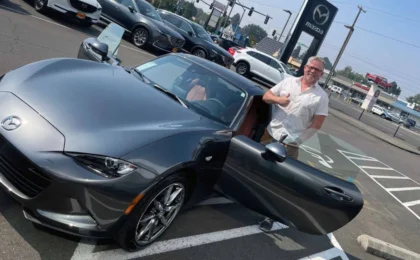
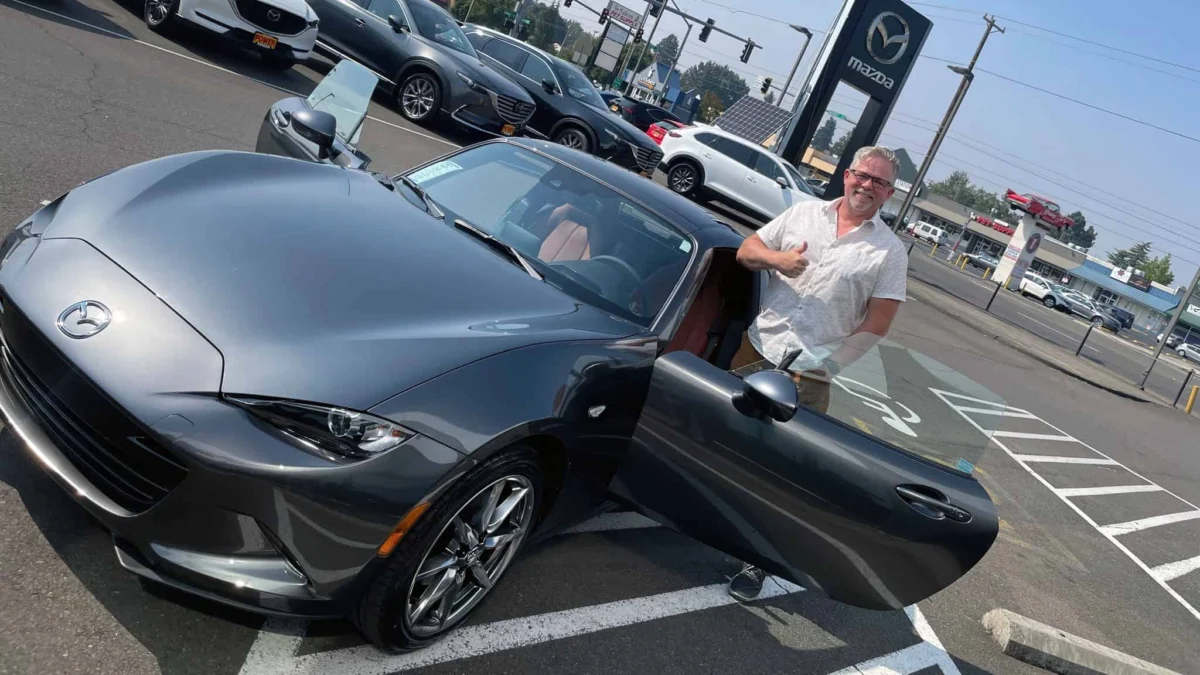
The final act of the transaction took place in Salem, Oregon. The author approached the Mazda dealer with a clear, firm stance. He had his trade-in offer in hand and a specific configuration in mind: a gray hardtop with a manual transmission.
When the salesman attempted to use the "four-square" negotiation tactic to push a car already on the lot, the author stood his ground. He refused to compromise, waiting for the exact vehicle he wanted. The dealership, realizing they were dealing with a customer who knew his own mind, agreed to hold the price at $39,245—including a market adjustment fee—and waited for the specific shipment to arrive.
Implications: The Psychology of the "Rich Life"
The purchase of a $40,000 car is an emotional decision, one that the author acknowledges is not strictly "logical" in a vacuum. However, when framed against his previous, less-than-ideal vehicle, the trade-off becomes clear. He wasn’t just buying a car; he was reclaiming a piece of his identity.
This decision touches on a deeper philosophy popularized by financial coach Ramit Sethi: the concept of a "Rich Life." For many, especially those who grew up in households with limited means, spending money on "Nice Things" often triggers a sense of undeserved guilt.
The author’s journey from a self-described "poor kid" to someone comfortable with a deliberate, joy-driven purchase is significant. By viewing the purchase as a component of a larger, well-managed financial life rather than an isolated act of vanity, he successfully dismantled the guilt that had kept him from his preferences for decades.
Conclusion: Driving into the Future
As he drove his new Miata home—top down, wind in his hair, and the music playing—the author realized the true value of the transaction. The low mileage (a mere five miles on the odometer) was merely a symbol of a fresh start.
This story serves as a poignant reminder that while financial responsibility is paramount, it is meant to serve the individual, not the other way around. By waiting for the right moment and refusing to accept the "good enough" compromise, he turned a volatile market into a personal victory. In the end, the Miata wasn’t just an expense; it was an investment in the daily quality of his life.