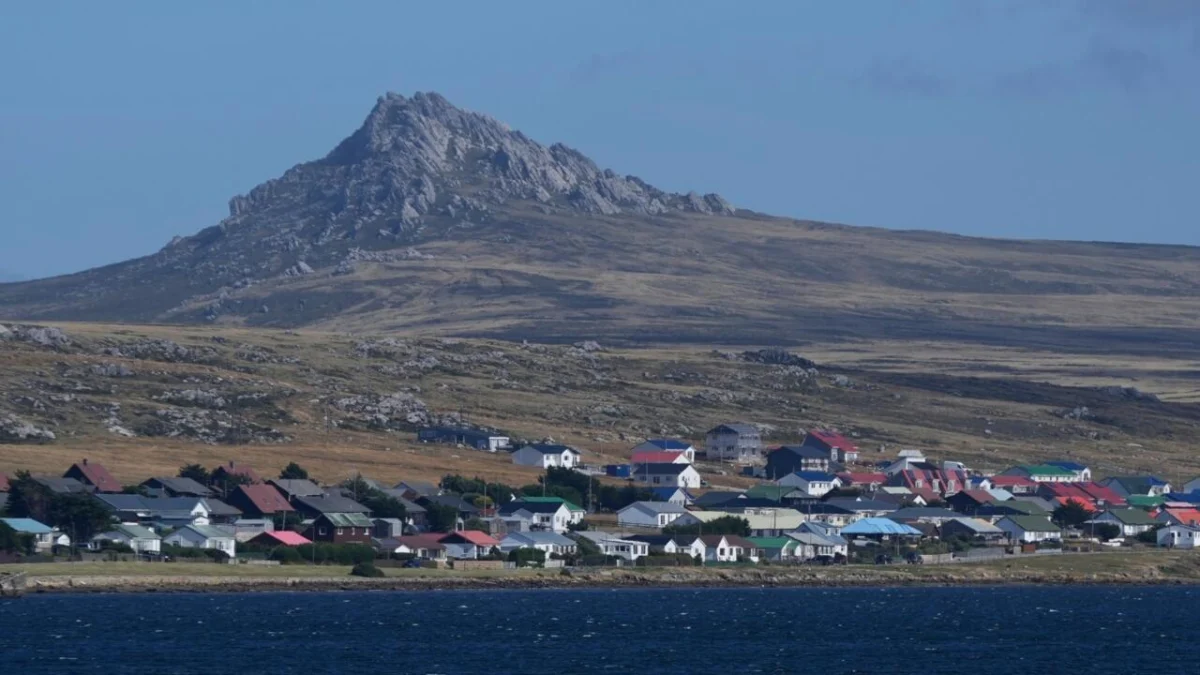
In a move that threatens to reignite one of the most enduring geopolitical disputes of the 20th century, Argentine President Javier Milei has issued a formal ultimatum to the United Kingdom. On Monday, the libertarian leader announced that his administration is preparing to initiate international arbitration proceedings against London, accusing the British government of the "illegal sacking" of natural resources through the development of the Sea Lion oil field near the Falkland Islands—known in Argentina as Las Malvinas.
The declaration marks a significant hardening of Buenos Aires’ stance on the disputed South Atlantic territory. President Milei, taking to the social media platform X, stated that he has instructed his Foreign Ministry and legal teams to prepare a case for the International Tribunal for the Law of the Sea (ITLOS) should the United Kingdom fail to halt exploration activities within a two-week window.
The Sea Lion Project: A Catalyst for Conflict
At the heart of this renewed friction is the Sea Lion oil field, a major offshore venture located approximately 220 kilometers (137 miles) off the coast of the Falkland Islands. The project is being spearheaded by a consortium featuring Israel’s Navitas Petroleum and the British firm Rockhopper Exploration.
Both companies have remained steadfast, brushing off the Argentine threats as political theater. They maintain that their operations are underpinned by valid, legally binding exploration licenses issued by the government of the Falkland Islands and recognized by the United Kingdom. For the developers, the North Falklands Basin represents a significant economic opportunity, with potential reserves that could transform the islands’ fiscal landscape.
However, for the Milei administration, the project is a direct violation of international law. Buenos Aires argues that the exploitation of subsea resources in these waters contravenes United Nations resolutions that explicitly call for both the UK and Argentina to refrain from unilateral actions while the sovereignty dispute remains unresolved.
A Legacy of War: Historical Context
To understand the gravity of the current situation, one must look back to the spring of 1982. The Falklands War, a 10-week conflict triggered by the Argentine military junta’s invasion of the British-administered islands, resulted in a swift but brutal maritime and land war.
The human cost was significant: 649 Argentine soldiers and 255 British military personnel lost their lives. While the conflict ended in a decisive British victory and the restoration of UK control, the underlying disagreement over sovereignty was never formally settled. For decades, the islands have remained a point of immense national pride and political sensitivity for Argentina, with every administration since the return to democracy in 1983 reaffirming the claim to the Malvinas.
The recent shift in tone under President Milei appears to be influenced by shifting global alliances. Notably, Buenos Aires has grown increasingly emboldened following remarks by United States President Donald Trump, who recently suggested that Washington might be open to reviewing its long-standing, historically neutral stance regarding the sovereignty of the islands. This perceived change in diplomatic winds has provided the Milei government with fresh momentum to challenge the status quo.
Chronology of a Resurgent Dispute
The timeline of this long-standing tension is marked by cycles of relative calm and sudden outbursts of hostility:
- 1982: The Falklands War claims over 900 lives and cements the deep-seated mistrust between London and Buenos Aires.
- 1990s–2000s: A period of "normalization" sees the resumption of diplomatic ties and cooperation on fishing and tourism, though the sovereignty issue remains a "frozen" conflict.
- 2010s: Discovery of oil in the North Falklands Basin leads to renewed friction. Argentina passes laws threatening sanctions against oil companies operating in the region.
- 2024–2025: President Javier Milei takes office. His administration moves from rhetoric to legal confrontation, culminating in the current threat to take the UK to the International Tribunal for the Law of the Sea.
- September 2026: Argentina faces domestic economic strain, with poverty rates climbing to nearly one in three citizens. Analysts suggest that the aggressive posture on the Falklands may serve as a rallying cry to distract from domestic economic struggles.
Official Responses and Diplomatic Posturing
The British government remains firm in its position. A spokesperson for the UK government reiterated that London stands fully behind the businesses currently operating in the region. The British position is centered on the principle of self-determination, noting that the islanders themselves have repeatedly expressed their desire to remain a British Overseas Territory. Furthermore, London argues it has the absolute right to develop natural resources within its maritime exclusive economic zone as it sees fit.
Conversely, the Argentine Foreign Ministry is building a case based on international maritime law. They argue that the United Kingdom is acting as a "colonial power" by exploiting resources that belong to the Argentine continental shelf.
"If within two weeks the United Kingdom does not stop the illegitimate exploitation, we will go to the International Tribunal for the Law of the Sea," Milei declared. This deadline creates a high-pressure diplomatic window that could force the UK to either engage in an unwanted legal battle or risk further escalation in the South Atlantic.
Logistics and Regional Implications: The Punta Arenas Connection
While the legal battle unfolds in international courts, regional commerce continues to shift. In a parallel development, representatives of the Falkland Islands government recently traveled to Punta Arenas, Chile, to discuss the relaunch of a maritime trade route.
The route, which was deemed unfeasible and subsequently terminated in the early 2000s, is intended to facilitate the transport of essential construction materials, fresh food, and beverages to the islands. Louise Ellis, the deputy director of economic development for the Falklands, was quick to distance this initiative from the Sea Lion project.
"This project began long before the recent headlines regarding Sea Lion," Ellis stated during the visit to Chile. "It is about the basic necessities of our community and the economic development of the islands. It has absolutely no relation to the transportation of heavy oil equipment or critical cargo for the offshore oil fields."
Despite these assurances, the development is unlikely to go unnoticed in Buenos Aires, where any increase in the islands’ connectivity is often viewed with suspicion as an attempt to integrate the territory further into the regional economy.
Implications: A High-Stakes Legal Gamble
The decision to pursue arbitration represents a high-stakes gamble for President Milei. Should the ITLOS agree to hear the case, it could force a global spotlight onto the sovereignty issue, potentially destabilizing relations with the UK for years to come.
However, legal experts suggest that the tribunal may be hesitant to rule on sovereignty itself, as the court’s primary jurisdiction involves the interpretation of the UN Convention on the Law of the Sea (UNCLOS) rather than historical territorial claims. The case will likely hinge on whether the exploitation of resources in disputed waters constitutes a violation of the duty to cooperate under international law.
Furthermore, the domestic implications for Argentina cannot be ignored. With inflation and poverty levels causing significant social unrest, President Milei’s assertive foreign policy serves a dual purpose. It satisfies his nationalist base while projecting a strong image of a leader unwilling to yield to international pressure. Yet, if the move fails to yield tangible results, it risks being perceived as a costly distraction from the economic reforms that his administration was elected to implement.
Conclusion
As the two-week deadline approaches, the international community will be watching closely. While a military confrontation remains unlikely given the modern geopolitical landscape and the UK’s robust military presence in the islands, the diplomatic and legal battlefield is widening. The Sea Lion project has become more than just an oil venture; it is now a test of international resolve, the sanctity of maritime law, and the enduring, painful legacy of the 1982 war.
For the Falkland Islanders, it is a matter of autonomy and survival; for Argentina, it is a matter of sovereign dignity. As these competing interests collide, the waters of the South Atlantic remain as turbulent as the politics surrounding them.