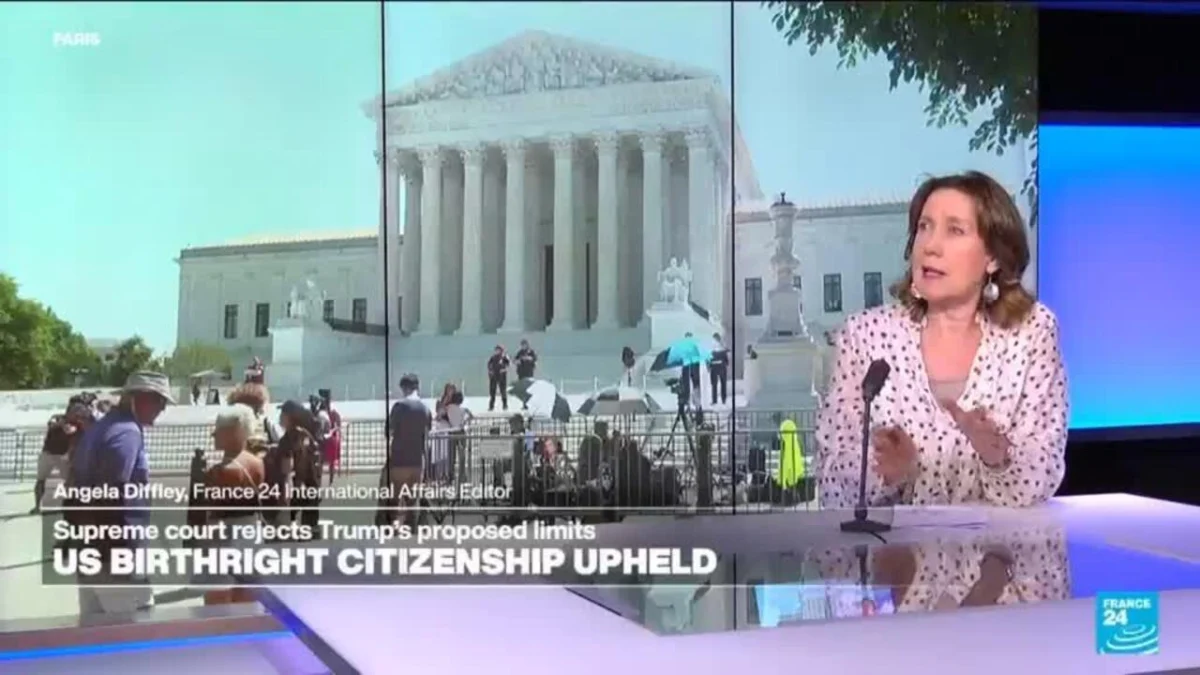
In a landmark ruling that reverberates through the heart of American immigration policy, the United States Supreme Court has delivered a definitive blow to efforts aimed at curtailing birthright citizenship. By refusing to hear a challenge to the long-standing interpretation of the 14th Amendment, the Court has effectively preserved the legal guarantee that anyone born on U.S. soil is a citizen, regardless of the immigration status of their parents.
The decision, issued on June 30, 2026, marks a significant judicial setback for former President Donald Trump and his political allies, who have long advocated for a fundamental reinterpretation of the Constitution to restrict access to citizenship. For millions of Americans and advocates of civil liberties, the move is seen as a preservation of the nation’s foundational principles. For those on the other side of the aisle, it signals a renewed push to bypass the judiciary and seek legislative reform.
Main Facts: The Ruling and the Legal Context
The Supreme Court’s decision to decline the petition for certiorari leaves in place the established precedent rooted in the 1898 case United States v. Wong Kim Ark. The 14th Amendment of the U.S. Constitution explicitly states: "All persons born or naturalized in the United States, and subject to the jurisdiction thereof, are citizens of the United States and of the State wherein they reside."
For over a century, the phrase "subject to the jurisdiction thereof" has been interpreted by the courts to include children born to undocumented immigrants. Critics, including Trump and his legal advisors, have argued that the clause was intended to exclude those who are not under the "total" political jurisdiction of the U.S. government. By declining to take up the case, the High Court has effectively signaled that it sees no ambiguity in the existing constitutional language, nor a pressing need to revisit the settled jurisprudence.
Chronology: A Multi-Decade Struggle
The debate over birthright citizenship is not a modern phenomenon, but it has reached a fever pitch over the last decade.
- 1868: The 14th Amendment is ratified, granting citizenship to all persons born or naturalized in the U.S., primarily to ensure that formerly enslaved people were recognized as citizens.
- 1898: In United States v. Wong Kim Ark, the Supreme Court rules that a child born in San Francisco to Chinese immigrant parents is a U.S. citizen by birth.
- 2015: During his initial presidential campaign, Donald Trump calls for the end of birthright citizenship, labeling it a "magnet" for illegal immigration.
- 2018: As President, Trump announces his intention to end birthright citizenship via executive order, a move met with immediate condemnation from legal scholars across the political spectrum.
- 2024–2025: A series of lower court challenges are initiated, backed by conservative legal groups, aiming to reach the Supreme Court and force a re-evaluation of the 14th Amendment.
- June 30, 2026: The Supreme Court officially declines to hear the case, effectively ending the most prominent legal challenge to birthright citizenship in recent history.
Supporting Data: The Demographic Reality
The impact of this ruling touches on the lives of millions. According to data from the Pew Research Center, there are approximately 4.5 million children living in the United States who are U.S. citizens but have at least one parent who is undocumented.
The Economic Contribution
Economic studies suggest that children of immigrants, regardless of their parents’ status, contribute significantly to the U.S. economy. By ensuring these individuals are recognized as citizens, the U.S. integrates them into the social fabric, granting them access to public education, federal financial aid, and, eventually, the ability to work and vote.
Immigration Trends
While proponents of restricting birthright citizenship argue that it encourages illegal immigration, historical data does not show a direct correlation between the policy and increased undocumented border crossings. Instead, researchers point to economic instability, violence, and political unrest in origin countries as the primary drivers of migration.
Official Responses and Political Fallout
The aftermath of the decision has triggered a firestorm of political rhetoric.
The Conservative Stance
Former President Donald Trump expressed profound frustration with the Court’s refusal to act. In a statement released shortly after the decision, he described it as a "day of infamy for our sovereignty," and vowed to make "constitutional reform" a central pillar of his future platform. Many congressional Republicans echoed this sentiment, arguing that the Court is "out of touch" with the concerns of the American public regarding border security.

The Progressive Perspective
Conversely, civil rights organizations, including the ACLU and the American Immigration Council, celebrated the decision as a triumph of the rule of law. "The Supreme Court has upheld the Constitution against an unprecedented political assault," said a spokesperson for a leading civil liberties group. "Birthright citizenship is a cornerstone of American democracy; it ensures that our nation remains a land of opportunity rather than a system based on caste or parentage."
The White House
The current administration issued a brief statement affirming the ruling, noting that the White House has always maintained that the 14th Amendment is clear and not subject to the political whims of any single administration.
Implications: Where Does the Nation Go From Here?
The Supreme Court’s inaction on this issue suggests that the judiciary is unlikely to be the vehicle for changing immigration policy in this regard. This shift in strategy will have several major implications for the U.S. political landscape:
1. A Shift to the Legislative Arena
With the legal path effectively blocked, those seeking to end birthright citizenship will likely shift their focus to the legislative branch. However, amending the Constitution requires a two-thirds majority in both the House and the Senate, followed by ratification by three-fourths of the states—a near-impossible threshold in today’s polarized political climate.
2. The Focus on "Interior" Immigration Policy
If the status of children born in the U.S. cannot be changed, the debate will likely intensify around "interior" enforcement—focusing on the parents of these citizens. Expect increased pressure for stricter workplace verification systems and expanded deportation efforts, even as legal challenges regarding the rights of mixed-status families continue to evolve.
3. The Judicial Appointments Conflict
This ruling will undoubtedly influence the next cycle of judicial nominations. Potential presidential candidates will likely be pressed on their litmus tests for future Supreme Court justices, with the "birthright" issue becoming a proxy for a candidate’s broader interpretation of constitutional originalism versus living constitutionalism.
4. Global Standing and Human Rights
The decision reinforces the United States’ adherence to the principle of jus soli (right of the soil), a policy shared by most countries in the Western Hemisphere but increasingly rare in Europe and Asia. By maintaining this stance, the U.S. continues to distinguish itself as a nation defined by civic identity rather than ancestral or ethnic heritage.
Conclusion: A Settled Matter?
While the legal challenge to birthright citizenship has been put to rest for the time being, the societal debate remains as vibrant and contentious as ever. The Supreme Court has reaffirmed the text of the 14th Amendment, but the political divisions that fueled this challenge are unlikely to dissipate.
As the nation looks toward the next election cycle, the question of who "belongs" in the American experiment will remain central to the national identity. For now, however, the doors of the courthouse are closed to those wishing to alter the foundational promise that the child of any person in this country is, by right of birth, a citizen of the United States. The challenge now passes to the American people and their representatives to determine how, or if, they wish to engage with this fundamental constitutional tenet in the years to come.