By Editorial Staff
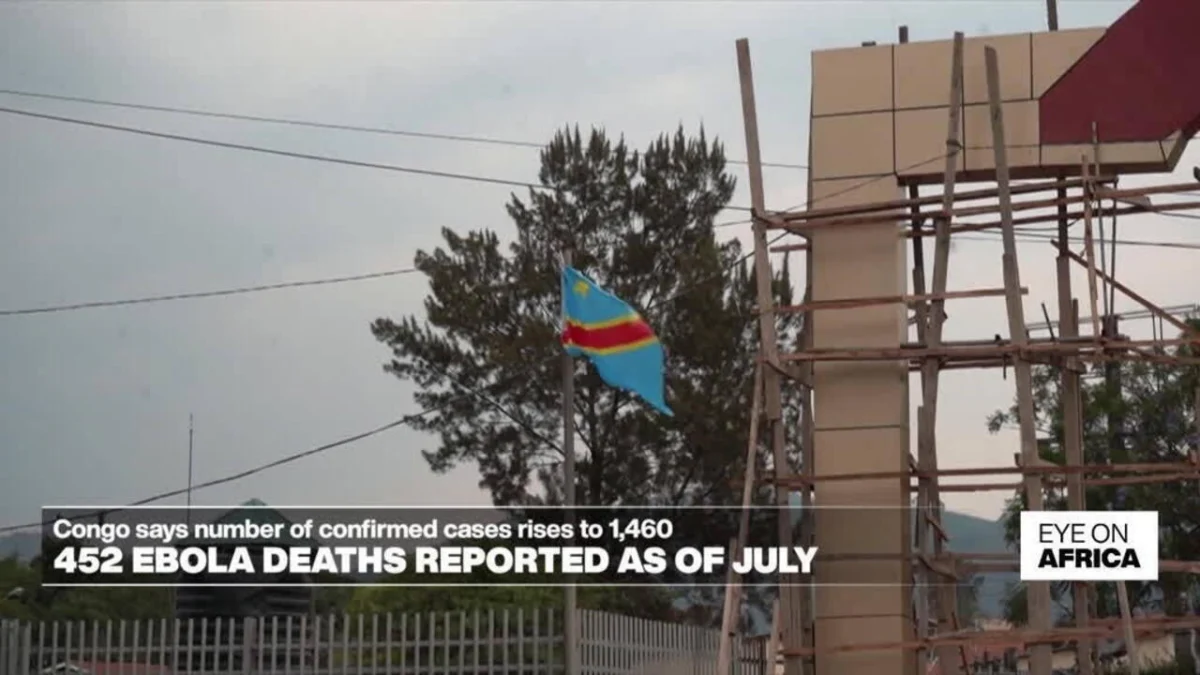
The African continent is currently grappling with two distinct but equally devastating crises that threaten to destabilize regional security and public health. In the Democratic Republic of the Congo (DRC), health authorities are racing against time as a deadly Ebola outbreak—which has already claimed more than 400 lives—demonstrates a concerning geographical expansion. Simultaneously, international observers and the United Nations have sounded the alarm over a burgeoning human rights catastrophe in Sudan, where the siege of the city of al-Obeid has left thousands of civilians trapped in a cycle of starvation and violence.
I. The DRC Ebola Outbreak: A Virus on the Move
Public health officials in the Democratic Republic of the Congo are facing a renewed nightmare as the latest Ebola virus epidemic escapes its containment zones. Initially identified as a localized cluster, the virus has now been detected nearly 600 kilometers away from the original outbreak epicenter, signaling a significant failure in containment strategies and raising the specter of a broader regional epidemic.
The Geography of Transmission
The recent detection of the virus in a region far removed from the primary hotspot is the most alarming development since the current outbreak began. Ebola, known for its high mortality rate and rapid transmission through bodily fluids, requires rigorous contact tracing and isolation protocols to control. The ability of the virus to "leap" across 600 kilometers suggests either undetected chains of transmission along transit corridors or a breakdown in regional surveillance systems.
Health experts are currently analyzing the genetic sequencing of the virus to determine if this new case represents a separate zoonotic spillover or a direct link to the ongoing outbreak. Regardless of the origin, the logistical challenge of deploying medical teams, cold-chain storage for vaccines, and protective equipment to such a vast area is immense.
II. Chronology of the Crisis
To understand the severity of the current situation, it is essential to trace the trajectory of the outbreak and the parallel collapse in Sudan.
The Ebola Timeline
- Early 2026: Initial cases are reported in a remote rural district of the DRC, primarily affecting local hunters and families.
- April 2026: The death toll surpasses 100 as the virus reaches a regional market hub, complicating contact tracing efforts.
- May 2026: International NGOs and the World Health Organization (WHO) begin mass vaccination campaigns, though they are hampered by local mistrust and difficult terrain.
- June 2026: The death toll climbs past 300, and reports of community resistance to burial protocols begin to circulate, leading to "super-spreader" events at funerals.
- July 2026: A case is confirmed 600 kilometers from the origin, marking the transition from a "contained outbreak" to a "national emergency."
The Sudan Siege
- January 2026: Tensions escalate in North Kordofan as armed factions move to surround the city of al-Obeid.
- March 2026: The city is effectively cut off from humanitarian aid, with supply routes blocked by warring parties.
- June 2026: The United Nations warns of "catastrophic levels" of food insecurity, with reports of mass civilian displacement and targeted killings.
- July 2026: International calls for a humanitarian corridor grow, but negotiations remain stalled amidst intense urban combat.
III. Supporting Data and Public Health Impact
The statistics emerging from the DRC are harrowing. With over 400 confirmed fatalities, the case-fatality ratio remains dangerously high. In rural areas, the lack of basic sanitation and the prevalence of traditional burial customs—which involve direct contact with the deceased—remain the primary drivers of transmission.
The Economic Cost
Beyond the human toll, the economic implications are severe. The DRC’s fragile economy, which relies heavily on artisanal mining and cross-border trade, faces paralysis. Markets in the affected provinces have seen a 40% decline in activity, as residents flee from rural zones to urban centers, inadvertently creating new risk vectors for the virus.
Sudan: The Human Rights Toll
In al-Obeid, the data is equally grim. According to UN estimates, roughly 85% of the city’s medical facilities are non-functional. Food supplies are dwindling, with prices for basic commodities like bread and flour skyrocketing by over 300% in the black market. The lack of clean water has already triggered outbreaks of waterborne diseases, complicating the medical landscape even before accounting for trauma injuries caused by shelling.

IV. Official Responses and International Intervention
The international community finds itself stretched thin, attempting to respond to two high-intensity crises simultaneously.
The WHO and DRC Strategy
The World Health Organization has declared the DRC situation a "Public Health Emergency of International Concern" (PHEIC). Efforts are now focused on a "ring vaccination" strategy, which involves vaccinating the contacts of infected individuals and their contacts’ contacts. However, the WHO has noted that "the current level of funding is insufficient to cover the expanded geographical scope of the response."
The UN on Sudan
The United Nations has been vocal in its condemnation of the siege in al-Obeid. High Commissioner for Human Rights Volker Türk stated in a recent press briefing that "the deliberate obstruction of humanitarian aid constitutes a war crime." The UN Security Council has debated potential sanctions against faction leaders, though internal divisions among member states have thus far prevented a unified, aggressive approach.
V. Future Implications: A Region in Flux
The intersection of these two crises presents a dire outlook for the central and eastern African regions.
The Security-Health Nexus
Health security and national security are inextricably linked. As the Ebola virus spreads, it weakens the ability of the state to govern effectively in remote regions, creating power vacuums that armed groups may exploit. Conversely, in Sudan, the humanitarian catastrophe prevents the deployment of public health workers, ensuring that even if the conflict were to end tomorrow, the societal trauma and disease burden would persist for years.
The Need for a Coordinated Response
Experts argue that the current piecemeal approach to international aid is failing. There is a desperate need for:
- Integrated Humanitarian Corridors: Establishing safe zones in Sudan that allow for both food aid and medical teams.
- Technological Surveillance: Using satellite imagery and mobile phone metadata in the DRC to predict population movements and identify potential new transmission clusters before they explode.
- Community Engagement: In the DRC, shifting the focus from top-down medical directives to grassroots engagement with traditional and religious leaders to build trust in vaccination programs.
Conclusion: A Call to Action
The crises in the DRC and Sudan are tests of the international community’s resolve. While the media cycle often shifts its focus, the realities on the ground in al-Obeid and the rural provinces of the DRC remain static, desperate, and deteriorating.
As of July 3, 2026, the global community stands at a crossroads. The choice is between continuing the current trajectory of reactive, insufficient support or committing to a proactive, sustained effort to stabilize these regions. For the families currently mourning their dead in the DRC or those hiding from snipers in the ruins of al-Obeid, the distinction is not merely academic—it is a matter of life and death.
Produced by Clarisse Fortuné and Antonia Cimini for "Eye on Africa," this report serves as a stark reminder of the fragile nature of peace and public health in regions where systemic instability remains the status quo.