By International News Desk
September 25, 2026
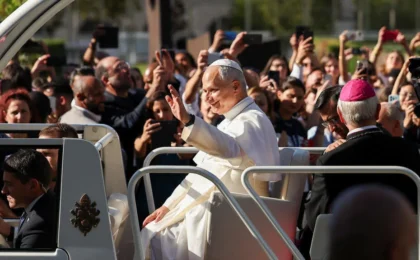
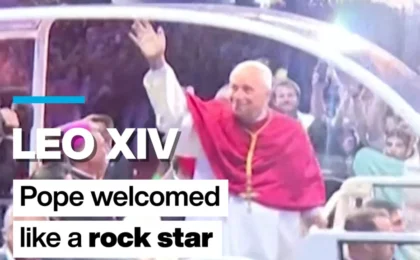
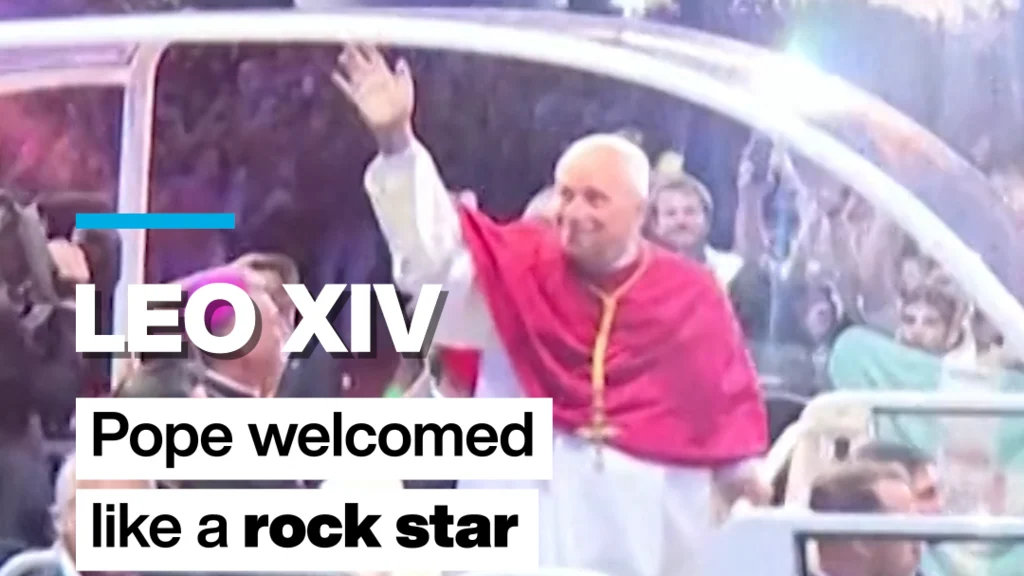
In an unprecedented display of global religious enthusiasm that blurred the lines between liturgical observance and modern pop-culture phenomena, Pope Leo XIV arrived at the Stade de France near Paris today to a reception typically reserved for the world’s most iconic music stars. The event, which saw over 80,000 spectators pack the national stadium, marks a significant departure from traditional papal visits, signaling a bold, high-energy strategy for the Catholic Church in an increasingly secularized Europe.
The Main Facts: A Stadium-Sized Ministry
The scene at the Stade de France was electric, characterized by chanting, rhythmic clapping, and the waving of flags—a vibrant atmosphere that defied the conventional austerity often associated with papal appearances. Pope Leo XIV, who has garnered a reputation for his populist approach and focus on youth engagement, addressed a diverse audience that transcended age, nationality, and traditional religious affiliation.
The event, which was streamed globally, centered on the theme of "Hope in the Digital Age." Leo XIV used the platform to speak directly to the anxieties of a generation grappling with rapid technological change, climate migration, and the erosion of local community structures. Unlike traditional mass settings, the production featured high-definition LED screens, immersive soundscapes, and a stage setup that brought the Pontiff into the heart of the crowd, rather than elevating him behind a distant altar.
A Chronology of the Visit
The events of September 25, 2026, were meticulously orchestrated to build momentum throughout the day:
- 09:00 AM: The Pope arrived at Charles de Gaulle Airport, greeted by French President and state officials, marking the official commencement of his state visit.
- 12:30 PM: A private luncheon was held at the Élysée Palace, where the Pontiff and French leadership discussed secularism (laïcité) and the role of faith in public life.
- 04:00 PM: Doors opened at the Stade de France. Despite security protocols, the entry process was described by attendees as a "festival-like" experience, with choirs and youth groups performing throughout the afternoon.
- 07:30 PM: The Pope’s motorcade entered the stadium. The crowd erupted into a roar of applause, with the Pontiff circling the pitch in his customized Popemobile, stopping to bless children and greet representatives from various humanitarian organizations.
- 08:15 PM: The keynote address began. For 45 minutes, Leo XIV spoke without a prepared manuscript, relying on a teleprompter to maintain eye contact with the massive audience.
- 09:30 PM: The evening concluded with a candlelight vigil, where the entire stadium was plunged into silence, followed by a final benediction that was broadcast simultaneously across multiple social media platforms.
Supporting Data: The Digital Reach of a Modern Papacy
The scale of this event is best measured not just by the attendance figures, but by the digital footprint it generated. According to analytics firms tracking the event, the hashtag #LeoXIVinParis trended worldwide within minutes of the Pope entering the stadium.
- Attendance: 81,342 attendees (Maximum capacity reached).
- Global Reach: An estimated 140 million viewers tuned in via YouTube, X, and various state-run broadcasting networks.
- Demographic Shift: Exit surveys conducted by the Vatican’s communications office suggest that 40% of the audience identified as "infrequent churchgoers" or "spiritual but not religious," indicating that the Pope’s "stadium strategy" is successfully attracting those who feel alienated by traditional parish structures.
- Economic Impact: Local Parisian authorities estimate the event injected approximately €15 million into the regional economy through tourism, logistics, and hospitality services.
Official Responses and Political Implications
The visit has triggered a wide spectrum of responses across the European political landscape.
The French government, led by the President, expressed gratitude for the message of unity brought by the Pontiff. "In a time of profound division, Pope Leo XIV reminds us that the fundamental values of dignity and compassion remain the bedrock of our society," the President’s office stated in a formal communique.

Conversely, some critics have raised concerns regarding the "commodification" of faith. Secularist organizations in France have questioned the public cost of security for such a high-profile religious event, arguing that it tests the limits of the country’s strict laïcité laws.
Within the Vatican, the reaction is largely triumphant. Cardinal Aris, a senior advisor to the Holy See, remarked, "The Church cannot remain within the walls of cathedrals if it wishes to speak to the world. We must go where the people are. Today, the people were at the stadium."
Implications for the Future of the Church
The success of the Stade de France event serves as a blueprint for the future of the papacy under Leo XIV. Observers suggest that this "rock star" approach to ministry will likely be exported to other major global hubs, including New York, Tokyo, and Mexico City, throughout the remainder of 2027.
1. The Decentralization of Faith
By hosting events in secular venues, the Vatican is effectively bypassing the traditional hierarchy of parish life, establishing a direct, parasocial relationship between the Pope and the individual believer. This may accelerate a shift toward a more charismatic, personality-driven Catholicism.
2. Technological Integration
The heavy reliance on social media and high-tech production at the Stade de France indicates that the Church is fully embracing the digital revolution. Future encyclicals may move away from traditional written formats, potentially adopting video-first communication styles to reach younger demographics.
3. Diplomatic Soft Power
Leo XIV’s ability to draw massive crowds in a historically secular nation like France provides him with significant diplomatic leverage. His influence as a "moral influencer" on the global stage is bolstered by these displays of popular support, making him a central figure in international negotiations regarding human rights and climate change.
Conclusion
As the lights dimmed at the Stade de France and the crowds dispersed into the Parisian night, the impact of Pope Leo XIV’s visit was clear. He has successfully transformed the image of the papacy from an ancient, static institution into a vibrant, mobile force capable of capturing the global imagination. Whether this momentum can be sustained and translated into long-term institutional growth remains the central question for the Vatican as it looks toward an increasingly complex and interconnected world.
For now, the image of a Pope being welcomed with the fervor of a global icon serves as a stark reminder: in the 21st century, the message remains the same, but the medium has changed forever.