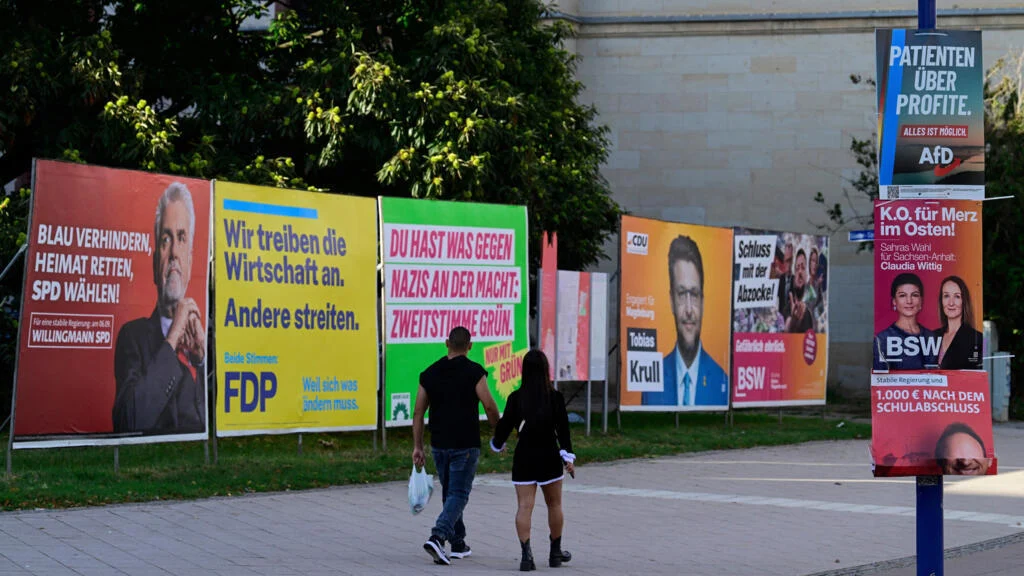
Magdeburg, Germany – September 6, 2026 — As polling stations across Saxony-Anhalt opened their doors this morning, the atmosphere in this eastern German state is charged with a palpable sense of political uncertainty. The regional elections, taking place under the watchful eye of both domestic observers and international analysts, serve as a critical barometer for the health of the German political establishment and a litmus test for the shifting allegiances of a disillusioned electorate.
The stakes are exceptionally high. For the traditional governing parties, this vote is an existential struggle to maintain the status quo against a rising tide of populism. For the opposition, it represents an opportunity to reshape the political landscape of a region that has long been a bellwether for national sentiment.
Main Facts: The Anatomy of a High-Stakes Election
The election in Saxony-Anhalt is primarily centered on the regional parliament, the Landtag. Voters are casting ballots to determine the composition of a legislative body that will navigate the state through a period defined by economic transition, energy insecurity, and debates surrounding migration and social cohesion.
At the heart of the contest is the performance of the incumbent coalition. The governing parties are fighting to retain their legislative majority, but recent polling suggests a fracturing of the traditional centrist consensus. Key issues dominating the campaign trail include:
- Economic Stagnation: Concerns over the region’s industrial base and the transition to a greener economy have left many voters feeling economically vulnerable.
- Energy Policy: As an industrial hub, Saxony-Anhalt has felt the brunt of energy price volatility, leading to intense debates over the pace of the Energiewende (energy transition).
- The "East-West" Divide: Despite decades of reunification, a perceived lingering gap in investment and political representation continues to drive a wedge between Eastern states and the federal government in Berlin.
The turnout today is expected to be a key indicator of voter engagement. Early reports from urban centers like Magdeburg and Halle suggest a robust participation rate, signaling that despite political fatigue, the electorate remains deeply invested in the outcome.
Chronology: The Path to the Polls
The journey to this Sunday’s election has been marked by a series of events that have steadily eroded the traditional political framework.
- January 2026: The regional government faced a budget crisis, forcing difficult discussions on austerity measures that alienated segments of the public sector.
- April 2026: A series of town hall meetings across the state saw record attendance, with citizens expressing deep frustration over local infrastructure decay and rising living costs.
- June 2026: The official campaign season kicked off, characterized by a shift toward more aggressive, populist rhetoric. Both the far-right and far-left saw surges in their membership numbers during this period.
- August 2026: The final televised debates were marked by heated exchanges regarding the federal government’s role in local affairs, with opposition leaders successfully framing the election as a "referendum on Berlin."
- September 5, 2026: The final day of campaigning saw a flurry of activity as candidates made their last appeals to undecided voters in town squares across the state.
Supporting Data: Understanding the Shifting Landscape
Political science experts and pollsters have spent the last several months dissecting the shifts within the Saxony-Anhalt electorate. Data indicates that the "Big Tent" parties are losing their grip on the working-class vote, which has historically been the bedrock of regional stability.
According to independent projections released late last week:
- Incumbent Support: The ruling coalition has seen a steady decline in approval ratings, hovering at a level that suggests they will struggle to form a stable majority without reaching across the aisle to unconventional partners.
- The Rise of the Fringe: Parties advocating for a more protectionist economic stance have seen a 12% increase in polling compared to the previous election cycle.
- Demographic Split: There is a stark divide between younger voters, who are prioritizing climate policy, and older demographics, who are significantly more concerned with pensions and social stability.
The data suggests a "fragmented legislature" scenario. In such a case, the process of forming a government could take months, potentially leading to a period of political paralysis that would further weaken the state’s bargaining power with federal authorities.
Official Responses: The Battle for Narrative
As the results begin to trickle in, the rhetoric from party leadership has intensified.

The Incumbent Perspective:
Government representatives have characterized the election as a choice between "pragmatic stability and reckless populism." A spokesperson for the ruling coalition stated, "We are asking the people of Saxony-Anhalt to recognize the progress we have made in modernizing our infrastructure. A shift toward extremist platforms would not only stall this progress but threaten the very social fabric of our state."
The Opposition Stance:
Opposition leaders, meanwhile, have framed their platforms as a long-overdue correction. "The people here have been ignored for far too long," said one high-ranking opposition official during a campaign stop in Halle. "This is not just an election; it is a signal to Berlin that the citizens of the East are no longer content to be treated as second-class voters. We are demanding a policy shift that puts local interests before national ideology."
Independent Observers:
Political analysts have noted that regardless of the winner, the rhetoric used during this campaign has permanently altered the tone of regional politics. The normalization of aggressive, polarized debate has made the prospects for post-election consensus significantly dimmer than in previous years.
Implications: What Lies Ahead for Germany
The repercussions of the Saxony-Anhalt election will resonate far beyond the state borders. As a microcosm of the national mood, the results will force the federal government to reconsider its current trajectory.
1. Federal Stability
If the coalition government performs poorly, the shockwaves will be felt in the Bundestag. The Chancellor will likely face pressure to reshape the national agenda to appease disgruntled voters in the eastern states, potentially causing internal friction within the federal cabinet.
2. The Future of German Industry
Saxony-Anhalt is a critical node in Germany’s industrial strategy. The outcome of this election will dictate the state’s approach to industrial subsidies and the green energy transition. Investors are watching closely; a shift in policy could lead to a temporary freezing of capital investment as firms wait to see how the new government handles regulatory frameworks.
3. A Precursor to the General Election?
Many are viewing this election as a "dress rehearsal" for the next federal cycle. If the electoral trends seen here—namely the decline of the political center—are mirrored in other states, it could signal the end of the traditional coalition model that has defined German politics for decades. The rise of a multi-polar parliament makes the prospect of "minority governments" or "grand coalitions" more likely, which could fundamentally change the legislative efficiency of the German state.
4. Social Cohesion
Beyond the economic and political implications, there is a profound social dimension. The intense focus on cultural identity and "local pride" during this campaign has deepened divisions within the community. The new government will face the daunting task of reconciling a polarized public, a challenge that may define the state’s governance for years to come.
As the sun sets on Saxony-Anhalt this Sunday, the path forward remains shrouded in fog. The voters have had their say, and the political establishment must now grapple with the consequences. Whether this election leads to a period of renewal or a deepening of the current malaise remains to be seen. What is certain, however, is that the events of September 2026 have etched a new chapter into the history of the Federal Republic—a chapter characterized by complexity, volatility, and a deep-seated desire for change.