In a significant realignment of the high-stakes AI infrastructure sector, Denver-based data center giant Crusoe has officially terminated its agreement to utilize stationary power turbines developed by local aerospace firm Boom Supersonic. The move marks a sudden end to a high-profile partnership that was originally valued at $1.25 billion, casting a spotlight on the volatile intersection of artificial intelligence, energy demand, and industrial innovation.
For Crusoe, which recently secured a staggering $3.9 billion in funding to expand its footprint of "AI factories," the decision reflects a broader, more fluid approach to energy procurement. For Boom Supersonic, best known for its pursuit of supersonic passenger travel, the dissolution of the deal represents a high-profile loss of its primary "launch customer" for its diversification into the power generation market.
The Genesis of a Bold Ambition
The partnership was born out of the desperate, insatiable need for power in the age of generative AI. As companies like OpenAI and Microsoft demand massive computing capacity, the "AI factory" has become a new type of critical infrastructure.
Crusoe, founded in 2018 by Cully Cavness and Chase Lochmiller, began its journey with a unique niche: capturing flared natural gas from oil fields to power bitcoin mining operations. Having successfully pivoted into one of the nation’s largest developers of AI-ready data centers, the company needed reliable, scalable, and decentralized power.
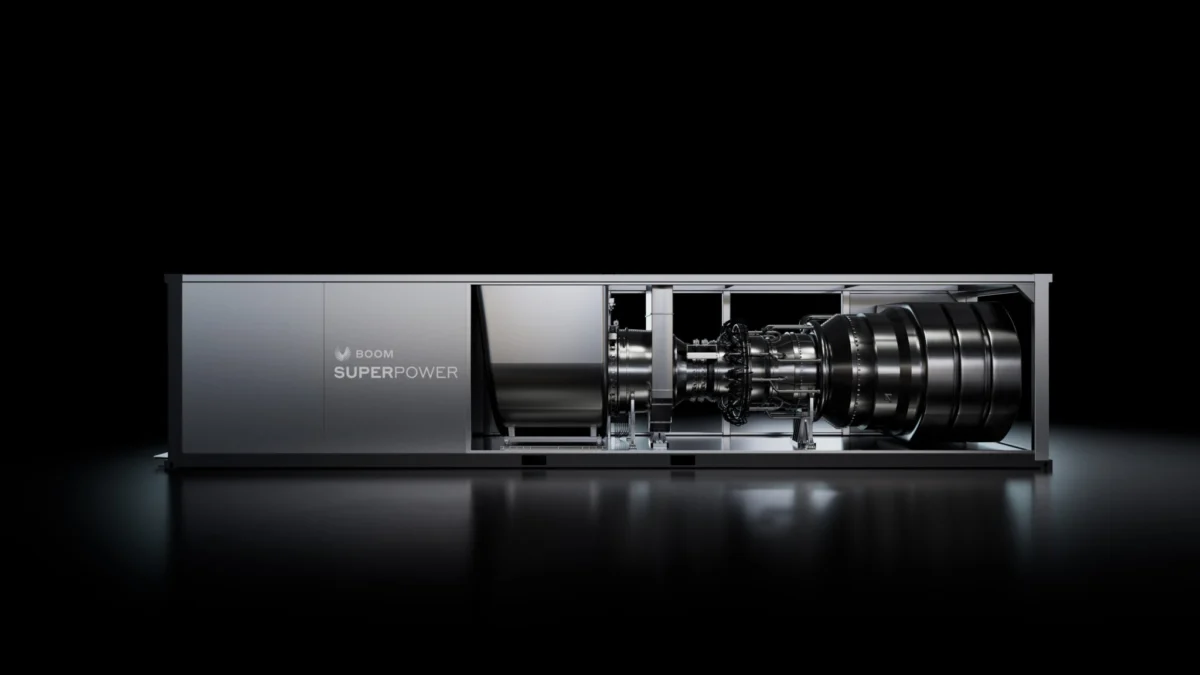
Enter Boom Supersonic. While the company is famously developing the "Overture" supersonic jet, CEO Blake Scholl identified a strategic opportunity to leverage the proprietary engine technology being designed for that aircraft. By adapting the core architecture of the "Symphony" jet engine into a stationary, natural gas-fired turbine dubbed "Superpower," Boom aimed to create a robust revenue stream to help fund its aerospace ambitions. With roughly 80% of parts shared between the jet engine and the ground-based turbine, the business model promised a symbiotic relationship between aerospace engineering and energy production.
Chronology of a Failed Alliance
The timeline of this partnership highlights the rapid pace of change within the AI infrastructure sector:
- 2023: Boom Supersonic pivots toward the energy sector, leveraging its aerospace engineering prowess to develop the "Superpower" turbine.
- Late 2025: Crusoe and Boom Supersonic announce a massive $1.25 billion deal, with Crusoe slated to purchase 29 of the 42-megawatt turbines. The delivery schedule was targeted to begin in 2027.
- December 2025: Boom Supersonic raises $300 million in capital, largely intended to commercialize the power plant business to sustain its jet development program.
- September 2026: Following a $3.9 billion funding round for Crusoe, the company re-evaluates its capital expenditure and energy strategy.
- September 2026 (Friday): Blake Scholl confirms via social media that the partnership has been dissolved, citing a shift in Crusoe’s near-term energy mix.
The Strategic Shift: Why the Deal Fell Apart
The dissolution of the agreement is not merely a product of contractual disagreement, but rather a reflection of the evolving philosophy behind how modern AI data centers are built.
In a statement provided to the press, a spokesperson for Crusoe emphasized the company’s need for agility. "We build AI factories from the power up, and we’re bringing new campuses online across the country, powered by innovative energy sources," the statement read. "As our portfolio grows, we stay flexible, choosing the energy solutions that are right for each site as its needs evolve—including turbines, along with wind, solar, batteries and the grid."
For Crusoe, the "Superpower" turbines were originally intended to serve as a cornerstone for specific deployments. However, as the company’s portfolio has expanded, the logistical and financial overhead of managing specialized gas-turbine sites has prompted a reassessment. The company’s current flagship 1.2-gigawatt data center in Abilene, Texas—which provides critical computing power to OpenAI and Oracle—relies primarily on the grid, using gas turbines as a secondary backup rather than a primary load source.
While Crusoe is indeed proceeding with a 900-megawatt facility in Abilene that will be powered by on-site gas turbines, the specific model and vendor requirements have evidently shifted away from the Boom Supersonic solution.

Boom Supersonic’s Path Forward
Despite the loss of its launch partner, Boom Supersonic remains publicly optimistic about the viability of its energy division. CEO Blake Scholl, in his address on the social platform X, acknowledged the split with grace while pivoting immediately to the future of the product line.
"The TL/DR is that turbines are no longer part of Crusoe’s near-term primary power mix at Abilene/etc., so a launch partnership just didn’t make sense," Scholl wrote. He was quick to highlight that the company’s order book remains active, noting that Boom is on track to deliver approximately 250 megawatts of Superpower capacity to other, undisclosed sites next year, with a stated goal of reaching 1 gigawatt of deployed capacity by 2028.
Scholl’s messaging suggests that Boom is distancing itself from the "dependency" on Crusoe, framing the split as a logical business adjustment rather than a failure of technology. "We’re grateful for the help Crusoe gave us in shaping Superpower and continue cheering for their successes," Scholl added, leaving the door open for future collaboration should market conditions align.
The Broader Implications for AI Infrastructure
The collapse of this deal serves as a case study for the "Gold Rush" dynamics currently gripping the AI industry. Several key implications emerge:
1. The Power-AI Bottleneck
The demand for electricity by AI data centers is reaching a fever pitch. Utilities are struggling to keep up with the massive load requirements of training and inference clusters. This has forced companies like Crusoe to become energy developers in their own right. The volatility of these partnerships underscores how difficult it is for tech companies to predict their exact energy needs 24 to 36 months in advance.
2. The Risk of Diversification for Aerospace
Boom Supersonic’s attempt to bridge the gap between aviation and power generation is a classic example of "dual-use" engineering. While the potential for high-margin revenue is immense, the risks are equally high. By banking on a single, massive launch customer to validate a new product line, a company risks losing its entire business case if the customer’s strategy shifts.
3. The "Grid vs. Microgrid" Debate
Crusoe’s decision to move away from exclusive reliance on specialized turbines reflects an ongoing industry debate: should AI data centers be "off-grid" islands powered by proprietary onsite generation, or should they integrate more deeply with existing national grids supplemented by renewables and storage? Crusoe’s recent messaging suggests a "hybrid" future, where the energy source is dictated by the local geography and the specific regulatory environment of each site, rather than a one-size-fits-all hardware solution.
Conclusion: A Lesson in Industrial Agility
The parting of ways between Crusoe and Boom Supersonic is a reminder that in the hyper-growth phase of the AI revolution, plans are subject to rapid iteration. Crusoe, buoyed by $3.9 billion in fresh capital, is clearly operating with a mandate for maximum optionality. It cannot afford to be locked into a technology stack that does not perfectly align with the shifting demands of its hyperscale clients.
Conversely, Boom Supersonic is entering a critical phase of its own. As it moves toward its 2028 production goals, the company must prove that its stationary power plants can compete with established energy sector incumbents like General Electric or Siemens. Whether or not the "Superpower" turbine succeeds will likely be determined by the company’s ability to diversify its client base and move beyond the initial, experimental phases of its energy pivot.
For now, the two Denver titans remain on separate paths—one focused on the massive computational requirements of the digital age, and the other on the structural engineering challenges of the next generation of flight. While the $1.25 billion deal has dissolved, the underlying hunger for reliable, high-density power remains the defining challenge of the decade.