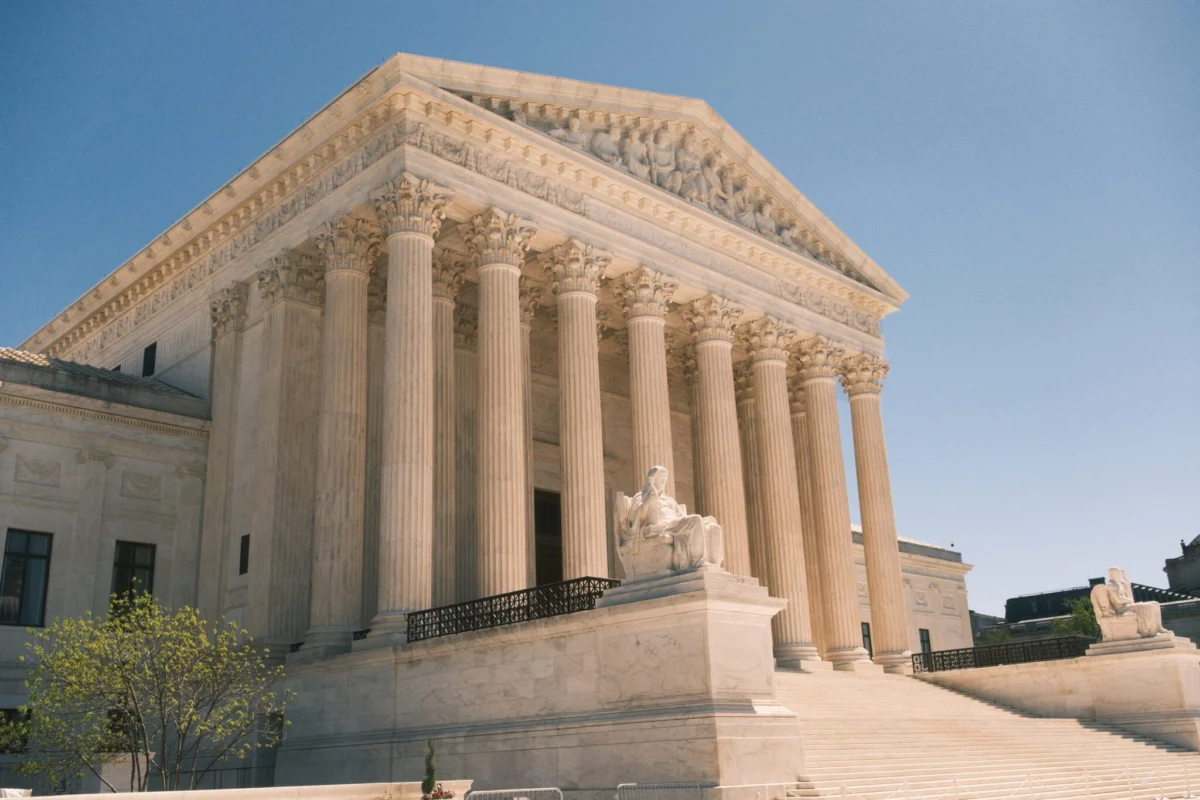
In a significant judicial development arriving just weeks before the November 3 midterm congressional elections, the United States Supreme Court issued an unsigned opinion on Friday that permits the federal government to resume its controversial program of vetting voter citizenship status against Social Security Administration (SSA) records.
The decision effectively stays a June 22 injunction issued by the US District Court for the District of Columbia, which had previously blocked the Department of Homeland Security (DHS) from utilizing its overhauled Systematic Alien Verification for Entitlements (SAVE) program. By reviving these checks, the high court has reopened a federal database pipeline that critics argue threatens voter privacy and risks disenfranchising eligible citizens, while proponents maintain it is a necessary tool for ensuring the integrity of the American franchise.
Main Facts: The Scope of the Ruling
The Supreme Court’s decision centers on a technical but high-stakes legal battle over the DHS’s 2025 expansion of the SAVE program. Originally designed to assist agencies in verifying immigration status for benefit eligibility, the system was modified by the Trump administration to include bulk data-sharing agreements with the Social Security Administration. These agreements allow for the systematic cross-referencing of state voter registration rolls against federal citizenship records.
The majority of the Court found that while the plaintiffs—a coalition including the League of Women Voters (LWV) and the Electronic Privacy Information Center (EPIC)—likely possessed the legal standing to bring the suit, they failed to demonstrate a high probability of success on the merits. The Court pointed to the Illegal Immigration Reform and Immigrant Responsibility Act of 1996, specifically 8 U.S.C. § 1373, which dictates that the department may obtain citizenship data from other federal agencies “notwithstanding any other provision of law.”
Crucially, the Court’s ruling is an interim measure. It does not resolve the underlying merits of the privacy-related lawsuit but allows the administration to continue the data-matching program while the case proceeds through the appellate process.
Chronology: A Path to the High Court
The controversy surrounding the SAVE program overhaul did not emerge in a vacuum. The timeline of this litigation highlights the rapid escalation of tensions regarding voter roll maintenance:
- 2025: The Department of Homeland Security implements an overhaul of the SAVE program, incorporating bulk Social Security data searches to identify potential noncitizens on voter registration lists.
- Early 2026: Advocacy groups, including the League of Women Voters and the Electronic Privacy Information Center, file suit in the District of Columbia, arguing that the program violates federal privacy protections and the Privacy Act of 1974.
- June 22, 2026: The US District Court for the District of Columbia issues an injunction, ruling that the DHS’s program expansion likely violates federal law and ordering the cessation of the bulk searches.
- August 2026: The Trump administration appeals the district court’s order, seeking an emergency stay to allow the program to operate before the midterms.
- Late August 2026: The Supreme Court issues its unsigned opinion, granting the administration’s request to stay the injunction, thereby reinstating the citizenship checks just weeks before the November 3 election.
Supporting Data: The Scale of Verification
The administration’s defense of the program has relied heavily on the volume of data processed through the system. In court filings, the government stated that since the program’s expansion, the system has successfully vetted over 65 million registered voters across 26 states.
According to the data provided by the DHS, the program has flagged 28,635 individuals as “potential noncitizens.” However, the administration has been careful to frame these numbers as “leads” rather than definitive findings of voter fraud. Despite this, the sheer volume of flags has become a central point of contention. Critics point out that even a small percentage of false positives—a common occurrence in large-scale government databases—could result in thousands of eligible, naturalized citizens being erroneously targeted for investigation or removal from the rolls.
The government maintains that the system is a vital component of “election hygiene,” ensuring that voter rolls remain accurate and that the integrity of the democratic process is maintained against the potential for foreign or unauthorized influence.
Official Responses and Judicial Dissent
The ruling has sparked a sharp divide, not only between the administration and civil rights advocates but within the Supreme Court itself.
The Majority’s Rationale
The Court’s unsigned opinion emphasized that the federal government holds broad authority under the 1996 immigration statutes to share data between agencies. By invoking the “notwithstanding” clause, the majority indicated that existing privacy statutes, which were the cornerstone of the plaintiffs’ case, may be superseded by the specific mandates of federal immigration law.
The Dissenting View
Justice Ketanji Brown Jackson, joined by Justices Sonia Sotomayor and Elena Kagan, issued a blistering dissent. Justice Jackson argued that the majority’s decision to grant a stay on such a complex issue—without the benefit of full briefing or oral arguments—was deeply premature and dangerous.
"The Court has issued questionable interim rulings that disregard the very real, tangible harm to lawful voters," Jackson wrote. She specifically highlighted the plight of recently naturalized citizens, whose records at the Social Security Administration may not have been updated to reflect their new status, thereby making them vulnerable to being flagged as noncitizens. The dissent warned that the administration’s actions risk creating a climate of fear and confusion, which may deter eligible voters from participating in the upcoming midterms.
Advocacy Groups
The League of Women Voters released a statement following the ruling, labeling the Court’s action as "a blow to the democratic rights of millions." The organization argues that the SAVE program was never intended to be used for voter roll maintenance and that its current application is a "backdoor attempt to purge voter rolls without sufficient due process."
Implications: The Midterm Landscape and Beyond
The timing of this ruling, occurring less than six weeks before the November 3 congressional elections, carries profound implications for the electoral landscape.
The 90-Day Rule
Federal law, specifically the National Voter Registration Act (NVRA), prohibits states from conducting systematic removals of ineligible voters from registration rolls within 90 days of a federal election. This “quiet period” is designed to prevent last-minute voter purges that could disenfranchise eligible citizens.
The majority acknowledged this constraint in their ruling, noting that it limits the immediate reach of their decision. While the DHS can continue to flag voters, the ability of states to act on those flags and remove individuals from the rolls is significantly hampered by the 90-day rule. However, the ruling provides a legal framework for states to pursue individual, case-by-case investigations, which some election law experts fear could be used to harass voters or intimidate election officials.
Future Legal Challenges
The controversy is far from settled. The Supreme Court has already scheduled a case for December that asks a fundamental question: Does the NVRA’s 90-day bar on systematic removals apply to the removal of noncitizens?
If the Court eventually rules that noncitizens can be removed at any time, the current SAVE program would become a potent tool for mass voter roll maintenance. Conversely, if the Court affirms the 90-day rule’s absolute nature, it could lead to a protracted legal battle over the definition of “systematic” versus “individual” checks.
Trust in the System
Beyond the legal mechanics, the decision reflects a deepening divide in American politics regarding the administration of elections. The move to use federal immigration data to police the voter rolls is viewed by supporters as a necessary step toward total transparency. To opponents, it represents the weaponization of the federal bureaucracy against the electorate.
As the nation moves toward the midterms, the impact of this ruling will likely be felt in the heightened scrutiny of voter rolls and the potential for litigation in key swing states. Whether the SAVE program acts as a safeguard of election integrity or a catalyst for disenfranchisement remains the central question that will define the legal landscape of the 2026 election cycle.