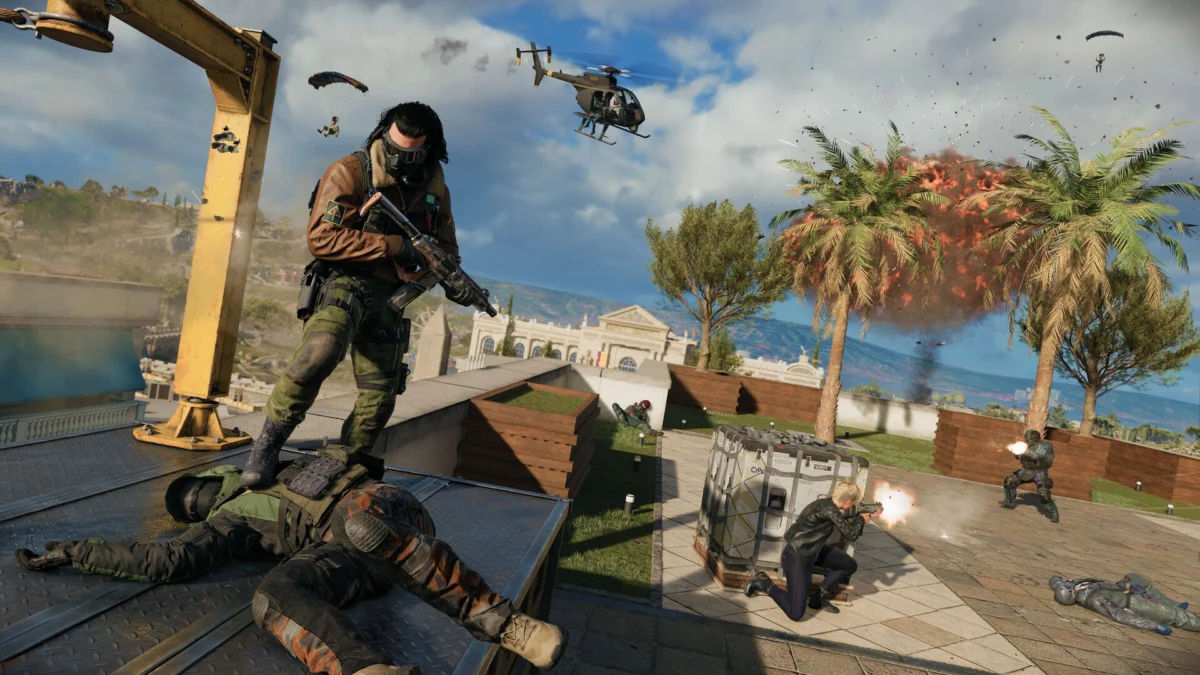
The landscape of competitive gaming is shifting once again. For millions of players who have remained loyal to the PlayStation 4 and Xbox One hardware ecosystem, the clock is officially ticking. Activision has confirmed that Call of Duty: Warzone, the titan of the free-to-play battle royale genre, will officially cease support for last-generation consoles following the integration of Call of Duty: Modern Warfare 4.
This transition marks a definitive, if long-anticipated, departure from the hardware that defined the mid-2010s. As the industry looks toward the capabilities of current-gen hardware—and the rumored power of the incoming Nintendo Switch 2—the limitations of the aging Jaguar CPU architecture found in the PS4 and Xbox One have finally hit a ceiling that developers are no longer willing to accommodate.
The Chronology of a Sunset: Key Dates and Deadlines
The phasing out of Warzone on legacy hardware has been a calculated process, designed to provide a "soft landing" for the player base rather than an abrupt cutoff.
- May 2026: Activision officially announces Call of Duty: Modern Warfare 4 and confirms that the title, alongside the Warzone integration, will bypass last-gen hardware entirely.
- June 2026: The in-game store for Warzone was effectively shuttered on PS4 and Xbox One, signaling the beginning of the end for microtransactions and content purchases on these systems.
- September 2026 (Present): Activision reiterates that while the game remains functional, it is no longer available for new downloads on legacy platforms.
- October 23, 2026: The launch of Call of Duty: Modern Warfare 4. This date serves as the bridge, with the subsequent arrival of Season 1 signaling the absolute end of Warzone functionality on PS4 and Xbox One.
For players currently on these consoles, the ability to engage with the game is currently restricted to those who already have the application installed. New users are effectively locked out of the experience, marking a complete halt to the growth of the legacy user base.
The Technical Imperative: Why Last-Gen Must Go
The decision to sunset Warzone on the PS4 and Xbox One is rooted in the "connected experience" strategy. Activision intends for Modern Warfare 4 to represent a leap in technical fidelity, utilizing new lighting engines, complex environmental destruction, and high-fidelity physics simulations that simply exceed the memory and processing overhead of 2013-era hardware.
Memory Bottlenecks
The PS4 and Xbox One operate on 8GB of DDR3/GDDR5 RAM, much of which is shared between the system and the GPU. As Warzone has grown in scale—adding new maps, intricate weapon attachments, and high-fidelity operator skins—the memory footprint has ballooned. Developers have struggled to optimize the game to fit within these constraints without drastically reducing texture quality or draw distances, which ultimately compromises the competitive integrity of the game.
The "Connected Experience" Philosophy
By forcing a transition to the PlayStation 5, Xbox Series X, and Windows PC, Activision is creating a standardized "floor" for performance. This ensures that every player in a lobby is operating within a similar range of frame rates and latency, which is critical for a battle royale that relies on split-second reactions. The integration of Modern Warfare 4 content into Warzone requires a unified engine architecture, one that is not burdened by the legacy "spaghetti code" required to maintain parity with older consoles.
Implications for the Player Base
For the millions of players who have yet to make the jump to a current-gen console, this transition represents a significant barrier to entry. However, the move is not entirely unprecedented. The industry has been trending toward "current-gen only" development for some time, with titles like Starfield and Cyberpunk 2077: Phantom Liberty setting the precedent that the legacy hardware of the last decade is now a liability for innovation.
The Financial Burden
The primary concern for the community remains the cost of entry. With the PS5 and Xbox Series X still commanding significant price points, the barrier to continuing their Warzone journey is high. However, the inclusion of the Nintendo Switch 2 in the Modern Warfare 4 ecosystem suggests that Activision is betting on a broader, more modern hardware spread to eventually replace the PS4/Xbox One demographic.
Progression and Account Integrity
One piece of good news for the player base is the nature of Activision’s unified account system. Because player progression is tied to an Activision ID rather than the console platform, any progress made in terms of operator skins, weapon levels, and Battle Pass tiers will transition seamlessly to a new console or PC. Players are not losing their history; they are merely being asked to change their venue.
Official Stance and Future Outlook
In a statement released alongside the Modern Warfare 4 announcement, the development teams at Infinity Ward, Raven Software, and their collaborators highlighted that the shift is essential for the future of the franchise.
"Our goal is to build the most immersive, fluid, and expansive Call of Duty experience in history," a spokesperson for the development team noted. "To do that, we have to lean into the capabilities of modern hardware. By moving past legacy limitations, we are able to introduce features and map densities that were previously impossible. We understand this is a difficult transition for some of our players, but we believe the result will be a significantly more stable and exciting environment for everyone."
The team also clarified that while the in-game store was removed in June, players on legacy systems can still finish out the current Black Ops 7 seasonal progression. This allows those on the fence to complete their current Battle Pass commitments before the final shutdown occurs.
The Long-Term Vision: A New Era for Warzone
The history of Warzone has been defined by rapid evolution. From the original 2020 launch to the 2023 transition to the current engine, the game has undergone several "rebirths." This latest move feels like the most definitive of these pivots.
By removing the tether to 2013 technology, Warzone is effectively positioning itself to become a "live service platform" that can adapt to the next decade of gaming. With the integration of Modern Warfare 4, the game will move toward a more modular design, allowing developers to add and remove content without the fear of breaking the game on older, weaker hardware.
For the competitive scene, this is a breath of fresh air. Competitive integrity is often hampered by the lowest common denominator; by elevating the minimum hardware requirements, the playing field becomes more balanced. Players on high-end PCs will no longer have to contend with lobby-wide performance degradation caused by optimization issues on legacy hardware.
Conclusion: Preparing for the Migration
As October 23 approaches, the Warzone community is in a state of transition. While the loss of legacy support is a point of contention for some, it is an inevitability that reflects the broader trajectory of the gaming industry. The hardware that powered the battle royale boom of the 2020s is finally retiring, making way for a new, more powerful generation of interactive entertainment.
Players currently on PS4 or Xbox One who wish to continue their journey are encouraged to look into the trade-in programs offered by various retailers or to consider the jump to a current-gen console. The transition is not merely a technical update; it is the closing of a chapter that saw Warzone transform from a side project into the most significant gaming phenomenon of its decade. The future of the franchise is being built on a foundation of modern performance, and for those who make the move, the upcoming season of Modern Warfare 4 promises to be the most ambitious chapter yet.