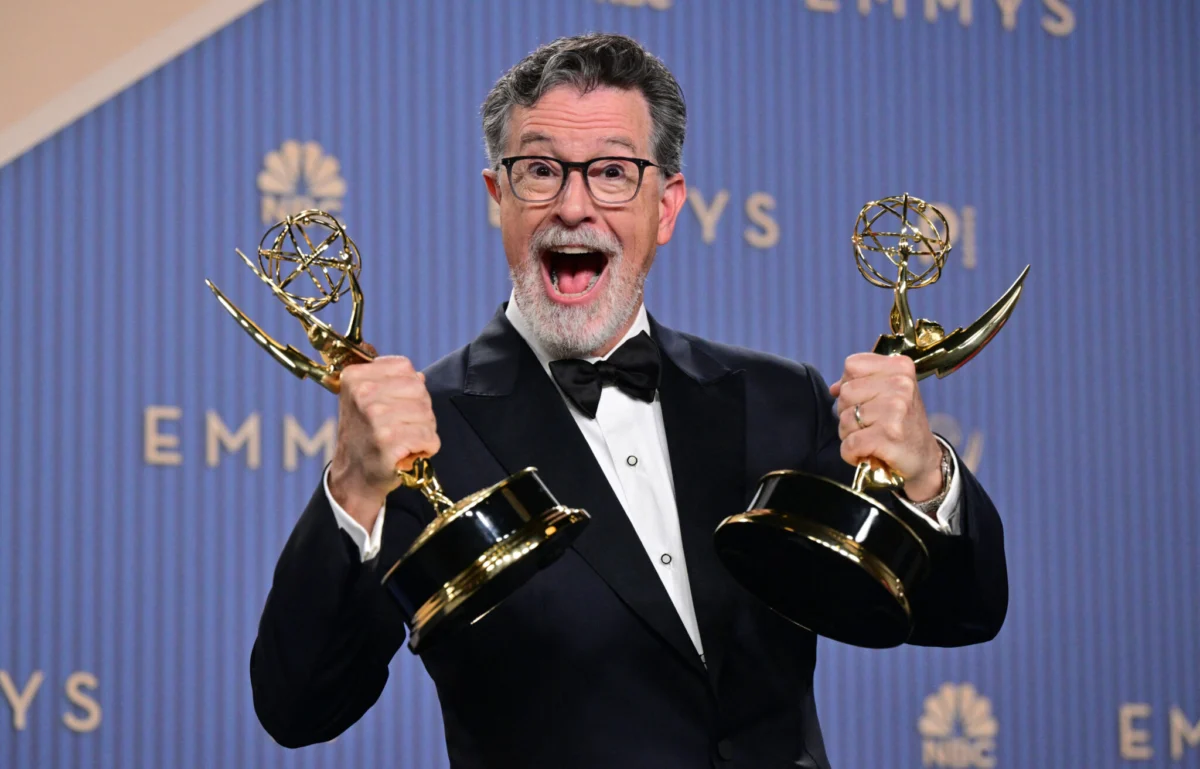
Just one day after closing the final chapter of his illustrious tenure at CBS, Stephen Colbert appeared on the stage of Jimmy Kimmel Live! with the relaxed air of a man who had finally put down a heavy, ticking burden. Having just accepted the Primetime Emmy Award for Outstanding Variety Series for the swan song season of The Late Show with Stephen Colbert, the host’s appearance served as a victory lap—and a definitive statement on his future.
For many, the transition from the center of the cultural zeitgeist to a life beyond the nightly monologue is a daunting prospect. But as Colbert sat across from his peer and fellow late-night icon Jimmy Kimmel, his answer to whether he missed the grind of daily television was as sharp as it was immediate: "Nope."
The Weight of the Daily Cycle: A Metaphor for Modern Satire
The dialogue between Colbert and Kimmel on Tuesday night provided a rare, unvarnished glimpse into the psychological toll of hosting a daily political talk show. When Kimmel observed that his friend seemed "happier" and "healthier" than he had in years, the former Late Show host didn’t shy away from the intensity of the job he left behind.
Colbert famously likened the experience of anchoring a daily show to being "lowered like carbon rods into a radioactive pool every day." It was a vivid, if grim, metaphor for the demands of distilling the chaotic, often toxic, cycle of global news into a digestible, humorous format. "A good part of the job is, as I remember it, to be lowered like carbon rods into a radioactive pool every day," Colbert explained. "And then to be pulled out and put in front of a camera. And to radiate it back at the audience at a nonlethal rad level."
This admission highlights the exhausting nature of the current media landscape. For decades, late-night hosts have functioned as both jesters and unofficial moral arbiters, tasked with finding levity in a news cycle that grows increasingly polarized and aggressive. By stepping away, Colbert has effectively exited the "radiation zone," and the results—according to those around him—are already palpable.
Chronology of a Final Season: From Cancellation to Emmy Gold
The conclusion of The Late Show with Stephen Colbert in May 2026 marked the end of an era for CBS. When the network announced the series’ cancellation, it sparked a broader conversation about the shifting tides of television viewership and the declining prominence of the traditional talk show format.
However, the final season of the show proved that its creative team had not lost its touch. On September 14, 2026, at the 78th Primetime Emmy Awards held at the Peacock Theatre, the Television Academy recognized the show’s legacy, bestowing upon it the award for Outstanding Variety Series. The victory was a testament to the show’s enduring relevance, even in its final months.
The win was particularly significant given the caliber of the competition. The category was stacked with industry titans, including Comedy Central’s The Daily Show, ABC’s Jimmy Kimmel Live!, HBO’s Last Week Tonight with John Oliver, and NBC’s Saturday Night Live. By bestowing the top honor upon The Late Show for its final season, the Academy acknowledged not just a singular year of performance, but the profound impact Colbert’s voice had on the cultural discourse throughout his run.
Additionally, Colbert walked away with an Emmy for Outstanding Short Form Comedy, Drama or Variety Series for the digital companion program Colbert Before Air, proving that his influence extended well beyond the traditional broadcast window.
The State of the Industry: Free Speech and the Late-Night Ecosystem
Despite his personal decision to step away, Colbert remains a staunch defender of the medium. During post-awards interviews with Variety’s Ramin Setoodeh and CNN’s Elizabeth Wagmeister, Colbert emphasized that the late-night format remains a "vital" part of the television ecosystem, even as it navigates significant headwinds.

When asked about the current state of free speech and the pressures facing entertainers, Colbert was characteristically thoughtful. "Because if you can’t say something because you go to jail, that is a violation of free speech," he noted. "I think that late night is just as funny and just as vital as it ever has been."
He further underscored his appreciation for his contemporaries, expressing a desire to see the genre continue to thrive. "I love watching Jimmy and Jimmy and John and John and Seth and everybody else," he said, referencing the current landscape of hosts like Kimmel, John Oliver, and Seth Meyers. "I hope it goes on for a long time because you get to work with people like this, and that’s the greatest gift."
Implications: What Does the Future Hold for Late Night?
The departure of a pillar like Colbert raises inevitable questions about the future of late-night television. As traditional broadcast ratings fluctuate and younger audiences migrate toward streaming platforms and short-form digital content, the "monologue-and-guest" structure that has defined the genre since the days of Johnny Carson is under pressure to evolve.
1. The Shift to Digital-First Content
Colbert’s dual win—one for his broadcast show and one for his digital Colbert Before Air—underscores a critical shift. The audience is no longer tethered to a specific airtime. The success of digital-only segments suggests that the future of the medium may lie in decentralized, platform-agnostic content that lives on social media as much as it does on linear television.
2. The Talent Burnout Factor
Colbert’s candid discussion of "radioactive" workloads points to an unspoken crisis in the industry: host burnout. The expectation that a host must be an expert on world politics, a comedian, an interviewer, and a social media personality simultaneously is a heavy burden. If the industry wants to retain its biggest stars, the production model may need to shift toward shorter seasons or more collaborative structures to avoid the "radiation" effect that forced a top-tier talent like Colbert to walk away at the height of his powers.
3. The Cultural Role of the Host
For years, late-night hosts were seen as the "midnight conscience" of the nation. Colbert’s reflection on his time on the air suggests that this role is becoming increasingly untenable for the individual. The implication is that the era of the singular, all-knowing host may be transitioning toward a more diverse array of voices and formats, where the pressure to represent a collective truth is distributed more widely across the entertainment landscape.
Conclusion: A Legacy Defined by More Than Ratings
Stephen Colbert’s final Emmy win serves as a fitting punctuation mark on a career that bridged the gap between traditional broadcast journalism and avant-garde comedy. His decision to leave the screen while still at the top of his game is a rare move in an industry that often incentivizes perpetual output until a show’s relevance has long since faded.
As he told Kimmel, the desire to "not think about the news every day" is a simple, human response to an increasingly complex world. Whether or not he truly never returns, his legacy is secure. He leaves behind a landscape that he helped shape, and he walks away with the rare privilege of choosing his own exit—not with a whimper, but with an Emmy in hand and the freedom to finally stop radiating.
For the television industry, the challenge now remains: how to fill the void left by one of its most articulate and incisive voices, and whether the next generation of hosts can find a way to navigate the radioactive pulse of the news without succumbing to its heat.