Introduction: A Championship Forged in Fire
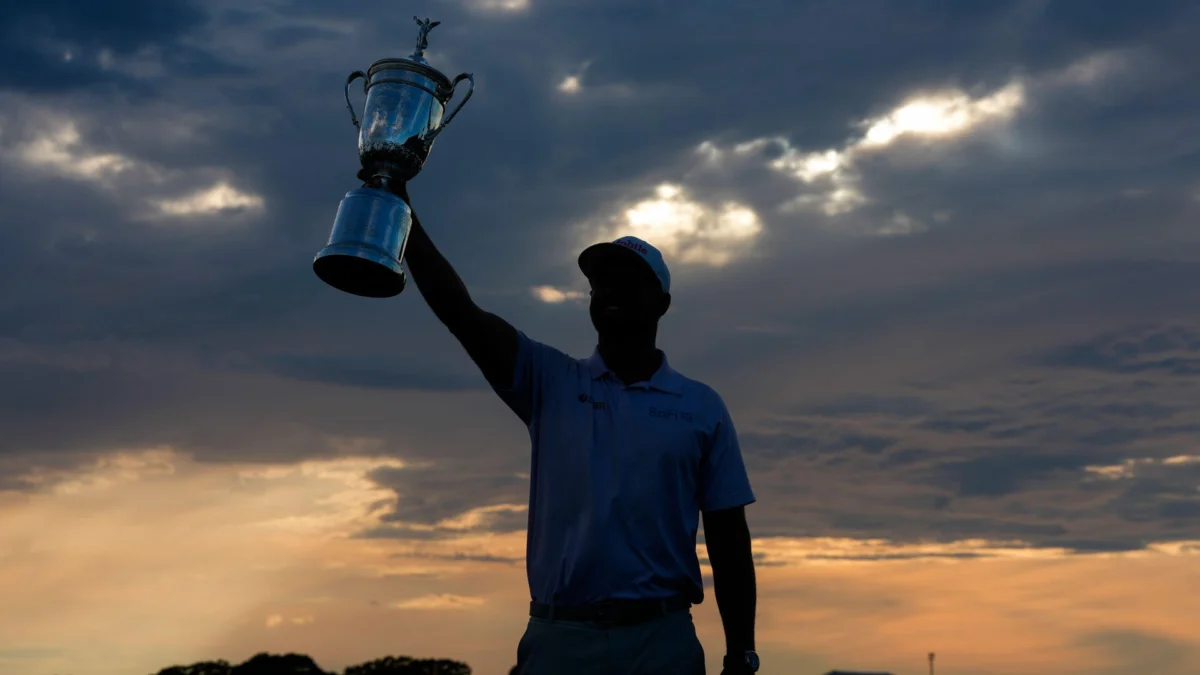
SOUTHAMPTON, N.Y. — Wyndham Clark arrived at Shinnecock Hills on Sunday standing on the precipice of two vastly different legacies. Entering the final round with a commanding six-stroke lead, the American golfer faced an existential binary: either he would etch his name into the history books as a two-time U.S. Open champion within a four-year span, or he would become the protagonist of the most infamous collapse in the modern era of major championships.
There was no middle ground for Clark, and perhaps, that was the point. While his performance on the links was a masterclass in grit, the narrative surrounding the 2026 U.S. Open was dominated by a cloud of controversy that followed him from the driving range to the 18th green. In a sport that prizes decorum above all, Clark’s checkered history—marked by outbursts, destroyed property, and public apologies—turned the fairways of Shinnecock into a hostile environment that felt less like a professional tournament and more like a gladiatorial arena.
The Weight of History: A Reputation Under the Microscope
To understand the vitriol Clark faced on Sunday, one must look at the "microscope" he has lived under throughout his career. The public memory is long, and for many fans, Clark’s past transgressions have overshadowed his undeniable talent.
The incidents are well-documented and frequently cited by his detractors: the locker he shattered at Oakmont Country Club following last year’s U.S. Open; the stray driver that damaged a sponsorship sign at the PGA Championship, narrowly missing a volunteer; and a series of rulings and tone-deaf quotes that left the golf world questioning his maturity.
By the time Sunday afternoon arrived, these incidents had coalesced into a singular, negative perception. As he walked toward the first tee, the tension was palpable. He wasn’t just competing against Scottie Scheffler or Sam Burns; he was competing against the collective will of a crowd that seemed determined to see him fail.
A Chronology of the Final Round: An "Away Game" in New York
The atmosphere at Shinnecock Hills was decidedly partisan, but not in the way a traditional favorite might expect. The thousands lining the fairways on that crisp, clear summer day were not gathered to cheer for the leaders; they were there to witness the unraveling of the man with the six-stroke lead.
The Front Nine: The Pressure Mounts
The nerves of protecting such a massive lead were compounded by the hostility of the gallery. Clark’s opening nine holes were a study in survival rather than dominance. A disastrous bogey on the par-5 5th hole signaled that the pressure was beginning to manifest in his game. Turning in at 3-over-par, Clark saw his lead dwindle, much to the audible delight of the spectators. Every time his ball strayed from the fairway, the groan of the crowd was instantaneous, followed by a surge of energy when his competitors managed a successful shot.
The Back Nine: The Relentless Barrage
By the time the leaders made the turn, the environment had shifted from merely rowdy to downright suffocating. Fans were reportedly summoning friends via FaceTime to participate in the heckling, creating a digital and physical wall of sound that followed Clark through the dunes of Shinnecock.
"I was kind of making jokes about it with Dave [his caddie]," Clark noted during his post-round press conference. "If we heard someone cheer for me, I’d go, ‘Oh, there’s one person that likes me.’ It’s tough, man. I’ve played in Presidents Cups and Ryder Cups on foreign soil, and it felt like that. It’s an ‘away game.’"
Despite the psychological warfare, Clark held firm. On the 10th hole, immediately after Scottie Scheffler rolled in a birdie, Clark landed a crucial "body blow" of his own, steadying his nerves. The crowd’s reaction—or lack thereof—spoke volumes. When Clark hit a brilliant shot, silence fell over the gallery. When he struggled, the cheers were raucous and high-fives were exchanged as if the tournament were already decided in their favor.
The Climax: The 16th Hole Uppercut
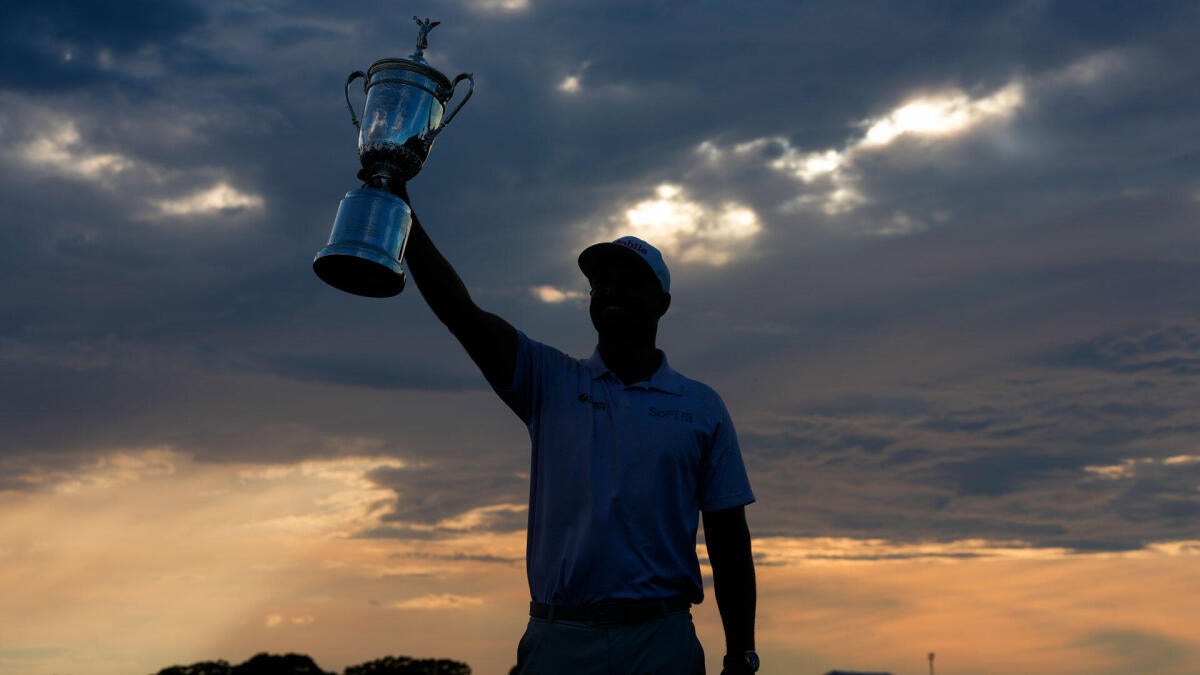
The decisive moment came on the par-5 16th. Out of position off the tee and facing a difficult lie, Clark needed a moment of brilliance to silence the doubters. He drained a 24-foot birdie putt, an "uppercut" that effectively knocked the wind out of the opposition’s sails. A solid two-putt par on the 18th hole solidified his status as a two-time champion, joining the rarefied air of Tiger Woods, Bryson DeChambeau, Retief Goosen, and Brooks Koepka as the only men to achieve this feat in the 21st century.
Supporting Data: Financial and Statistical Context
The 2026 U.S. Open was notable not only for the drama but for the record-breaking stakes. The event featured an unprecedented prize purse of $22.5 million. Clark’s victory secured him the winner’s share of this massive pool, cementing his financial status at the top of the sport.
Statistically, Clark’s performance was arguably one of the most mentally taxing in the history of the event. While his stroke-play numbers were impressive, the "Expected Winning Probability" was severely challenged by his own psychological state and the extreme external pressure of the gallery. According to post-round analytics, the volatility of his score on the front nine was a direct reflection of the pressure, yet his recovery on the back nine ranks among the highest-rated clutch performances in major championship history.
Official Responses and Reflections
In the immediate aftermath of his victory, a more subdued and introspective Clark addressed the media. He did not shy away from his past, nor did he blame the crowd for their behavior.
"I’m hoping I can win back the fans," Clark said on Friday, a sentiment he reiterated after the win. "I feel like I can show people that I’m fun, outgoing, fierce, and competitive. I respect the game, and I just had a bad moment. I hope this closes the door on it."
When asked if he feared becoming the "heel" of the PGA Tour, Clark offered a wry, pragmatic response: "I guess if I am, any press is good press, right?"
Implications: The New Face of Professional Golf
The victory at Shinnecock Hills leaves the golf world in a complicated position. Wyndham Clark is, by all metrics, a world-class golfer, but he remains a polarizing figure. The implications of this win are twofold:
- The Evolution of Fan Engagement: The hostility Clark faced highlights a growing trend in professional golf where the "fan experience" is becoming increasingly confrontational. The influence of social media and real-time connectivity has turned spectators into active participants in the psychological warfare of the sport.
- The Redemption Arc vs. The Villain Narrative: Clark’s win forces a conversation about whether athletes should be judged strictly by their professional output or by their behavioral history. As he matures, the "heel" persona may either define him or become the catalyst for his transformation into a respected veteran.
Ultimately, Clark proved that he has the mental fortitude to survive the most hostile environments in sports. Whether or not the public chooses to embrace him, his place in the history of the U.S. Open is now undeniably secure. In a game that often leans toward the "vanilla," Clark provides a distinct, if controversial, flavor—and as he proved at Shinnecock, he is more than capable of winning even when the world is rooting against him.