WASHINGTON — In an extraordinary display of bipartisan unity, the House Oversight and Accountability Committee voted unanimously on Tuesday to recommend holding billionaire private equity executive Leon D. Black in contempt of Congress. The 41-0 vote follows Black’s persistent refusal to comply with congressional subpoenas seeking non-disclosure agreements (NDAs) and testimony regarding his extensive financial and personal relationship with the late convicted sex offender Jeffrey Epstein and his co-conspirator Ghislaine Maxwell.
The action marks a major escalation in the House’s ongoing investigation into how high-profile figures utilized confidentiality agreements to potentially conceal illicit networks, sex trafficking operations, and financial transactions connected to Epstein. Black, the co-founder and former Chief Executive Officer of Apollo Global Management, now faces a potential referral to the U.S. Department of Justice for criminal contempt prosecution should the full House of Representatives adopt the committee’s report.
Main Facts: A Unanimous Bipartisan Rebuke
The House Oversight Committee’s decision to move contempt proceedings against Black represents a rare moment of total alignment between committee Republicans and Democrats. The formal committee report recommends that the House cite Black under 2 U.S.C. §§ 192 and 194, the federal statutes governing congressional contempt, after months of mounting frustration over his lack of cooperation.
================================================================================
                    HOUSE OVERSIGHT COMMITTEE CONTEMPT VOTE
================================================================================
 Date of Vote:        September 15, 2026
 Motion:              Recommend Contempt of Congress Citation for Leon D. Black
 Final Vote Count:    41 - 0 (Unanimous Bipartisan Approval)
 Key Issue:           Non-compliance with Subpoenas for NDAs and Deposition Testimony
 Target Entity:       Leon D. Black (Co-founder, Apollo Global Management)
 Next Legislative:    Scheduled Vote before the Full House of Representatives
 Potential Outcome:   Criminal Referral to the U.S. Department of Justice
================================================================================
According to the committee’s report, Black has repeatedly shielded documentation regarding confidentiality agreements executed between himself, Epstein, Maxwell, and various third parties. While Black initially agreed to participate in a transcribed voluntary interview earlier in the summer, lawmakers determined that his refusal to address questions regarding NDAs severely hindered their oversight mandate.
Subsequent legal instruments, including formal subpoenas for document production and mandatory deposition testimony, were largely rebuffed by Black’s legal counsel. To date, Black has turned over only a single NDA to congressional investigators, a response the committee characterized as wholly inadequate given the breadth of his dealings with Epstein.
Chronology of the Inquiry: From Voluntary Interview to Subpoena Defiance
The congressional clash with Black reflects a multi-year effort by lawmakers to uncover the mechanisms that allowed Epstein to operate an international sex-trafficking ring for decades while maintaining lucrative ties with some of the world’s most powerful financial and political figures.
                               TIMELINE OF EVENTS

  2012–2017:   Black pays Epstein over $158 million for tax and financial services.
      │
  Aug 2019:    Jeffrey Epstein dies in federal custody; investigations intensify.
      │
  Mar 2021:    Black steps down as CEO/Chairman of Apollo Global Management.
      │
  Jun 26, 2026: Black attends voluntary transcribed interview; refuses NDA answers.
      │
  Jul–Aug 2026: House Oversight Committee issues subpoenas for documents and deposition.
      │
  Sep 3, 2026:  Black fails to appear for scheduled congressional deposition.
      │
  Sep 15, 2026: Committee votes 41-0 to recommend holding Black in Contempt of Congress.
1. The Financial and Personal Relationship
Between 2012 and 2017—years after Epstein had already pled guilty in 2008 to Florida state charges of procuring a child for prostitution—Black maintained an intimate personal and financial connection with Epstein. An independent law firm review commissioned by Apollo in 2021 confirmed that Black paid Epstein tens of millions of dollars for estate planning, tax structuring, and family office management. However, congressional investigators contend that the true scope of these transactions and the associated non-disclosure agreements require federal legislative scrutiny.
2. The June 26, 2026 Transcribed Interview
Seeking to explore how legal mechanisms like NDAs may have been leveraged to insulate Epstein and his associates, the committee requested Black’s testimony. On June 26, 2026, Black voluntarily sat for a transcribed interview with committee staff and members. However, during the session, Black repeatedly declined to answer direct inquiries regarding NDAs involving himself, Epstein, and Maxwell, citing ongoing civil litigation and non-disclosure obligations.
3. Subpoena Escalation and the September 3 Defiance
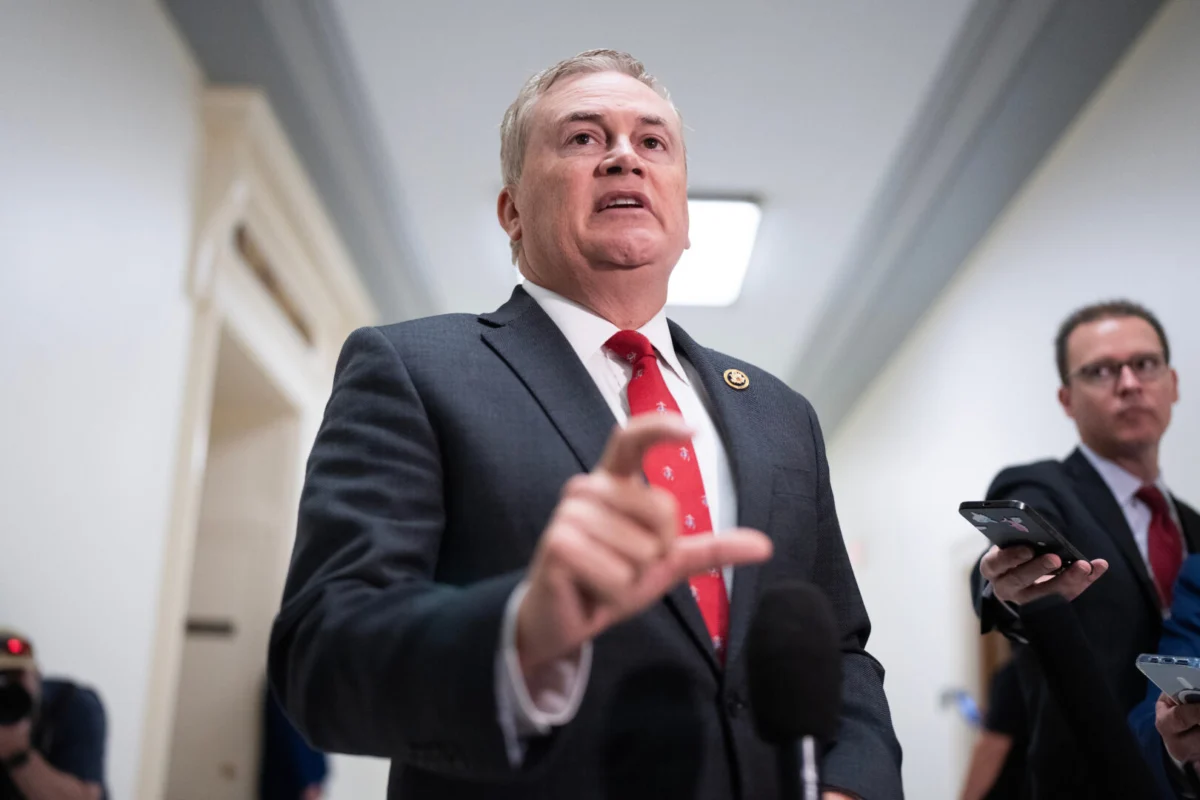
Unsatisfied with Black’s selective responses, Chairman James R. Comer, R-Ky., issued formal congressional subpoenas compelling Black to produce all relevant NDAs, related correspondence, and to appear for a formal deposition scheduled for September 3, 2026.
Black missed the September 3 deadline, failing to appear for the deposition. Furthermore, his legal team produced only one NDA, maintaining that other records were protected or beyond the committee’s jurisdiction.
4. Committee Markup and Vote
On September 15, 2026, the committee convened for a formal markup to consider the contempt report. Following robust debate underscoring the necessity of enforcing congressional subpoena authority, lawmakers voted 41-0 to advance the contempt citation to the House floor.
Supporting Data: Financial Ties and the Role of Confidentiality Agreements
The committee’s findings highlight the disproportionate financial volume flowing between Black and Epstein compared to other high-net-worth clients affiliated with the late financier. The committee report notes that Black was "one of the individuals most closely connected to Epstein" that lawmakers have attempted to examine.
+---------------------------------------------------------------------------------+
|                       FINANCIAL & INVESTIGATIVE METRICS                         |
+---------------------------------------------------------------------------------+
| Total Documented Payments to Epstein:   | $158 Million to over $170 Million     |
+---------------------------------------------------------------------------------+
| Timeline of Direct Financial Relations: | 2012 – 2017                            |
+---------------------------------------------------------------------------------+
| Subpoenaed Documents Delivered:         | 1 Non-Disclosure Agreement (NDA)      |
+---------------------------------------------------------------------------------+
| Deposition Attendance Status:           | Non-compliant (Failed to appear Sept 3) |
+---------------------------------------------------------------------------------+
| Committee Contempt Resolution Margin:   | 41-0 (Unanimous approval)               |
+---------------------------------------------------------------------------------+
The $158 Million+ Financial Trail
While prior internal reviews arranged by Apollo estimated that Black paid Epstein roughly $158 million for advice on trust, estate, and tax matters, the House Oversight Committee’s report indicates the true total could be higher, potentially exceeding $170 million. Investigators are seeking to determine:
- Whether any portion of these funds indirectly financed Epstein’s illegal activities or victim settlements.
- How NDAs were drafted to protect the financial partners and associates involved in these transactions.
- Whether Epstein used his financial management role to gain leverage over ultra-wealthy clients.
Non-Disclosure Agreements as Legal Shields
A central pillar of the committee’s systemic inquiry is how civil legal tools—specifically NDAs and confidentiality clauses—have been deployed by affluent individuals to suppress evidence of criminal conduct. Committee counsel noted that non-disclosure agreements executed by Epstein and his associates frequently contained restrictive language intended to prevent signatories from cooperating with law enforcement or regulatory authorities.
Official Responses: Lawmakers and Legal Representation
The unanimous vote prompted strong statements from committee leadership, emphasizing that financial status does not grant immunity from legislative oversight.
Statement from Chairman James R. Comer (R-Ky.)
Chairman James R. Comer emphasized that the integrity of congressional subpoena power was at stake, warning that high-net-worth individuals cannot hide behind ongoing legal disputes to evade legislative inquiry.
"The committee wants to ensure that NDAs or other confidentiality agreements cannot be used to cover up criminal activities," Chairman Comer stated following the markup. "Mr. Black is legally obligated to provide this committee with the requested documents and testimony. He cannot continue hiding behind civil litigation. When a witness refuses to comply with a lawful subpoena, this committee has no choice but to hold him in contempt."
  "The committee wants to ensure that NDAs or other confidentiality
   agreements cannot be used to cover up criminal activities...
   We have no choice but to hold him in contempt."

   — Rep. James R. Comer (R-Ky.), House Oversight Committee Chairman
Statement from Ranking Member Robert Garcia (D-Calif.)
Ranking Member Robert Garcia echoed Comer’s sentiments, highlighting the unified stance across party lines to hold powerful figures accountable.
"He believes that he’s above this committee’s oversight authority. He believes he is too powerful for Congress or the American people to touch," Garcia said during the committee proceeding. "But we’re going to stand up and remind Leon Black and the American people that subpoenas are not suggestions."
Speaking to reporters immediately following the vote, Garcia added that House Democrats are actively pushing for an expedited vote on the floor:
"We are encouraging a swift vote by the full House to hold Mr. Black in criminal contempt and refer this matter to the Justice Department without delay."
  "We're going to stand up and remind Leon Black and the American
   people that subpoenas are not suggestions."

   — Rep. Robert Garcia (D-Calif.), House Oversight Committee Ranking Member
Legal Defense and Position of Leon Black
While Black did not issue a public statement immediately following the vote, legal representatives for the private equity founder have previously argued that Black has acted in good faith by appearing for the June 26 transcribed interview. Defense counsel has contended that many of the requested NDAs contain confidential third-party business details, proprietary financial strategies, or pertain to ongoing civil litigation, rendering their broad release legally complex.
Black’s attorneys have previously asserted that their client was completely unaware of any unlawful conduct conducted by Epstein during the period of their professional relationship, characterizing the payments strictly as fees for legitimate, highly lucrative tax strategies that saved Black hundreds of millions of dollars.
Implications: Legislative Reform, Subpoena Power, and Corporate Accountability
The Oversight Committee’s unanimous recommendation carries significant legal, political, and institutional ramifications that extend beyond Leon Black’s personal legal standing.
               POTENTIAL IMPLICATIONS AND NEXT STEPS

       +---------------------------------------------------+
       |              Full House Floor Vote                |
       |  House conducts vote to approve Contempt Report   |
       +---------------------------------------------------+
                                │
                                ▼
       +---------------------------------------------------+
       |      Referral to U.S. Attorney for D.C.           |
       | Speaker certifies report to Department of Justice |
       +---------------------------------------------------+
                                │
                                ▼
       +---------------------------------------------------+
       |           Criminal Prosecution Risk               |
       | Potential misdemeanor charges (2 U.S.C. § 192)    |
       | Penalties: Fines up to $100k and up to 12 months  |
       +---------------------------------------------------+
                                │
                                ▼
       +---------------------------------------------------+
       |         Systemic Legislative Reforms            |
       | Proposals restricting NDA enforcement in cases    |
       | involving severe federal crimes & sex trafficking  |
       +---------------------------------------------------+
1. Enforcement of Congressional Subpoena Authority
The 41-0 vote sends a clear signal to other witnesses in high-profile investigations. In recent years, congressional subpoenas have frequently been bogged down by prolonged court challenges and partisan disagreements. By asserting a unified front, the Oversight Committee is attempting to re-establish the traditional authority of legislative subpoenas over private citizens and corporate executives alike.
If the full House votes to adopt the resolution, the Speaker of the House will certify the report to the U.S. Attorney for the District of Columbia. Under federal law, a criminal contempt citation carries penalties of up to a $100,000 fine and imprisonment for between one month and twelve months.
2. Statutory Restrictions on Non-Disclosure Agreements
The core objective of the committee’s broader inquiry is legislative reform. Lawmakers are currently drafting statutory frameworks aimed at invalidating non-disclosure agreements that conceal information regarding felony crimes, human trafficking, or sexual abuse. If enacted, such legislation would prevent civil litigants and private figures from using contractual secrecy provisions to block law enforcement or legislative bodies from accessing critical evidence.
3. Impact on Wall Street and Executive Accountability
The proceedings against Black maintain intense focus on Wall Street’s historical connections to Jeffrey Epstein. Despite Black’s formal departure from Apollo Global Management in 2021, the continued public fallout underscores the long-term reputational risks facing major financial institutions whose executives maintained ties with Epstein.
As the full House prepares to take up the contempt citation, pressure is mounting on other high-net-worth associates of Epstein to fully disclose their financial agreements or risk similar statutory penalties from Congress.