WASHINGTON — With just two weeks remaining before the fiscal year deadline on September 30, Capitol Hill finds itself locked in a familiar yet increasingly dangerous game of political brinkmanship. As Congress resumes its autumn session under the shadow of the upcoming November 2026 midterm elections, lawmakers face an acute ultimatum: pass a funding agreement to keep the federal government operational or trigger a damaging federal shutdown.
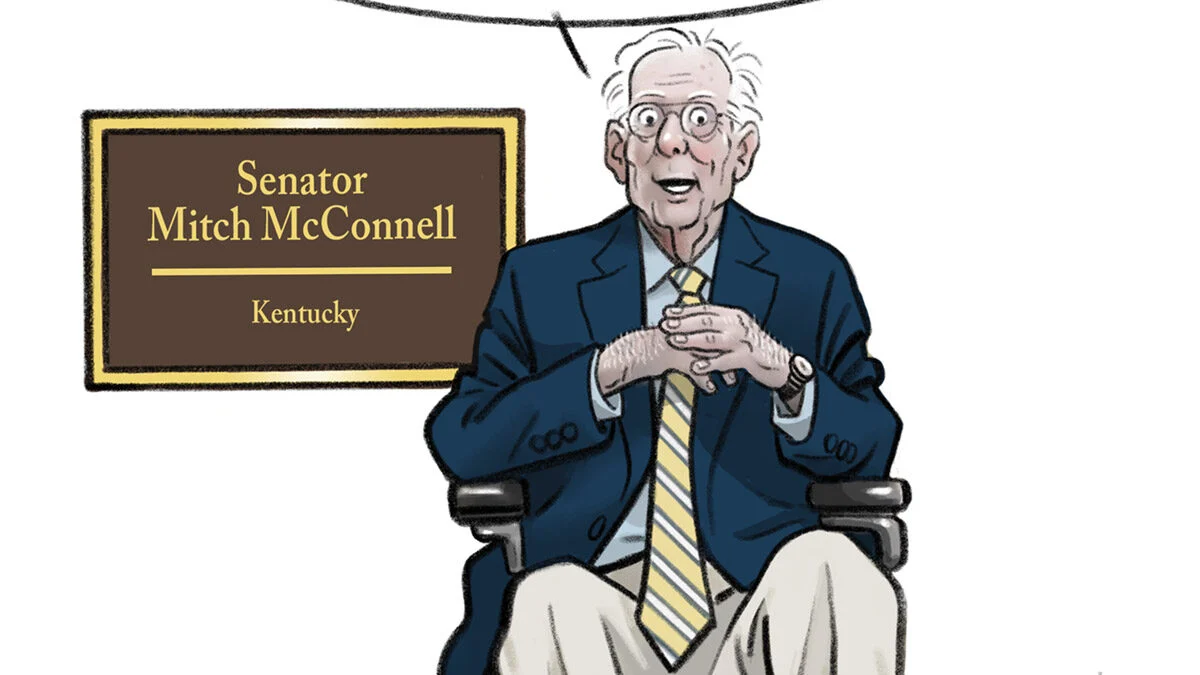
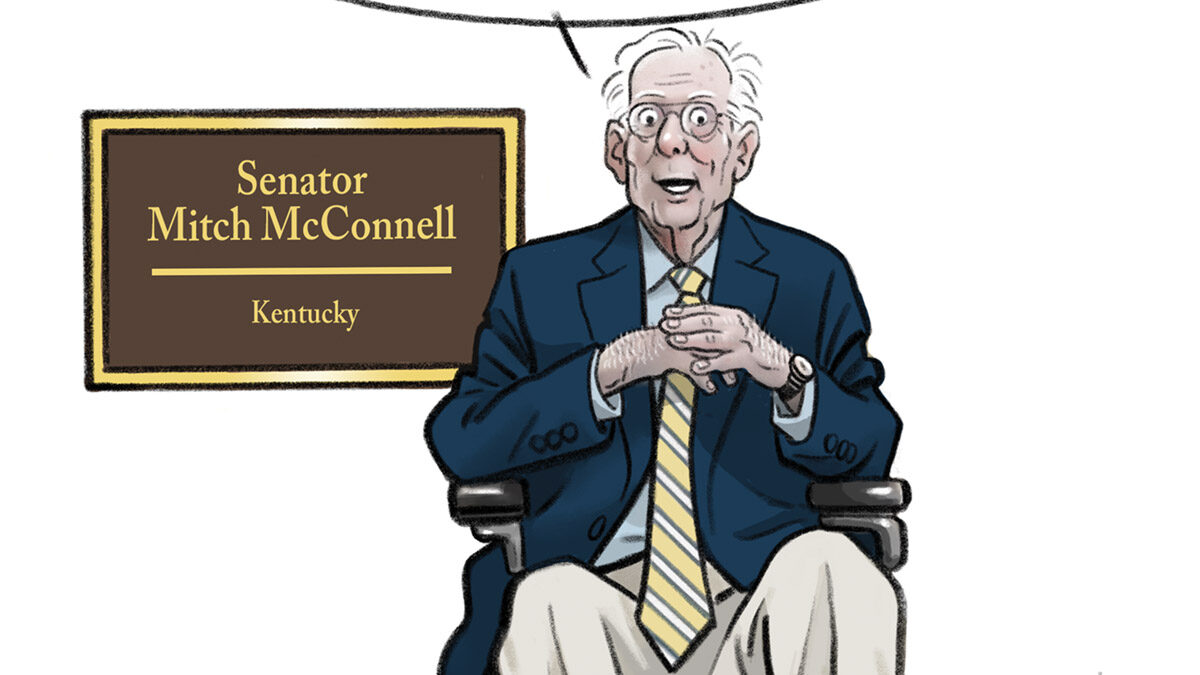
The escalating tension on the Hill—immortalized in R.J. Matson’s latest Capitol Ink cartoon for CQ Roll Call published on September 16, 2026—captures the prevailing mood in Washington. Satirizing the deep political divide and fiscal posturing between congressional factions, the commentary highlights how partisan gridlock continues to paralyze fundamental legislative duties. With time rapidly running out, lawmakers remain sharply divided over top-line spending levels, policy riders, and the duration of a prospective stopgap continuing resolution (CR).
Main Facts: The September Funding Standoff
The core issue confronting the 119th Congress is the urgent need to enact funding for federal operations before Fiscal Year 2027 begins on October 1. Despite months of committee hearings and markup sessions, Congress has failed to enact any of the 12 individual discretionary appropriations bills into law.
The immediate impasse revolves around two conflicting visions for federal governance:
House Fiscal Strategy: House leadership, pushed by strong conservative factions within its majority, insists on steep cuts to discretionary spending below previously agreed-upon caps. Furthermore, House leaders are attempting to attach stringent policy riders—covering border enforcement, regulatory cutbacks, and energy policy—to any temporary funding vehicle.
Senate and White House Stance: The Senate, operating with a narrow bipartisan consensus under its leadership, along with the White House, has firmly rejected deep cuts to non-defense programs. They demand a "clean" Continuing Resolution (CR) that extends current funding levels into November or December, allowing lawmakers to negotiate a comprehensive full-year omnibus package after the midterm elections.
With federal agencies issuing standard pre-shutdown guidance and contingency plans, the political stakes could not be higher. A lapse in appropriations on midnight, September 30, would immediately trigger the furlough of hundreds of thousands of non-essential civil servants, pause critical government services, and inject political volatility into key battleground districts just six weeks before election day.
Chronology of the 2026 Budget Dispute
The current crisis is the culmination of a months-long breakdown in the traditional legislative process, marked by stalled markups, floor disputes, and partisan posturing.
+-------------------------------------------------------------------------------+
|                       2026 LEGISLATIVE FISCAL TIMELINE                        |
+-------------------------------------------------------------------------------+
|  March 2026    | President submits initial FY2027 Budget Request to Congress. |
|  May 2026      | House & Senate Appropriations Committees set spending targets.|
|  July 2026     | House passes partisan bills; Senate advances bipartisan plans.|
|  August 2026   | Congressional Summer Recess; District political pressure.    |
|  Sept 8, 2026  | Lawmakers return to Washington; 14 days to deadline.         |
|  Sept 16, 2026 | Deadlock deepens over CR length and attached policy riders.   |
|  Sept 30, 2026 | MIDNIGHT DEADLINE: End of FY2026 appropriations.             |
+-------------------------------------------------------------------------------+
Spring 2026: Budget Proposals and Initial Fractures
March 2026: The White House submitted its FY2027 budget proposal to Congress, requesting modest increases in non-defense discretionary spending alongside sustained investment in national security, domestic infrastructure, and foreign assistance.
May 2026: Appropriations committees in both chambers began formal markups. However, fundamental disagreements emerged early over the top-line budget authority. The House Appropriations Committee adopted spending ceilings significantly below the caps established in prior fiscal agreements, setting the stage for structural conflict with the Senate.
Summer 2026: Unilateral Floor Action and Gridlock
June–July 2026: The House passed four of its twelve appropriations bills along strictly partisan lines. These measures included deep funding reductions for environmental, educational, and regulatory agencies, while adding contentious social and immigration policy riders.
Late July 2026: The Senate Appropriations Committee took a sharply different approach, passing several bipartisan spending packages with overwhelming committee support. These bills strictly adhered to defense and non-defense spending parity, omitting controversial policy riders to ensure passage on the Senate floor.
August 2026 Recess: Members returned to their home states and districts for the summer work period. While conservative members faced pressure from base voters to hold the line on fiscal cuts, swing-district members faced sharp criticism over potential government service disruptions and cuts to local federal investments.
September 2026: The Final Push
September 8, 2026: Congress reconvened in Washington with only 12 legislative days remaining before the fiscal cliff.
September 12, 2026: House leadership attempted to float a six-month continuing resolution linked to mandatory proof-of-citizenship voting enforcement provisions. The proposal failed to gather sufficient consensus among key moderate factions and drew an immediate veto threat from the executive branch.
September 16, 2026: As highlighted in national political commentary and media coverage, leaders from both parties remain in a stalemate. Formal bicameral leadership negotiations have stagnated, leaving a short-term funding extension as the only viable alternative to a federal shutdown.
Supporting Data and Economic Context
The fiscal debate takes place against a backdrop of complex national economic indicators and fiscal pressures. The modern budgetary landscape illustrates the systemic challenges facing congressional appropriators:
+-------------------------------------------------------------------------------+
|                      FY2027 APPROPRIATIONS PROGRESS MATRIX                    |
+-----------------------------------+-------------------+-----------------------+
| Measure                           | House Status      | Senate Status         |
+-----------------------------------+-------------------+-----------------------+
| Agriculture & FDA                 | Passed Floor      | Reported from Comm.   |
| Defense                           | Passed Floor      | Reported from Comm.   |
| Energy & Water Development        | Passed Floor      | Reported from Comm.   |
| Financial Services                | In Committee      | In Committee          |
| Homeland Security                 | Passed Floor      | Pending Committee     |
| Interior & Environment            | In Committee      | Reported from Comm.   |
| Military Construction & VA        | Passed Floor      | Passed Floor          |
| Enacted into Law (Total: 12)      | 0                 | 0                     |
+-----------------------------------+-------------------+-----------------------+
Fiscal and Economic Metrics
Total Discretionary Spending Target: Approximately $1.68 trillion is under dispute for FY2027, representing the discretionary portion of the federal budget passed through annual appropriations.
House Cut Demands: The spending targets pursued by House conservative factions seek a discretionary spending level roughly $70 billion below the Senate’s bipartisan framework, driven largely by targeted reductions in domestic administrative agencies.
National Debt Overhead: The national debt currently exceeds $35.3 trillion, generating escalating interest service costs that now surpass $800 billion annually. Fiscal conservatives cite these rising mandatory costs as justification for immediate discretionary spending reductions.
Public Opinion and Political Data
Congressional Approval: Recent national polling indicates congressional approval remains compressed at 18%, with 72% of registered voters expressing dissatisfaction with lawmakers’ management of federal finances.
Blame Allocation: Historically, voters tend to assign primary blame for federal government shutdowns to the party controlling the legislative majority or pushing for policy conditions. Current polling shows 48% of voters would blame congressional majorities for a shutdown, compared to 40% who would blame the White House and executive branch, with 12% undecided.
Key leaders across government have staked out aggressive positions as negotiations enter the final critical phase.
Congressional Leadership
"The American taxpayers elected us to restore fiscal sanity to Washington, not to write blank checks for an expanded federal bureaucracy. We will not pass a funding bill that continues uncontrolled government spending while ignoring critical security needs at our southern border."
— House Leadership Official Statement
Conversely, Senate leadership emphasized the necessity of bipartisan compromise to avoid self-inflicted economic harm.
"A shutdown is a catastrophic failure of governance that harms our military readiness, weakens our economy, and destabilizes working families. The Senate has demonstrated that bipartisan appropriations are possible. We urge our colleagues in the House to abandon ideological demands and pass a clean funding measure immediately."
— Senate Leadership Remarks on the Floor
The White House and Administration
The White House Office of Management and Budget (OMB) issued a formal Statement of Administration Policy warning that partisan conditions attached to essential funding would face an immediate presidential veto.
"Government operations cannot be held hostage to advance partisan agendas that could not pass through the ordinary legislative process. The President has made clear that he will sign a reasonable, clean stopgap measure to allow lawmakers the time needed to finalize full-year funding bills that serve the public interest."
— OMB Press Release
Moderates and Regional Factions
Members facing competitive re-election fights in swing districts have expressed frustration over the institutional impasse.
"My constituents do not want a government shutdown, nor do they want endless fiscal cliffhanger politics. We need a pragmatic, temporary extension that keeps our military paid, our federal law enforcement funded, and our federal services open while we work out a long-term agreement."
— Statement from a Swing-District Representative
Strategic and Policy Implications
The fallout from the current fiscal showdown extends far beyond the immediate September 30 deadline, carrying significant implications for governance, national security, and the political electoral landscape.
With the 2026 midterm elections fast approaching, a government shutdown on October 1 would fundamentally alter campaign strategy nationwide.
Swing-District Vulnerability: Incumbents in highly competitive House districts are particularly exposed. Moderate members fear that a high-profile legislative failure will alienate suburban independent voters who prioritize stability and pragmatic governance.
Base Mobilization: Conversely, ideological hardliners view a principled stand on spending as crucial for energizing core partisan bases, creating an internal strategy split within congressional caucuses.
2. Administrative and Operational Disruptions
A prolonged shutdown or even a series of short-term, highly restrictive continuing resolutions severely degrades federal administrative capacity:
Federal Contracting and Procurement: Uncertainty prevents agencies from issuing new long-term contracts, disrupting private sector vendors, defense contractors, and technology infrastructure partners.
Civil Service Furloughs: Essential personnel—including air traffic controllers, federal law enforcement, and active-duty military personnel—must work without immediate pay, while non-essential staff are furloughed, delaying regulatory approvals, research grants, and public assistance processing.
3. Financial Market and Credit Stability
Credit rating agencies have warned that recurring budget brinkmanship damages the perceived governance stability of the United States. Following past rating actions, international markets closely monitor Washington’s ability to execute routine budgetary functions. A shutdown in late September could inject volatility into treasury markets and increase borrowing costs across the economy.
4. Erosion of "Regular Order" Budgetary Norms
The continuous reliance on late-stage continuing resolutions and massive year-end omnibus spending packages underlines a broader structural breakdown in the congressional budget process. By bypassing the traditional legislative track of passing twelve distinct, fully debated appropriations bills, Congress increasingly manages national finances through high-stress crisis management—a dynamic captured by cartoonists, analysts, and political commentators alike as September 30 draws near.
Outlook
As Congress enters the final countdown toward the end of the fiscal year, pressure is mounting on legislative leaders to find a procedural off-ramp. While a short-term Continuing Resolution remains the most mathematically viable path to avoid an immediate shutdown on October 1, the terms, duration, and conditions of that extension remain contentious. The coming days will test whether political leaders can bridge their ideological divides or whether Capitol Hill will plunge into another costly federal shutdown on the eve of a historic midterm election.