For decades, the Porsche crest has been synonymous with the pinnacle of automotive engineering, luxury, and performance. From the timeless silhouette of the 911 to the groundbreaking electrification of the Taycan, the Stuttgart-based automaker has maintained a reputation for excellence that transcends borders. However, as the global automotive market pivots toward a new era of electrification and digital integration, even the most prestigious brands are finding themselves vulnerable to the volatile currents of the Chinese market.
As of mid-2026, Porsche finds itself in the midst of a significant, and perhaps painful, strategic retreat. Faced with plummeting sales and a misalignment between its product offerings and local consumer preferences, the brand is closing regional dealerships and initiating a massive corporate restructuring that signals a somber realization: the era of unchecked growth in China has come to an abrupt end.
The State of the Crisis: A Summary of Challenges
The numbers for the first quarter of 2026 tell a harrowing story. While Porsche continues to deliver some of the most refined sports cars in its history, the company’s performance in China has significantly trailed behind its other global markets. According to recent reporting from IT-home and CarNewsChina, the automaker has officially confirmed the closure of four regional dealerships—specifically in Wuhu, Jining, Huai’an, and Nanning. These locations ceased all operations on June 30th, leaving a void in the brand’s once-expansive physical retail footprint in the region.
The decision is not merely a localized cost-cutting measure; it is a symptom of a broader systemic struggle. Porsche ended 2025 having delivered 41,938 vehicles in China, representing a staggering 26.3% decline compared to the previous year. This downward momentum has only accelerated in 2026, with the company recording just 7,519 units sold in the first quarter—a 21.0% drop compared to the same period in 2025. In the high-stakes world of premium automotive retail, these figures represent a severe contraction that mandates immediate, albeit difficult, organizational change.
A Chronology of the Decline
To understand how a powerhouse like Porsche arrived at this crossroads, one must look at the timeline of the Chinese automotive shift.
- 2024: The market began showing early signs of saturation and an aggressive pivot toward domestic electric vehicle (EV) manufacturers. While international luxury brands remained resilient, the competitive gap between legacy internal combustion engine (ICE) luxury and domestic high-tech EVs began to narrow.
- Late 2025: As competitive pressure mounted, Porsche’s sales volume in China plummeted by over 26%. The reliance on traditional luxury status symbols proved insufficient as Chinese consumers increasingly prioritized smart-cockpit technology, rapid software iteration, and localized EV charging ecosystems.
- Early 2026: The first quarter brought a 21% sales slump, making China the worst-performing region for Porsche globally.
- June 30, 2026: The formal closure of four regional dealerships signaled that the “business as usual” model was no longer sustainable.
- Present Day: Porsche has embarked on a long-term plan to reduce its Chinese dealer network from 116 centers to 80. This consolidation is paired with a broader plan to cut approximately 3,900 jobs globally as part of a massive cost-saving and restructuring initiative.
Supporting Data: The Profitability Gap
The financial strain on individual Porsche dealers in China has reached a breaking point. Industry insiders report that for every vehicle delivered, individual dealerships are suffering losses ranging from 20,000 yuan ($2,941 USD) to 30,000 yuan ($4,413 USD). In a business model built on razor-thin margins, such per-unit losses are catastrophic.
The decision to scale back the dealer network is a calculated move to preserve the profitability of the remaining 80 centers. By consolidating operations, Porsche hopes to reduce the overhead that has been eating away at dealer balance sheets. This strategy is further evidenced by the company’s decision to cut back on infrastructure investments. Recently, Porsche reportedly shuttered approximately 200 DC fast-charging stations across China. These stations, which represented a significant capital expenditure, were likely intended to mirror the premium service levels offered in Europe and North America, but their maintenance costs in a low-sales environment have become an unsustainable liability.
The Product Mismatch
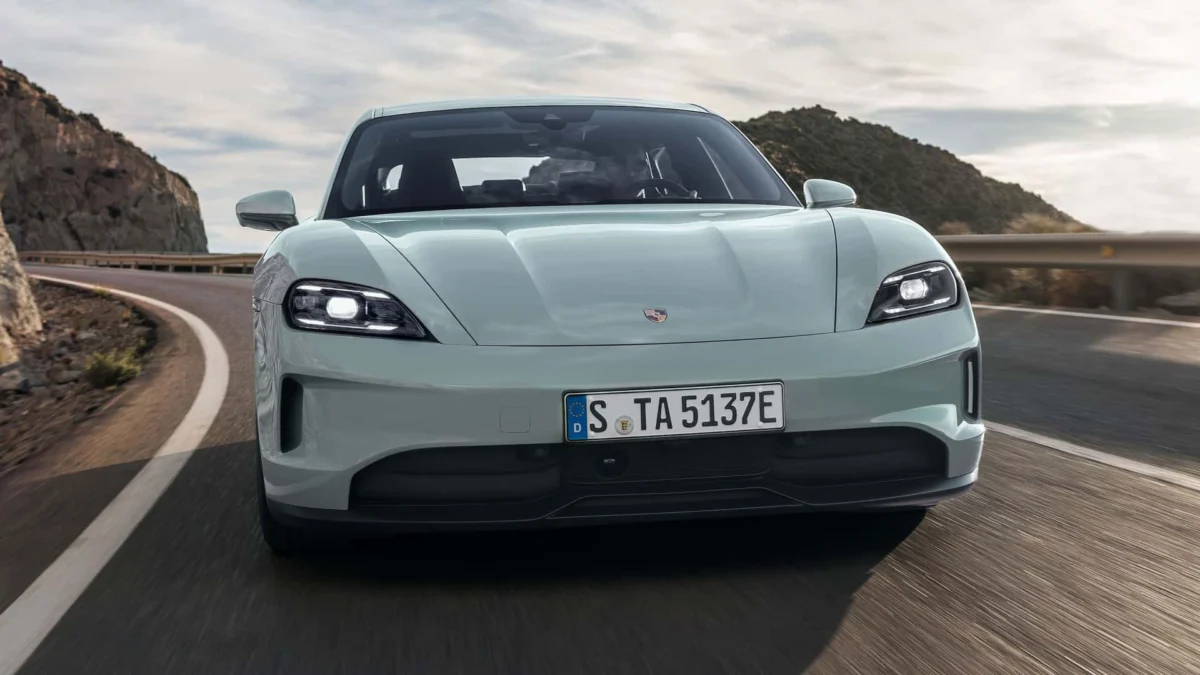
A significant portion of the tension in the Chinese market stems from the evolution of the Taycan. While the vehicle remains a technological marvel, the market is moving toward models that resonate specifically with local demand. Porsche’s move to eliminate "unpopular" models—such as the Taycan Sport Turismo—is a direct response to this.

In China, the appetite for high-performance wagons is negligible compared to the demand for executive sedans and ultra-luxury SUVs that offer specific rear-seat amenities and high-end digital connectivity. By slimming down its catalog to focus on what actually moves the needle, Porsche is attempting to stop the bleeding. However, critics argue that these cuts may be too little, too late, as domestic rivals continue to release new, tech-forward EVs every few months.
Corporate Restructuring and Future Outlook
The scale of the restructuring is massive. Beyond the closure of dealerships and charging infrastructure, Porsche is moving to streamline its internal departments. The planned loss of 3,900 jobs is a clear indicator that the company is bracing for a sustained period of lower demand.
From an administrative perspective, the goal is to create a leaner, more agile organization that can respond to market fluctuations without the drag of an oversized, loss-making infrastructure. This "right-sizing" of the company is an admission that the Chinese market has fundamentally changed. The days of expecting double-digit growth in China are, for now, in the rearview mirror.
Implications: The "Motor1" Perspective
The ramifications of this situation extend far beyond the immediate financial losses. Porsche’s struggle highlights a larger dilemma facing legacy luxury automakers: how to maintain a brand identity rooted in heritage and performance while competing in a market that prioritizes digital-first, EV-centric mobility.
China is currently the most advanced EV market in the world. Consumers there expect rapid, frequent software updates, seamless integration with domestic digital ecosystems, and aggressive pricing. While Porsche has felt the sting of the global market’s cooling appetite for electric vehicles, the impact in China is magnified by the existence of a robust, home-grown competition that is often cheaper, more "connected," and better suited to the local infrastructure.
For Porsche, the challenge is existential. If they continue to prioritize their traditional European-centric product strategies, they risk becoming a niche, legacy player in the world’s largest automotive market. If they pivot too aggressively toward Chinese-specific requirements, they risk diluting the brand equity that makes a Porsche a Porsche.
Conclusion: A Rough Road Ahead
As the dust settles on the recent dealership closures, the path forward for Porsche in China remains shrouded in uncertainty. The company is currently in a defensive posture, focused on survival and consolidation rather than the rapid expansion that characterized the previous decade.
While the brand’s resilience is well-documented—having survived global recessions, oil crises, and technological shifts—the Chinese market presents a uniquely modern challenge. The next few years will likely be a period of intense adjustment. Whether Porsche can successfully navigate this storm by balancing its legendary heritage with the harsh demands of the modern, hyper-competitive Chinese landscape remains to be seen. One thing, however, is certain: the era of relying on established reputation alone has ended. For Porsche, the future of its Chinese operations will depend on its ability to evolve at the speed of the market, or risk being left behind in the very place where it once saw its greatest potential.