A United Nations Special Rapporteur has issued a grave warning regarding the ongoing debris-removal operations in the Gaza Strip, suggesting that the systematic clearing of rubble may be functioning as a mechanism to obscure evidence of potential war crimes and human rights violations. As the international community watches, the transformation of Gaza’s decimated landscape has become a focal point of legal and humanitarian concern, raising urgent questions about the sanctity of forensic evidence and the obligations of occupying powers under international law.
The Warning: Allegations of Evidence Obscuration
On Monday, Francesca Albanese, the UN Special Rapporteur on the situation of human rights in the Palestinian territory occupied since 1967, issued a stark advisory concerning the methods employed in clearing the vast swaths of rubble that now characterize the Gaza Strip. Albanese contends that the current operations, led by the Israeli military and its allies, are not driven by the humanitarian imperative of aiding the local population. Instead, she argues that the relocation, crushing, and removal of debris are being conducted in a manner that threatens to permanently erase traces of atrocities committed during the conflict.
"It is vital that before decisions are made on displacement or crushing by the occupying army or its allies, the recovery and dignified identification of human remains, systematic documentation of sites and materials, preservation of potentially relevant evidence, and an unbroken chain of custody under independent oversight must take place," Albanese stated.
The Special Rapporteur emphasized that the destruction is not merely an environmental or infrastructural crisis; it is a forensic one. By failing to adhere to international standards for the recovery of human remains, the clearing process risks burying the truth of the conflict’s human toll beneath the weight of industrial machinery.
Chronology: From Conflict to Forensic Crisis
The current state of Gaza is the result of years of sustained bombardment and ground warfare. To understand the gravity of the current situation, one must look at the timeline of the conflict and the legal interventions that have attempted to hold the parties accountable.
The Escalation
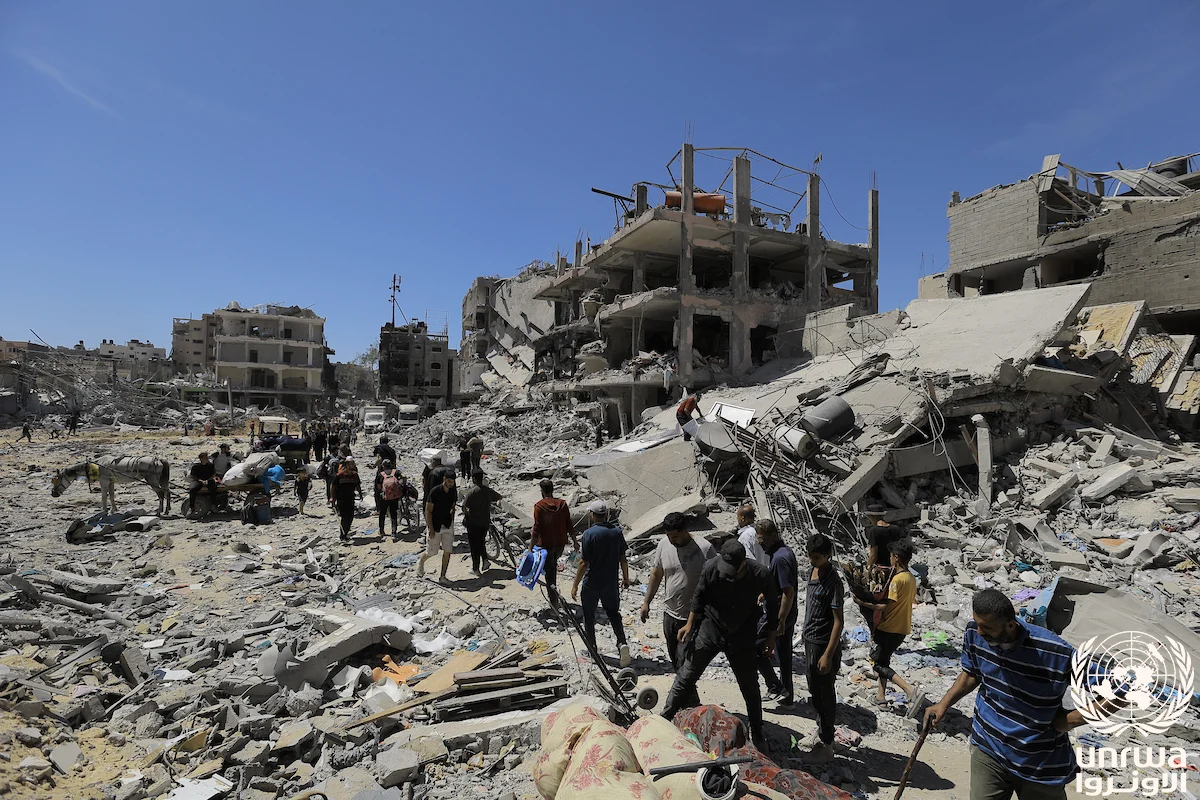
Since the outbreak of large-scale hostilities, the Gaza Strip has been reduced to a landscape of ruins. Tens of thousands of residential buildings, hospitals, and schools have been pulverized. Estimates suggest that upwards of 10,000 individuals remain trapped beneath this debris, their remains unrecovered and their identities lost to the destruction.
Legal Interventions
- December 2023: South Africa filed a landmark application with the International Court of Justice (ICJ), alleging that Israel’s actions in Gaza constitute genocide. The application meticulously detailed the commission of acts that satisfy both the physical and mental elements of genocide under the 1948 Genocide Convention.
- January 2024: The ICJ issued a series of provisional measures. Among these was a binding order requiring Israel to take all appropriate steps to preserve evidence related to allegations of breaches of the Genocide Convention.
- August 2026: A rare success in recovery efforts occurred when Palestinians, working with limited resources, managed to bury 112 individuals after a 17-day operation—a sobering reminder of the grueling pace required to identify the dead in a post-conflict zone.
- September 2026: UN reports confirmed the forced displacement of over 33,000 Palestinians from West Bank refugee camps, further complicating the humanitarian landscape and signaling that the policies of displacement are not limited to Gaza alone.
Supporting Data: The Magnitude of Destruction
The logistical challenge of clearing Gaza is monumental. According to experts, the sheer volume of rubble, combined with a total lack of modern excavation machinery and specialized personnel, suggests that the process of recovering human remains could take upwards of three years.
The Forensic Hurdle
The recovery process is not simply a matter of moving stone; it is a process of identification. The Minnesota Protocol on the Investigation of Potentially Unlawful Death serves as the global gold standard for such investigations. It requires a meticulous approach to the crime scene, ensuring that every piece of physical evidence is preserved for future legal proceedings.
However, the current clearing operations appear to bypass these protocols entirely. By using heavy bulldozers and crushers, authorities are effectively destroying biological evidence (human remains) and material evidence (ordnance fragments, structural impact markers) that would be essential in any future prosecution of war crimes.
The Displacement Factor
The destruction is compounded by the continued forced displacement of the population. When citizens are displaced, they are often unable to return to their homes to advocate for the search of their loved ones’ remains. This creates a cycle of loss, where the lack of closure prevents families from beginning the mourning process and simultaneously deprives investigators of witness accounts that could provide context to the destruction.
Legal Implications: Defining the Crime
The allegations brought forth by South Africa hinge on the complex legal definitions established by the Genocide Convention. The case rests on two pillars: the mens rea (the mental element) and the actus reus (the physical act).
The Mental Element (Dolus Specialis)
Proving genocide requires evidence of a specific intent to physically or biologically destroy a national, ethnic, racial, or religious group in whole or in part. South Africa’s application argues that the combination of mass civilian casualties, the deprivation of essential life-sustaining resources (food, water, and medical care), and the systemic destruction of infrastructure provides clear evidence of this intent.
The Physical Element
Once the hurdle of intent is cleared, the physical commission of the crime is evidenced by:
- Killing members of the group.
- Causing serious bodily or mental harm.
- Deliberately inflicting conditions of life calculated to bring about physical destruction.
- Imposing measures intended to prevent births.
- Forcibly transferring children of the group to another group.
By clearing the rubble without oversight, Israel is arguably tampering with the very evidence required to satisfy these elements. If the evidence of mass killing is crushed, the ability of international investigators to substantiate the physical element of the crime is severely compromised.
Official Responses and the Enforcement Gap
The international response to the situation in Gaza has been characterized by an "enforcement gap." While the ICJ has issued clear orders, the mechanism for enforcement remains weak.
The UN’s Stance
UN experts, including Francesca Albanese, have been consistent in their condemnation of the lack of accountability. The recent report detailing the forced displacement of Palestinians serves as a corroborating indicator that the violations are not isolated incidents but part of a broader strategy. The UN maintains that any removal of rubble must be done with "utmost sensitivity" and under international supervision to ensure that accountability remains a possibility.
The Uncertain Future
Despite a ceasefire in October, the physical and legal destruction continues. With the ICJ proceedings likely to stretch on for years, Palestinians are trapped in a state of suspended animation. The rubble, which represents the history and identity of thousands of families, is being systematically removed. For the victims, this is not just an act of clearing debris; it is the systematic erasure of their presence from the landscape and the denial of their right to justice.
As the bulldozers continue their work, the international community faces a critical juncture. If the evidence of these alleged atrocities is allowed to be crushed and scattered, the chance for a truthful accounting of the events in Gaza may be lost forever. The warning from the UN is clear: the clearing of rubble is not a humanitarian gesture—it is a legal battlefield, and the stakes could not be higher for the future of international human rights law.