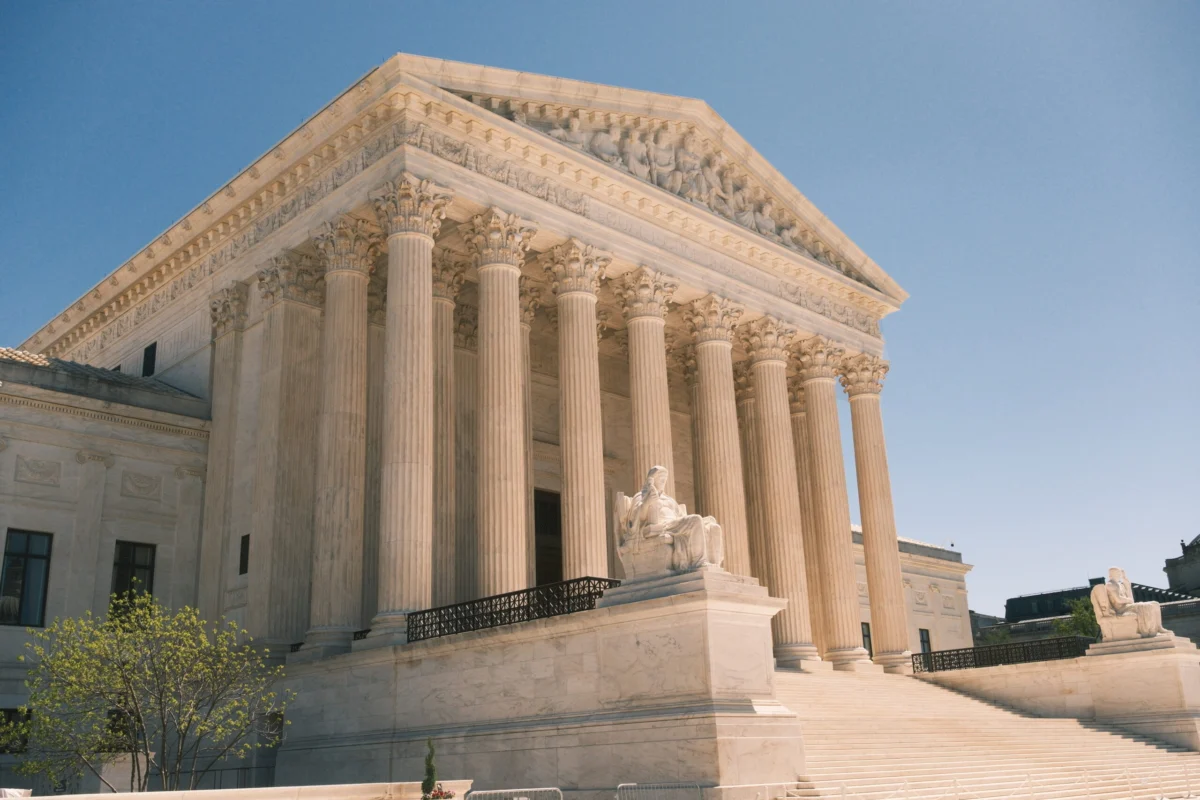
In a significant ruling that recalibrates the balance of power between federal border authorities and lawful permanent residents (LPRs), the United States Supreme Court issued a 6-3 decision on Tuesday in the case of Blanche v. Lau. The Court held that immigration officers are not required to possess "clear and convincing evidence" at the moment of inspection to classify a returning green card holder as an "applicant for admission" rather than an already admitted resident.
The decision, authored by Justice Clarence Thomas, effectively overturns a 2025 ruling from the U.S. Court of Appeals for the Second Circuit. By removing the stringent evidentiary requirement previously imposed on officers at the border, the Court has provided the government with greater operational flexibility when screening LPRs who may have committed disqualifying crimes.
The Core Legal Conflict: Admissibility vs. Deportability
At the heart of the dispute lies the Immigration and Nationality Act (INA), which dictates how the government treats individuals entering the United States. Generally, the INA grants LPRs—commonly known as green card holders—the right to return to the U.S. after temporary travel abroad without undergoing a new admission process.
However, the statute provides a critical exception. Under the "admission" framework, the government may treat an LPR as an "applicant for admission" if the resident has "committed" certain disqualifying offenses, most notably a "crime involving moral turpitude" (CIMT).
This classification creates a profound procedural divide:
- If classified as "already admitted": The government bears the burden of proving that the resident is deportable under the law.
- If classified as an "applicant for admission": The burden shifts entirely to the resident, who must prove their own admissibility to remain in the country.
The Second Circuit had previously ruled that for an officer to strip an LPR of their "already admitted" status, they must possess clear and convincing evidence at the time of entry that the individual committed a disqualifying crime. The Supreme Court, however, found no basis for this "clear and convincing" requirement within the text of the INA.
A Chronology of the Case: Blanche v. Lau
The legal journey of Muk Choi Lau illustrates the high stakes of this classification.
- 2007: Muk Choi Lau, a Chinese national, is granted lawful permanent resident status in the United States.
- 2012: Lau is charged in New Jersey with trademark counterfeiting.
- 2013: Following a brief trip to China, Lau attempts to reenter the U.S. at John F. Kennedy International Airport. Border officers, aware of the pending charges, decline to treat him as an "already admitted" resident and instead parole him into the country pending the resolution of his case.
- 2013: Lau pleads guilty to the trademark counterfeiting charge.
- Post-2013: The government initiates formal removal proceedings, relying on the "applicant for admission" classification, alleging that Lau’s conviction constitutes a crime involving moral turpitude.
- Agency Action: An immigration judge finds Lau removable, and the Board of Immigration Appeals (BIA) upholds the decision.
- 2025: The Second Circuit Court of Appeals intervenes, vacating the removal order. It holds that border officers exceeded their authority because they lacked "clear and convincing" evidence of the crime at the moment of Lau’s entry.
- April 2026: The Supreme Court rules in favor of the government, vacating the Second Circuit’s decision and remanding the case for further consideration regarding whether the specific offense constitutes a crime involving moral turpitude.
The Majority Opinion: Practicality and Statutory Interpretation
Justice Thomas, writing for the majority, emphasized that the INA does not demand a formal evidentiary hearing at the physical border. He argued that the statutory language distinguishes between the "commission" of a crime and the subsequent "conviction" or "admission" of that crime.
The Court held that the "commission" of a crime is the threshold event that allows an officer to treat a resident as an applicant for admission. Crucially, the Court noted that the government had met its burden at the subsequent removal hearing by presenting Lau’s guilty plea. Justice Thomas stated that the Court would not impose an added evidentiary burden on border officers who must make "quick judgments on the spot" while managing the flow of travelers.
By rejecting the Second Circuit’s mandate, the Supreme Court has cleared the path for the government to treat LPRs as applicants for admission even when the evidence of a disqualifying crime is developed or solidified after the initial encounter at the border.
The Dissent: A "Blank Check" for Executive Power
The 6-3 split featured a sharp dissent from Justice Ketanji Brown Jackson, joined by Justices Sonia Sotomayor and Elena Kagan. The dissent argued that the majority’s interpretation strips LPRs of the protections intended by Congress when it drafted the INA.
Justice Jackson contended that the statute’s directive—that an LPR "shall not be regarded as seeking an admission" unless a specific exception is met—requires the government to justify that status at the time of the border encounter. She characterized the majority’s ruling as handing the government "a massive blank check."
The dissent highlighted the severe consequences of the "seeking an admission" classification, including:
- Detention and Parole: The potential for prolonged detention or the imposition of restrictive parole conditions.
- Due Process Erosion: The confiscation of a permanent green card and the reversal of the burden of proof, which forces the resident to prove they should not be removed.
- Retrospective Justification: Jackson warned that the ruling allows the government to "shoot first and ask questions later," justifying the decision to treat a resident as an applicant for admission with evidence acquired long after the border encounter.
Implications for Lawful Permanent Residents
The implications of the Blanche v. Lau decision are broad, potentially affecting millions of LPRs who travel internationally.
1. Shift in Border Dynamics
For immigration attorneys, the ruling signals a significant increase in the discretionary power of Customs and Border Protection (CBP) officers. With the "clear and convincing" standard removed, officers have more latitude to detain or re-process LPRs based on suspicion of criminal activity, even if a formal conviction has not yet been rendered.
2. The Burden of Proof
The most immediate impact is on the burden of proof in removal proceedings. LPRs who are categorized as "applicants for admission" are effectively placed on the same footing as individuals arriving at the border for the first time. They lose the benefit of the government having to prove their deportability, a standard that is significantly higher and more favorable to the individual than proving one’s own admissibility.
3. Future Legal Challenges
While the Court decided the evidentiary standard, it left open the question of whether trademark counterfeiting qualifies as a "crime involving moral turpitude." This issue will return to the Second Circuit, and legal experts expect the lower courts to continue grappling with what constitutes a CIMT in the digital age.
Conclusion
The Supreme Court’s decision in Blanche v. Lau marks a pivotal shift in U.S. immigration enforcement. By prioritizing the operational needs of border officers over the heightened evidentiary protections for LPRs, the Court has signaled a preference for a more robust, if less transparent, entry screening process.
For the government, the ruling is a victory for administrative efficiency. For advocates of immigrant rights, however, the decision represents a worrying expansion of executive authority that leaves permanent residents vulnerable to the shifting tides of administrative suspicion. As the case returns to the Second Circuit, the legal community will be watching closely to see how this precedent is applied in practice, and whether it will lead to more frequent challenges to the government’s classification of returning residents.