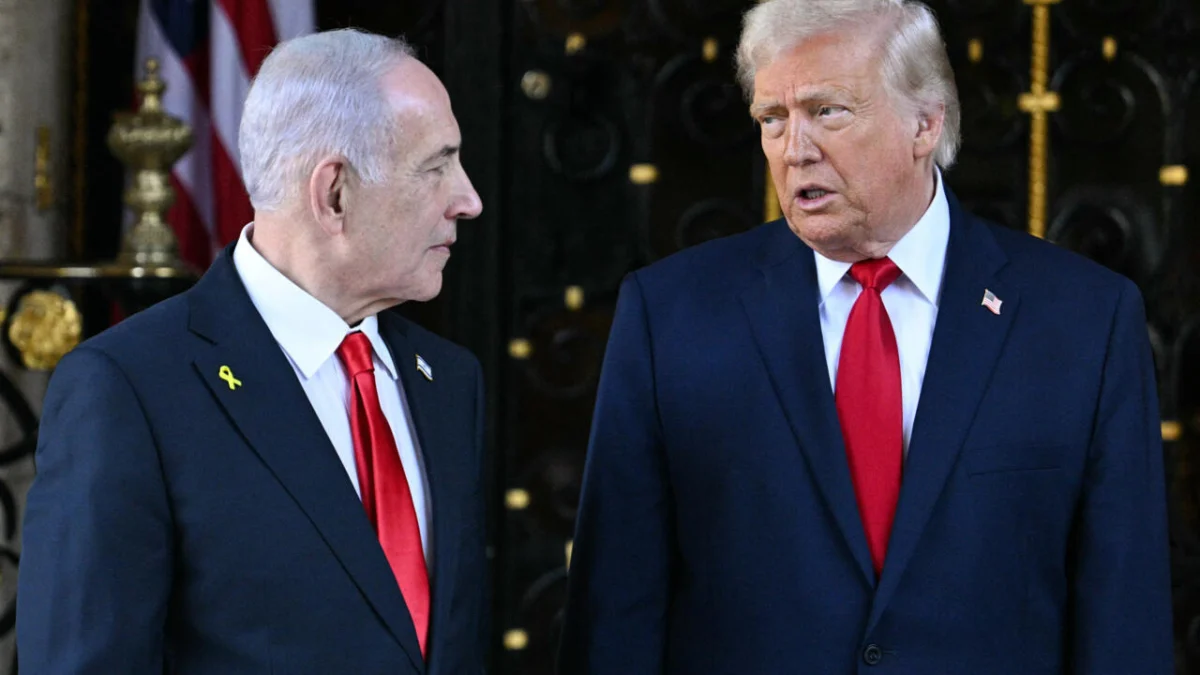
JERUSALEM – In a move aimed at breaking a widening diplomatic deadlock, Israeli Prime Minister Benjamin Netanyahu and senior U.S. envoy Jared Kushner have reached a critical understanding regarding the disarmament of Hamas. Following high-level meetings in Jerusalem on Monday, both parties confirmed that an American general will assume direct oversight of the decommissioning of Hamas’s military arsenal, a precondition the Israeli premier insists must be met before any Israeli forces withdraw from the Gaza Strip.
The agreement represents a significant pivot for the Trump administration’s “Board of Peace” initiative, which has been struggling to reconcile Hamas’s public commitment to a roadmap with Netanyahu’s increasingly vocal domestic opposition. As Israel approaches a pivotal general election on October 27, the stakes for the Israeli leader—and the regional stability of the Middle East—have never been higher.
The Core Agreement: U.S. Oversight and Hard Redlines
The primary breakthrough from the Jerusalem talks centers on the verification process. According to a senior Israeli official familiar with the negotiations, both Washington and Jerusalem are now aligned on a strict sequencing of events: no reconstruction of the Gaza Strip and no redeployment of Israeli troops will commence until the full and verifiable disarmament of Hamas is achieved.
At the heart of this mechanism is U.S. Major General Jasper Jeffers, the head of the International Stabilization Force (ISF). While Hamas had previously agreed to a roadmap involving the ISF, the new understanding clarifies that the "decommissioning" of weapons will be subject to direct supervision by an American general rather than a broader multilateral body.
“Every weapon collected will be fully decommissioned so it cannot be used again,” an official with the U.S. Board of Peace stated, underscoring that Israel retains an absolute, non-negotiable right to self-defense. The official added that should Hamas attempt to rearm or return to acts of terror, Israel reserves the right to intervene unilaterally.
This development is designed to address Netanyahu’s skepticism regarding the original proposal, which would have seen weapons handed over to a nascent, untested Palestinian governing body—a move that had previously been lauded by the White House as a breakthrough but criticized by the Israeli right as a security liability.
Chronology of a Fragile Peace Process
The road to this week’s meeting has been marked by shifting alliances and intense pressure. To understand the current climate, one must look at the recent sequence of events:
- July 30, 2026: Hamas formally agrees to a 15-point peace roadmap, which includes the eventual handover of weapons to a new Palestinian governing entity under the supervision of the ISF.
- August 9, 2026: Prime Minister Netanyahu publicly rejects the plan, creating a rare and visible rift with the Trump administration.
- August 16, 2026: Jared Kushner travels to Egypt for direct, historic talks with a Hamas delegation led by Khalil al-Hayya to bridge the gap between the group’s commitments and Israel’s security requirements.
- August 17, 2026: Kushner arrives in Jerusalem to present the findings of the Egypt talks to the Israeli cabinet.
- August 18, 2026 (Monday): The final agreement on American military supervision of the disarmament process is solidified.
The talks in Egypt were particularly fraught. Sources close to the negotiation indicated that Kushner demanded that Hamas leadership not only prove the physical surrender of their weaponry but also formally renounce any future role in the governance of the Gaza Strip—a demand aimed at ensuring that the post-war administration of the territory is not dominated by the militant organization responsible for the October 7, 2023, attacks.
Supporting Data: The Cost of the Conflict
The reality on the ground remains grim, despite the diplomatic maneuvering in high-level boardrooms. Since the ceasefire was implemented on October 10, the humanitarian situation has remained precarious.
Data provided by the Gaza Health Ministry—which the United Nations continues to cite as a reliable source—indicates that at least 1,265 Palestinians have been killed during the period of the ceasefire due to ongoing localized military operations and skirmishes. Conversely, the Israel Defense Forces (IDF) have reported five fatalities among their ranks during the same period.
These figures underscore the volatility of the "calm." While the Trump administration touts its peace plan, the death toll continues to climb, fueling domestic unrest within Israel and international condemnation from humanitarian organizations. The disparity in casualties highlights the asymmetric nature of the ongoing conflict, which continues to challenge the credibility of the peace process in the eyes of the Palestinian public.
Official Responses and Political Rhetoric
The atmosphere surrounding the negotiations is heavily colored by the upcoming Israeli elections. Netanyahu, serving as the longest-tenured prime minister in Israel’s history, is facing a severe political challenge. His recent willingness to openly defy the Trump administration—a move that would have been unthinkable just a year ago—is largely viewed as an attempt to shore up his right-wing base.
The Cabinet Divide
The discord within the Israeli government is best exemplified by National Security Minister Itamar Ben Gvir. In a recent podcast interview, Ben Gvir utilized inflammatory language that sparked international outcry, suggesting that Israel should intensify its operations in Gaza. His remarks, which explicitly dehumanized those in the Gaza Strip, reflect the extreme pressure from the far-right elements of Netanyahu’s coalition who view any peace deal with Hamas as an existential betrayal.
The Diplomatic Balancing Act
In contrast, President Isaac Herzog has adopted a more conciliatory tone. During his meeting with Kushner, Herzog praised the Board of Peace’s efforts, focusing on the potential for a "brighter and more secure future." This highlights a strategic division within Israel’s leadership: the ceremonial executive seeking stability and regional integration, and the security-focused cabinet maneuvering for electoral survival.
For its part, Hamas, represented by Khalil al-Hayya, has maintained that it is committed to the plan but is actively seeking to exert pressure on the U.S. to rein in Netanyahu’s government. Their participation in the talks is a tactical necessity, as the group faces exhaustion from the war and mounting internal pressure to end the cycle of destruction.
Implications: A New Regional Order?
The involvement of figures such as former British Prime Minister Tony Blair alongside Kushner suggests that the Trump administration is attempting to build a broad, international consensus for the "Board of Peace." However, the success of this initiative rests on three volatile pillars:
- The "Iran Factor": Netanyahu’s vocal dissatisfaction with the U.S.-led settlement with Iran—which ended the direct war between Tehran and Jerusalem earlier this year—remains a major point of contention. The Prime Minister fears that the current U.S. administration is pivoting away from a containment strategy toward a policy of regional accommodation that leaves Israel vulnerable.
- The October 27 Election: The election date serves as a ticking clock for all parties involved. A victory for Netanyahu’s coalition could embolden his hardline stance, potentially scuttling the disarmament agreement. Conversely, a loss could bring a new government to power that might either accelerate the peace plan or, conversely, abandon the current framework entirely.
- The General’s Mandate: The success of Major General Jasper Jeffers in overseeing the disarmament will be the ultimate test. If the disarmament process is seen as "window dressing" by either the Israeli public or the Palestinian factions, the entire structure of the peace plan could collapse, leading to a return to full-scale hostilities.
As the situation develops, the international community remains cautiously optimistic, yet wary. The shift toward American-led verification is a calculated gamble—one that seeks to substitute mutual trust, which has entirely eroded, with direct, external oversight. Whether this arrangement can withstand the pressures of regional history and domestic politics will determine the fate of the Gaza Strip for years to come.