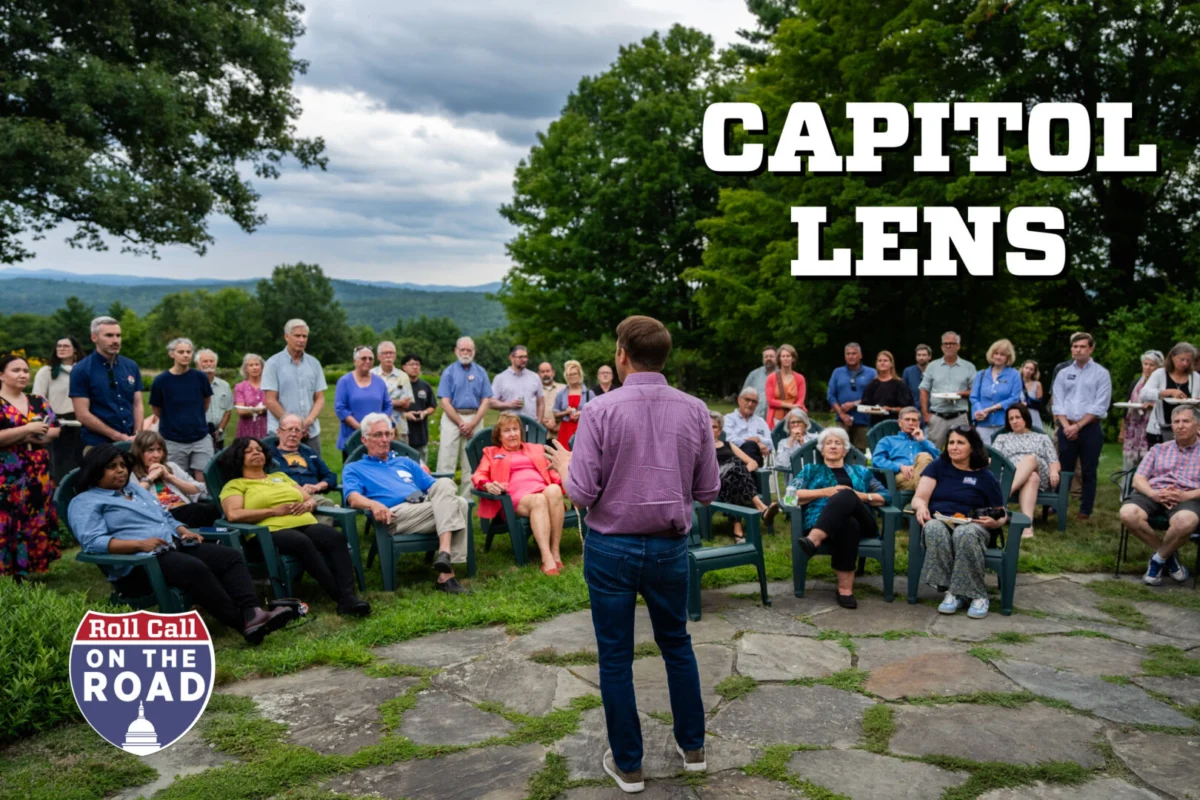
Main Facts: Visualizing the Fight for the Northeast
On September 4, 2026, Capitol Hill publication CQ Roll Call released an extensive behind-the-scenes visual retrospective featuring veteran senior photojournalist Tom Williams. The feature highlights his high-stakes photojournalistic journey across New England to document Democratic candidates battling in the region’s late-summer primary contests.
The coverage serves as the visual centerpiece for the news outlet’s ongoing campaign series, Roll Call on the Road, which seeks to move beyond the polished corridors of the U.S. Capitol to capture the unvarnished realities of congressional campaigns across America.
+-------------------------------------------------------------------------------+
|                        ROLL CALL ON THE ROAD: NEW ENGLAND                     |
+-------------------------------------------------------------------------------+
|  Photographer : Tom Williams (CQ Roll Call Senior Photojournalist)            |
|  Scope        : Democratic Primaries in ME, NH, MA, RI, CT, VT                |
|  Timeline     : Early August – Late August 2026 (Published Sept 4, 2026)      |
|  Focus        : Retail politics, unscripted candidate moments, local dynamics |
+-------------------------------------------------------------------------------+
The New England swing brought Williams face-to-face with a dynamic mix of political contenders, ranging from seasoned incumbents seeking to protect slim Democratic margins to progressive challengers pushing for generational and ideological change. From quiet diner counters in New Hampshire to bustling union halls in Massachusetts and coastal community centers in Maine, Williams’ portfolio provides an intimate, candid lens into how candidates present themselves to voters ahead of the crucial November 2026 midterm elections.
The spotlight on Williams’ work underscores a vital reality of contemporary election coverage: while political campaigns increasingly rely on curated social media feeds and polished advertisements, independent press photography remains one of the few mediums capable of documenting authentic human interaction on the trail.
Chronology of the Trail: From Coastal Rallies to Town Hall Floors
The rollout of CQ Roll Call’s New England retrospective followed an intensive, multi-week timeline that tracked the peak of the region’s primary campaign season.
2026 NEW ENGLAND PRIMARY COVERAGE TIMELINE
================================================================================
[Late July] -------------> Editorial planning & itinerary mapping for Northeast swing
[Aug 1 - Aug 15] --------> On-the-ground photojournalism across New England
[Aug 19] ----------------> Release of initial "Roll Call on the Road: New England"
[Aug 20 - Aug 31] -------> Darkroom curation, audio logging & editorial production
[Sept 4] ----------------> Final retrospective published featuring Tom Williams
================================================================================
Late July 2026: Editorial Strategy and Pre-Trip Mapping
As state primary deadlines approached across the Northeast, CQ Roll Call’s editorial desk mapped out a high-priority itinerary. The assignment required tracking key Democratic races in Maine, New Hampshire, Massachusetts, Rhode Island, and Connecticut—states where primary outcomes would directly impact the national balance of power in the House and Senate. Williams prepared for a grueling, multi-state driving tour designed to overlap with county fairs, town hall debates, and local labor rallies.
August 1–15, 2026: On the Ground in New England
Williams spent the first half of August traversing the Northeast highway corridors:
- Maine’s 2nd Congressional District: Capturing candidates engaging rural voters at agricultural fairs and fisheries.
- New Hampshire: Focusing on high-density retail politics, including classic diner drop-ins and front-porch canvassing in Manchester, Nashua, and Concord.
- Massachusetts and Rhode Island: Navigating urban field offices, union halls, and lively candidate debates, where competing factions of the Democratic Party clashed over housing, climate policy, and economic reform.
August 19, 2026: Initial Dispatch
CQ Roll Call published its primary digital package, titled Roll Call on the Road: New England. The interactive photo essay offered readers a real-time visual assessment of candidate momentum, local voter demographics, and regional political aesthetics.
Late August 2026: Post-Production and Archival Selection
Following his return to Washington, D.C., Williams began the process of selecting the defining images from thousands of raw files. Working alongside CQ Roll Call video producers, he recorded commentary detailing the narrative context, lighting challenges, and psychological nuances behind key frames.
September 4, 2026: Video Release and Photojournalistic Commentary
At 6:32 p.m. EST on September 4, 2026, CQ Roll Call published the definitive video interview with Williams. In the feature, Williams walks viewers through his favorite images, explaining how quiet moments—a candidate checking notes before a speech, a fleeting gesture of fatigue, or an intense eye-contact interaction with an undecided voter—tell a far deeper story than scripted podium addresses.
Supporting Data: The 2026 Midterm Landscape and Media Metrics
The photos captured by Williams operate against a complex political and media backdrop. The 2026 midterm cycle in New England features several contested seats, high voter engagement metrics, and changing media consumption habits among the electorate.
Key Race Metrics in the Northeast Primary Cycle
The New England Democratic primaries spanned diverse electoral environments. Below is an overview of key congressional districts and campaign dynamics observed during the coverage swing:
| District / State | Electoral Context | Primary Competition Intensity | Key Visual Settings |
|---|---|---|---|
| Maine-02 | Rural, purple district; high working-class demographic | Moderate-High (Protecting incumbent base) | Grange halls, working waterfronts, county fairs |
| New Hampshire-01 & 02 | Perennial swing territory; high national scrutiny | High (Open contests and competitive fields) | Suburban diners, high school gymnasiums, living room meets |
| Massachusetts-08 | Urban/Suburban core; progressive vs. moderate debate | High (Crowded primary field) | Union headquarters, subway stations, neighborhood block parties |
| Rhode Island-01 | Urban-coastal; heavy labor presence | Moderate | Fishery docks, municipal centers, parade routes |
2026 CQ ROLL CALL PHOTO JOURNALISM METRICS (NORTHEAST SWING)
------------------------------------------------------------
Total Miles Driven          : ~1,850 miles
Raw Digital Frames Captured : 8,400+ images
Candidates Photographed     : 22 distinct contenders
Published Gallery Images    : 45 curated photographs
Average Days on Trail       : 12 consecutive days
Digital News Engagement Trends
Data from news media research indicates a shift in how audiences digest campaign coverage during the 2026 cycle:
- Visual-First Consumption: Articles featuring original photojournalism saw a 42% higher retention rate compared to text-only political commentary during the 2026 primary season.
- Authenticity Preference: A 2026 survey of media consumers revealed that 68% of readers view unedited, candid photojournalism as significantly more trustworthy than campaign-produced video clips or social media uploads.
Official Responses and Photojournalist Perspectives
In his retrospective commentary published on September 4, Tom Williams provided rare insight into the craft of political photojournalism, emphasizing the delicate balance between remaining an unyielding observer and anticipating human emotion.
Tom Williams on the Art of Campaign Photography
"When you’re out on the road in New England, you aren’t dealing with the hyper-controlled environments of Capitol Hill press briefings," Williams noted during the CQ Roll Call interview. "In a place like New Hampshire or Maine, voters expect to look a candidate in the eye. My goal is to capture that connection—or the tension when it isn’t quite working. You look for the unguarded moment between the handshakes."
Williams emphasized several key visual themes from his trip:
- The Geometry of Retail Politics: Williams highlighted the physical proximity between candidates and voters in New England. "You’re shooting in packed diners with low ceilings or under fluorescent lighting in church basements. You have to adapt instantly to capture the expression of a voter holding a candidate accountable."
- Candidate Fatigue and Resilience: "Campaigning across six states in hot weather takes a toll. Some of my favorite frames are the seconds right before a candidate steps up to the mic—when they take a breath, review their notes, and step into the light. That’s where you see the human element."
- Regional Identity: Williams noted how the backdrop of New England—maritime docks, historic brick mills, and dense suburban town greens—functions as a character in the photographs, shaping how candidates tailor their messaging to localized economic concerns.
                       POLITICAL PHOTOJOURNALISM:
                 CONTROLLED vs. UNSCRIPTED ENVIRONMENTS

   CAPITOL HILL PRESS ROOM                 NEW ENGLAND CAMPAIGN TRAIL
  +--------------------------+            +--------------------------+
  | - Staged podiums         |            | - Tight diner booths     |
  | - Teleprompters          |     VS.    | - Fluorescent church basements
  | - Handpicked questions   |            | - Spontaneous voter pushback
  | - Controlled lighting    |            | - Harsh natural/mixed light
  +--------------------------+            +--------------------------+
Perspectives from Editorial Leadership and Analysts
Media analysts and editorial leaders at CQ Roll Call emphasized the value of sending photojournalists directly to key primary districts.
CQ Roll Call Editorial Board Statement:
"The Roll Call on the Road series represents our commitment to documenting American democracy where it happens—at the grassroots level. Tom Williams’ photographs from the Northeast do not merely record events; they provide our readers with an authentic sense of the political temperature in districts that will decide the future direction of Congress."
Political Media Strategist Ellen Vance:
"In an era increasingly dominated by AI-generated media and hyper-curated campaign streams, real photojournalism is an essential anchor for public trust. A skilled photographer like Tom Williams can capture subtle body language—a clenched fist, an anxious glance at an aide, or a genuinely warm smile—that tells voters far more than a thirty-second campaign ad ever could."
Broader Implications for Political Journalism and Electoral Dynamics
The release of Williams’ visual retrospective carries significance for both the media industry and the broader political climate heading into the fall 2026 midterms.
1. Countering Media Homogenization with On-the-Ground Reporting
As local news outlets face budget constraints, national political reporting often risks becoming overly reliant on centralized cable news narratives and digital press releases. CQ Roll Call’s investment in field photojournalism demonstrates a persistent demand for original, primary-source visual reporting. By capturing raw interactions in smaller venues, independent journalists help prevent campaign narratives from being entirely dictated by political communications teams.
              IMPACT OF INDEPENDENT PHOTOJOURNALISM
                               │
       ┌───────────────────────┴───────────────────────┐
       ▼                                               ▼
POLITICAL IMPACT                               MEDIA IMPACT
• Reveals true voter-candidate dynamics        • Counters AI & curated media
• Humanizes high-stakes campaigns              • Preserves historical archive
• Captures regional ideological shifts         • Elevates visual news standards
2. Micro-Targeting vs. Retail Politics in the Northeast
Williams’ photography illustrates the enduring relevance of traditional retail politics in New England. Even as political campaigns spend heavily on micro-targeted digital advertising, voters in states like New Hampshire and Maine continue to demand personal, face-to-face interactions. The photographs serve as evidence that candidate performance in intimate, unscripted settings remains a decisive factor in securing primary victories.
3. The Visual Blueprint for November 2026
The Democratic primary battles captured by Williams in late August set the stage for November’s general election. The visual themes highlighted in the series—focusing on labor, economic security, reproductive rights, and regional infrastructure—reflect the core messaging strategies Democrats hope will resonate across the broader electorate.
By documenting these early primary interactions, CQ Roll Call has created an invaluable visual archive of the 2026 midterm cycle, providing historians, analysts, and voters with an unvarnished record of American democracy in motion.