Introduction: A City Under Siege
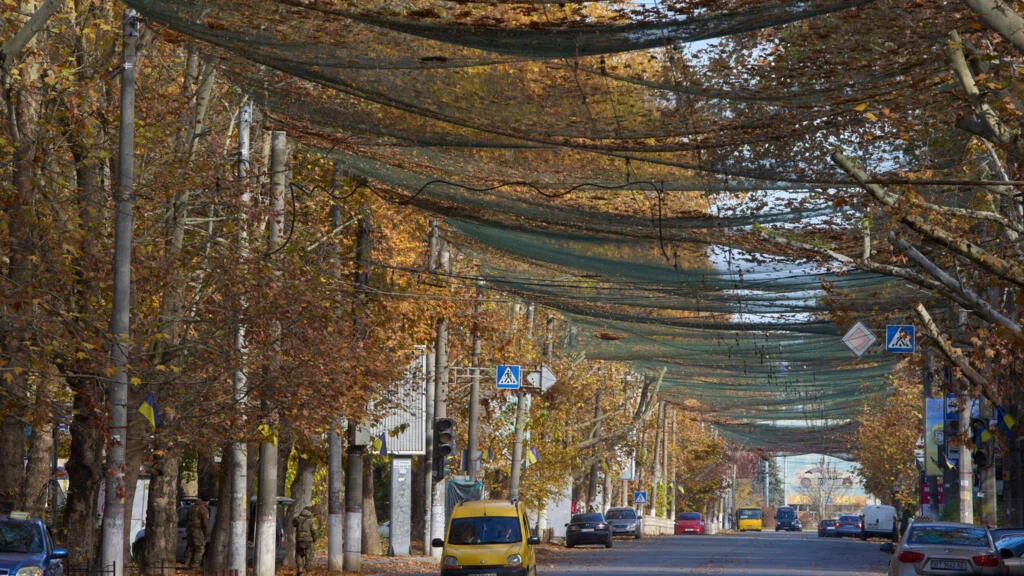
The southern Ukrainian city of Kherson, once a vibrant hub of culture and commerce on the banks of the Dnipro River, finds itself teetering on the edge of a humanitarian catastrophe. On Thursday, regional authorities issued an urgent plea for civilians—particularly families with children and the elderly—to evacuate the city immediately. The directive comes as Russian forces intensify a systematic campaign of aerial bombardment that has left the city’s critical infrastructure in tatters, threatening to leave hundreds of thousands of residents without electricity, water, or heating as the shadow of another brutal winter looms.
The situation has escalated beyond a mere military skirmish; it has evolved into a strategic campaign of attrition designed to render the city uninhabitable. With Russian forces positioned on the opposite bank of the Dnipro River, the city is subjected to daily shelling, but the recent introduction of heavy glide bombs has shifted the battlefield dynamic, creating a level of destruction that local authorities admit they are currently powerless to stop.
The Escalating Crisis: A Chronology of Destruction
To understand the current urgency, one must look at the timeline of a city trapped in the crosshairs of a war that has seen its population dwindle from approximately 280,000 before the February 2022 invasion to a fraction of that today.
The Occupation and Liberation (2022)
Kherson holds a unique place in the narrative of the Russo-Ukrainian war. Captured by Russian forces in the early days of the invasion in March 2022, it became a symbol of resistance until its liberation by Ukrainian forces in November of the same year. However, the withdrawal of Russian troops did not bring peace; it brought a new form of terror. Retreating to the eastern bank of the Dnipro, Russian forces established a permanent firing line, turning the river into a frontline and the city into a constant target.
The Winter of 2023-2024
Last winter served as a grim precursor to the current situation. The Russian military initiated a methodical campaign against Ukraine’s energy grid, striking power plants and substations across the country. Millions were left in freezing temperatures without electricity or heating. Kherson, already scarred by months of occupation, became a primary target for this strategy, experiencing near-total blackouts that lasted for weeks at a time.
The Current Escalation (Late 2026)
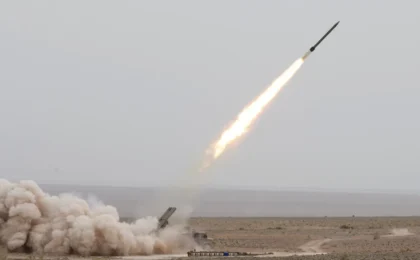
In recent weeks, the intensity of the attacks has reached a new threshold. The introduction of glide bombs—heavily destructive munitions that are difficult to intercept—has allowed Russian forces to strike critical infrastructure with devastating precision. The most recent attack, which targeted a district heating plant, has caused structural damage so severe that local officials have publicly admitted that the facility may not be repairable in the near term. This has triggered the latest, most desperate call for evacuation.
Supporting Data: The Anatomy of a Power Vacuum
The crisis in Kherson is not an isolated incident but a microcosm of the broader energy war being waged across Ukraine. Data from the region underscores the severity of the infrastructure degradation:
- Infrastructure Degradation: The recent strike on the district heating plant is the latest in a series of blows to the city’s utility network. Because the facility is located in a high-risk zone, engineers are often unable to conduct repairs while shelling is ongoing, leading to a "cascading failure" of services.
- The Defense Gap: Governor Oleksandr Prokudin’s statement regarding the lack of defensive capabilities against glide bombs is supported by broader military reports. While Ukraine has received advanced air defense systems like the Patriot missile battery, these assets are spread thin across a vast front line. Recent reports indicate that the supply of interceptor missiles for these systems is at a "beyond critical" shortage in Europe, leaving cities like Kherson increasingly vulnerable to aerial saturation.
- Demographic Vulnerability: The regional government estimates that those remaining in the city are primarily the most vulnerable—the elderly who are immobile and families who lack the financial resources or transport to relocate to safer western regions of Ukraine.
Official Responses and the Governance of Survival
The response from the regional administration has been one of stark, unvarnished honesty. Oleksandr Prokudin’s message on Telegram was not a suggestion; it was a plea for self-preservation.
The Governor’s Directive
"I am once again addressing the residents of Kherson, especially families with children and elderly people: if you have the possibility … please leave," Prokudin stated. The governor emphasized that the "extremely difficult security situation" is not temporary, but rather a worsening trend. He noted that the enemy is targeting critical nodes—power substations, heating pipes, and distribution centers—with the express purpose of making life in the city impossible.
The National Context
The Ukrainian government has consistently framed these attacks as war crimes, arguing that the targeting of civilian infrastructure is a violation of international law. However, at the national level, the rhetoric is tempered by the reality of the military situation. Kyiv is currently lobbying international partners for more robust air defense coverage, yet the global manufacturing capacity for these systems has not kept pace with the rate of Russian expenditure. The result is a painful triage: air defenses are prioritized for capital cities and vital defense industry hubs, leaving frontline cities like Kherson to bear the brunt of the assault.
The Strategic and Humanitarian Implications
The situation in Kherson carries profound implications for the trajectory of the war and the future of the Ukrainian state.
The "Human Safari" of Modern Warfare
Observers have noted that the regular shelling of residential areas, often described as "human safaris," is designed to create a permanent state of fear. By destroying the ability to heat homes, Russia is essentially weaponizing the climate. If the power and heat grid fails entirely this winter, the humanitarian consequences will be catastrophic, potentially triggering a mass exodus of the remaining population and leaving the city as a hollowed-out ghost town under constant bombardment.
The Strategic Front
From a military standpoint, the destruction of Kherson serves to tie down Ukrainian resources. By forcing the civilian population to evacuate and demanding constant government attention for emergency services, Russia prevents Ukraine from consolidating its administrative and military resources. The riverbank has become a "gray zone" where the cost of maintaining a civilian presence is becoming increasingly prohibitive.
Long-term Economic and Social Costs
The destruction of heating plants and electrical grids imposes a generational cost. Even if the war were to end tomorrow, the reconstruction of a city’s utility infrastructure requires years of investment and stability. For every day that these facilities remain in ruins, the economic viability of the region recedes further, potentially leading to long-term demographic displacement where residents, once evacuated, never return.
Conclusion: A City at the Crossroads
As the autumn air grows colder, the residents of Kherson face an impossible choice: stay in their homes and face the prospect of a winter without heat or light, or join the ranks of the millions of internally displaced persons (IDPs) who have fled to the relative safety of western Ukraine or abroad.
The tragedy of Kherson is a testament to the brutal evolution of modern warfare, where the distinction between the front line and the home front has effectively vanished. As long as the current shortage of advanced air defense systems persists, and as long as the Dnipro River remains a firing line, the city will remain trapped in a state of suspended animation—a place where the basic requirements for human survival have become the primary casualties of war.
For the international community, the unfolding crisis in Kherson serves as a reminder that the war in Ukraine is not merely a clash of armies, but a battle for the survival of civilian life in the face of industrial-scale destruction. The coming months will be a defining test of resilience, not only for the people of Kherson but for the support structures that underpin their survival.