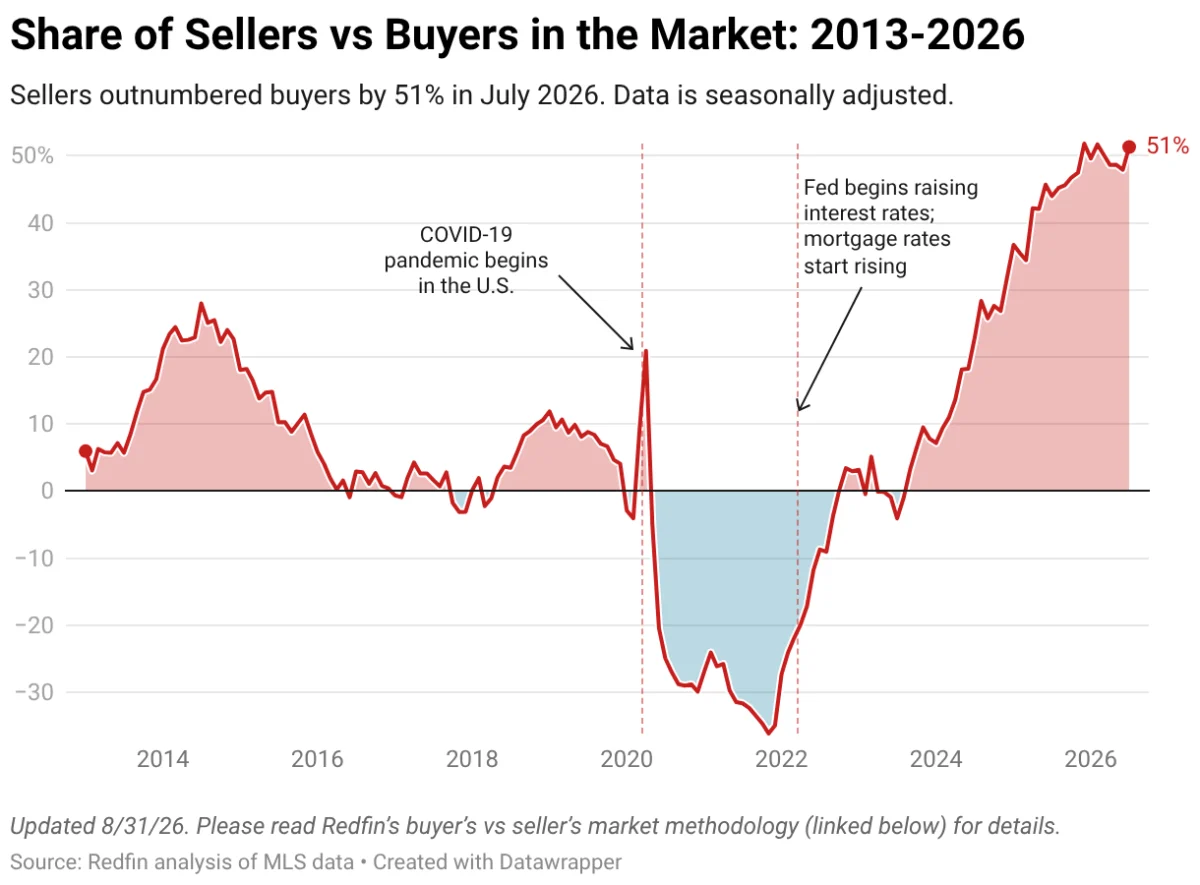
The summer of 2026 presents a housing landscape defined by a complex tug-of-war between persistent economic headwinds and the fundamental human need for shelter. For homeowners contemplating a sale, the decision is no longer as straightforward as it was during the pandemic-era frenzy. With monthly housing payments now exceeding $2,600 and a macro-economic climate fraught with global instability, the market has shifted decisively in favor of the buyer.
However, "buyer’s market" does not mean "impossible to sell." It simply means the rules of the game have changed. Success in this environment requires a departure from the "set it and forget it" listing mentality of the past, shifting instead toward a strategy rooted in data, flexibility, and professional guidance.
Main Facts: The Current State of Real Estate
The defining characteristic of the 2026 housing market is a pervasive sense of caution. Potential buyers are currently squeezed by a combination of high home prices and volatile mortgage rates, keeping many on the sidelines. According to recent market analysis, there are currently nearly 500,000 more home sellers than active buyers across the United States.
This supply-demand imbalance has caused the "days on market" metric to climb. The typical home now takes approximately 50 days to sell—a significant increase from the sub-30-day timelines observed in 2022. While this is still historically faster than the 60-to-90-day averages seen throughout the 2010s, it represents a notable cooling period that sellers must incorporate into their financial and life planning.
A Chronological Look at the 2026 Slowdown
To understand how we arrived at this point, one must look at the progression of the last six months:
- Early 2026: Initial optimism regarding a cooling in interest rates briefly narrowed the gap between supply and demand. Sellers felt encouraged to list, and buyers began to re-enter the market.
- Spring 2026: The onset of global volatility, specifically the war in Iran, injected immediate uncertainty into the energy and credit markets. This triggered a spike in inflation fears, which directly impacted mortgage rates.
- Late Spring to Early Summer 2026: As the economic fallout from geopolitical instability and the introduction of new tariffs began to manifest, consumer confidence waned. Buyers retreated, and sellers began to face the reality of a market that was no longer absorbing inventory at premium prices.
- Current Status: We are in a state of "stuttered progress." Peace talks and economic policy adjustments have provided temporary relief, but the underlying pressure of elevated mortgage rates and a cautious labor market continues to define the pace of transactions.
Supporting Data: Why the Market Is Fluctuating
Data from Redfin and other economic indicators reveal a highly bifurcated market. It is not a monolith; it is a collection of regional realities.
The Regional Divide
The Midwest and Northeast continue to defy the national trend of sluggishness. Cities like Rochester, NY, and Milwaukee, WI, are seeing inventory levels that fail to meet local demand. In these pockets, sellers can still command multiple offers and relatively quick closing times.
Conversely, the Sun Belt—a region that saw massive migration during the 2020-2022 boom—is now facing a correction. Homeowners in these areas are increasingly listing their properties as they weigh the rising costs of property insurance and the intensifying risks associated with climate change. This flood of inventory in the Sun Belt has effectively handed the leverage to the buyer, forcing sellers to slash prices to remain competitive.
The Financial Squeeze
The primary driver of the current market is the disconnect between wage growth and housing appreciation. Since the pandemic began, house prices have outpaced wage increases significantly. When you add the impact of elevated mortgage rates—fueled by energy cost volatility—the monthly "carrying cost" of a home has moved beyond the reach of the average American household. This has forced a wave of "delistings" and "relistings," where sellers attempt to test the market, fail to find a buyer at their price point, and pull their homes off the market entirely.
Official Perspectives: Expert Analysis
Daryl Fairweather, Chief Economist at Redfin, provides a sobering outlook for those entering the market. "Home sellers should prepare for a strong buyer’s market," she advises. "Elevated inventory has given buyers more options, but record costs have made them wary. Volatile mortgage rates and an unstable job market are adding a layer of uncertainty, making it harder for buyers to plan and act with confidence."
Echoing this sentiment, Chen Zhao, Head of Economics Research at Redfin, points to the broader geopolitical picture. "Mortgage rates are reacting to the war in Iran, as rising energy costs and concerns over inflation put pressure on the economy," Zhao notes. "Long-term improvement depends on a stronger economy and more housing construction. Unless homebuilding skyrockets or the country falls into a severe recession, buyer activity and housing affordability are unlikely to improve substantially."
Strategic Implications: How to Decide If You Should Sell
Given the current climate, when is it actually a "good" time to sell? The answer depends heavily on your personal "why."
When to List
- Supply Constraints: If you live in a market like the Midwest or Northeast where demand significantly outstrips supply, your home is likely still a hot commodity.
- Market Shifts: If you notice a sudden drop in local mortgage rates, that is often a leading indicator of a surge in buyer activity. Being ready to list when those windows open can net you a better result.
- Necessity: Life events—relocation, family growth, or divorce—often supersede market conditions. In these cases, the "best time" to sell is simply when your personal circumstances require it.
When to Hold
- High Rates, Low Equity: If you have recently refinanced and locked in a historic low rate, selling now means trading that cheap debt for a much higher interest rate on your next property, which could effectively wipe out the equity gains you’ve made.
- Deferred Maintenance: In a buyer’s market, properties that require major repairs sit on the market. Buyers today are less likely to take on "fixer-uppers" because the cost of borrowing to renovate is higher than ever.
- Pricing Realism: If you are unwilling to adjust your expectations to meet the current, lower-valuation reality, you risk having your home sit on the market and become "stale," which inevitably leads to deeper price cuts later.
Final Recommendations for the 2026 Seller
If you are determined to sell in this environment, your strategy must be refined. First, connect with a high-performing local agent. An agent’s knowledge of hyper-local inventory is worth more now than in any market in the last decade.
Second, consider phased marketing. By testing your property with a smaller, targeted audience before hitting the public Multiple Listing Service (MLS), you can gauge actual interest levels without the penalty of "days on market" accumulating while you experiment with price.
Finally, be prepared to negotiate. In a buyer’s market, the price is only one component of the contract. Be ready to offer concessions, such as closing cost assistance or home warranty credits, to entice the few qualified buyers who are actively searching.
The 2026 housing market is not a disaster, but it is a transition. It is moving away from the irrational exuberance of the pandemic and toward a more traditional, negotiated, and deliberate phase. For the prepared seller, it remains a viable path to cashing in on equity—provided they approach the market with a plan, a strategy, and a healthy dose of patience.