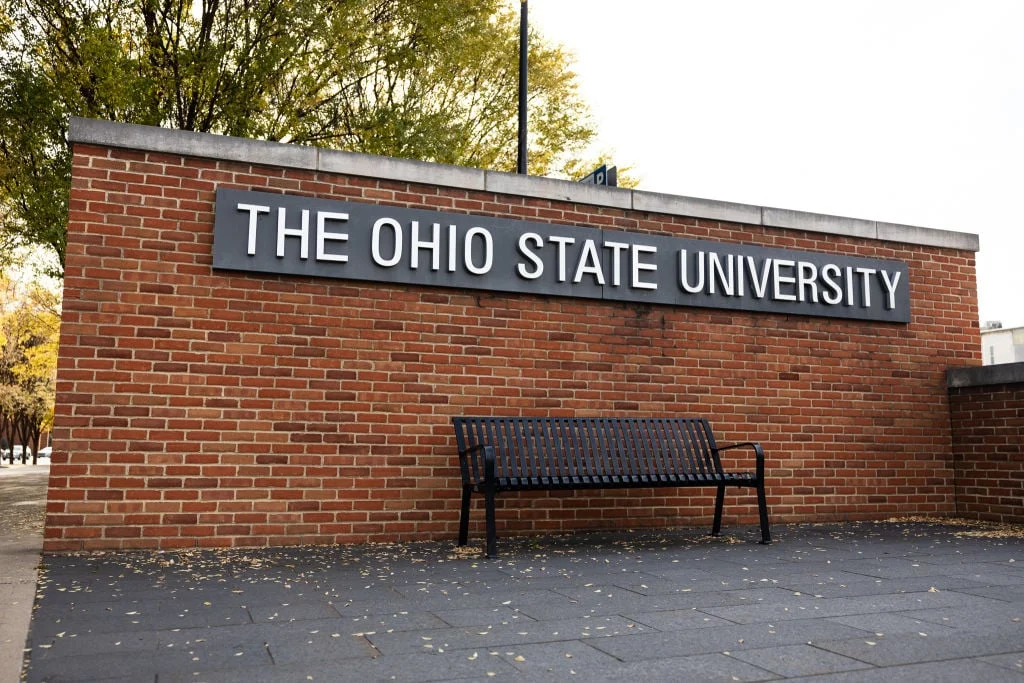
COLUMBUS, Ohio — The Ohio State University (OSU) has reached a $2.1 million settlement with the federal government to resolve allegations that the institution failed to disclose the ties of its federally funded researchers to Chinese entities. The agreement, finalized last week, concludes a long-running investigation into the university’s compliance with federal transparency mandates regarding foreign influence in taxpayer-funded scientific inquiry.
The settlement underscores the increasing scrutiny federal agencies, including the National Aeronautics and Space Administration (NASA) and the National Science Foundation (NSF), are applying to academic research institutions. As the geopolitical landscape shifts, the U.S. government has intensified its efforts to prevent the "leakage" of sensitive technology and intellectual property to adversarial nations.
The Core Allegations: A Breach of Federal Protocol
The allegations center on a decade-long period, spanning from November 2012 to August 2023, during which OSU received significant grant funding from NASA and the NSF. Under federal law—specifically the Consolidated and Further Continuing Appropriations Act of 2011—grant recipients are strictly prohibited from using federal funds to collaborate with or provide assistance to Chinese universities or state-owned enterprises.
According to the Department of Justice (DOJ), the crux of the issue was not necessarily the existence of international collaboration, but the deliberate failure to disclose those connections. While internal faculty activity reports at OSU had documented certain affiliations with Chinese organizations as early as 2014, these disclosures were allegedly never funneled to the federal agencies providing the financial backing.
The investigation highlighted a specific case involving C.K. Shum, a former principal investigator on a NASA-funded project. Federal authorities contend that while the university became aware in 2019 that Shum was a participant in China’s "Thousand Talents Program"—a state-run initiative designed to recruit experts in science and technology from Western institutions—the university failed to report this association to NASA or the NSF until 2023.
A Chronology of Non-Compliance and Settlement
The timeline of the investigation reveals a slow-moving but ultimately rigorous audit process that forced the university to reconcile its internal oversight mechanisms with federal requirements.
- November 2012 – August 2023: The period during which OSU received federal grants from NASA and the NSF that were subject to strict transparency requirements.
- 2014: The timeframe in which faculty reports began documenting links to Chinese research organizations, which remained siloed within the university’s internal reporting structure.
- 2019: The year OSU reportedly learned of Dr. C.K. Shum’s participation in the Thousand Talents Program.
- 2023: The university finally disclosed the conflict to federal agencies, sparking a deeper inquiry into the institutional failure to report the matter four years earlier.
- 2024: As part of preliminary accountability measures, OSU voluntarily repaid $254,661 to the government.
- August 2026: The final settlement is reached, with OSU agreeing to pay the remaining $1.84 million, bringing the total financial penalty to $2.1 million.
Supporting Data: The Cost of Transparency Gaps
The $2.1 million settlement is significant not only for its monetary value but for what it signals about the federal government’s valuation of "research security." For years, the academic community operated under a model of open collaboration. However, the paradigm has shifted toward "protected science."

The NSF and NASA rely on a system of self-reporting to ensure that taxpayers are not inadvertently funding the progress of foreign military or economic competitors. When a principal investigator—the person responsible for the scientific integrity and compliance of a project—is incentivized by a foreign government, the risk of "dual-use" research (technology that can be used for both civilian and military purposes) increases.
The government’s decision to pursue this case demonstrates that failure to maintain a "paper trail" is treated as a material breach of contract. By failing to inform agencies of foreign affiliations, universities essentially deprive the government of the ability to conduct its own risk assessment before awarding or continuing a grant.
Official Responses: Accountability vs. Institutional Integrity
The reaction from federal officials has been stern, emphasizing that the era of lax oversight in university research is over.
"Together with the Department of Justice and NASA, we have secured a major financial recovery on behalf of the American public," said Robert Steinau, a senior official at the NASA Office of Inspector General. "We will not tolerate institutions that conceal foreign ties and compromise national security. Our cutting-edge research must not fall into the hands of our adversaries."
For its part, The Ohio State University has sought to distance itself from the actions of individual researchers while highlighting its current remedial efforts. OSU spokesperson Chris Booker confirmed that Dr. Shum is no longer employed by the university and emphasized that the institution has cooperated fully with the federal government throughout the investigation.
"Ohio State takes national security seriously, and the university has long been recognized for its efforts to promote research integrity and security," Booker stated. He pointed to a suite of new safeguards implemented by the school, including:
- Dedicated research compliance and secure research offices.
- Mandatory conflict-of-interest and research security disclosure systems.
- Enhanced, robust security and foreign influence training programs for all faculty and staff involved in grant-funded research.
Broader Implications for Higher Education
The OSU settlement is not an isolated incident but part of a broader trend involving elite research universities across the United States. In recent years, institutions like MIT, Harvard, and Yale have all faced varying levels of scrutiny regarding their international research ties.

The Conflict of "Open Science" vs. National Security
Universities have traditionally thrived on the global exchange of ideas. The fundamental mission of an academic institution is the dissemination of knowledge. However, when that knowledge is funded by the U.S. Department of Defense, NASA, or the NSF, the government maintains a proprietary interest in the outcome. The tension arises when a faculty member’s commitment to an international network conflicts with their contractual obligations to the U.S. government.
The "Thousand Talents" Factor
China’s Thousand Talents Program has become a primary target for U.S. counterintelligence. The program provides researchers with significant financial incentives, lab space, and prestige in exchange for their findings. From a U.S. policy perspective, this constitutes an effort to hollow out American innovation. For universities, the lesson is clear: if a researcher is involved in such a program, it is not merely a personal career choice; it is a potential national security event that requires immediate federal notification.
Institutional Risk Management
For other universities, the message from the OSU case is clear: the "siloing" of information is a liability. It is no longer sufficient for a professor to disclose an affiliation to a department chair if that information does not reach the university’s central research compliance office, which in turn must report it to the relevant federal agencies. The financial cost of failing to bridge this communication gap is now measured in the millions, not to mention the potential for debarment from future federal funding—a death knell for many research programs.
Conclusion
The $2.1 million payment by The Ohio State University is an admission that, in the eyes of the law, the university’s oversight was insufficient. While the settlement includes no admission of liability or guilt, the scale of the payment and the specific nature of the allegations serve as a powerful warning to the academic community.
As global competition in technology and space exploration intensifies, the intersection of academia and national security will only become more contentious. Universities must now act as gatekeepers, balancing the traditional values of international scientific cooperation with the strict, often opaque requirements of national security compliance. For Ohio State, the payment closes a chapter, but for the rest of the higher education sector, the investigation serves as a stark reminder that when it comes to federal funding, transparency is the only acceptable policy.