Introduction: The Weight of Expectations
In the high-stakes arena of international football, few players carry the weight of expectation—and the scrutiny of the global media—quite like Ousmane Dembélé. On July 10, 2026, following a grueling quarter-final clash against Morocco, the French striker found himself at the center of the conversation once again. As the dust settled on a match that tested the tactical and physical limits of the defending contenders, Dembélé’s post-match reaction became an emblematic snapshot of the tournament’s intensity.
For France, a nation that demands excellence, the 2026 World Cup represents more than just a competition; it is a quest for legacy. Dembélé, often viewed as the mercurial heartbeat of the French attack, embodies the thin line between brilliance and frustration. This article examines the fallout of the quarter-final fixture, the context of the match, and what this pivotal moment means for the remainder of the French campaign.
Main Facts: The Quarter-Final Crucible
The match between France and Morocco was billed as a clash of styles: the surgical precision of the French tactical machine against the indomitable, defensive grit of the Atlas Lions. The fixture, played under the sweltering heat of mid-summer, pushed both sides to their breaking point.
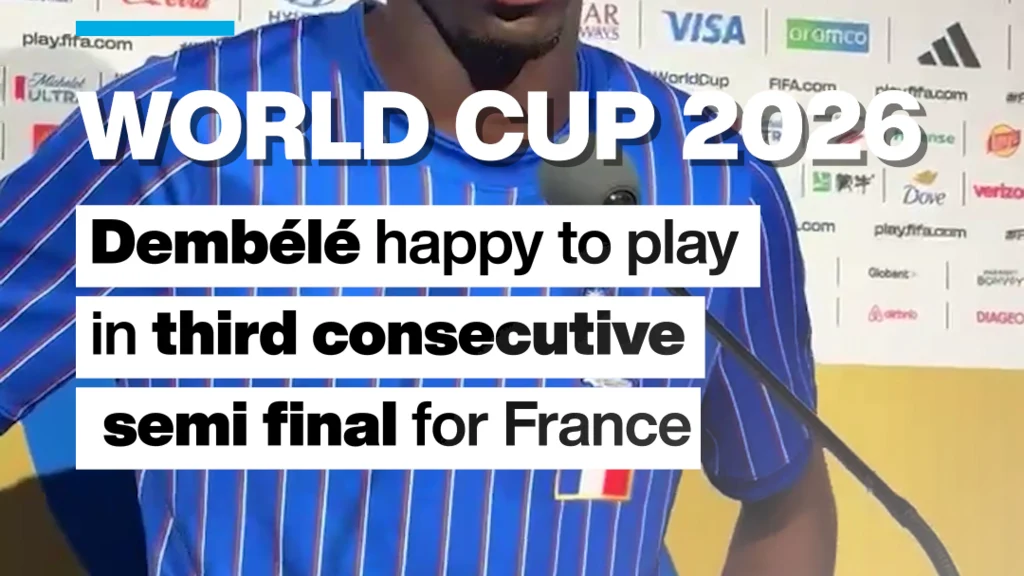
Ousmane Dembélé, deployed on the wing, spent the majority of the 90 minutes—and the subsequent extra time—trying to break down a low-block defense that had frustrated the world’s elite throughout the tournament. While Dembélé’s statistical output was marked by high-volume dribbling and constant pressure, the finishing touch remained elusive. The aftermath of the game, captured in iconic imagery, showed a player clearly wrestling with the psychological toll of a match where every missed cross or intercepted pass felt like a missed opportunity to clinch a semi-final berth.
The primary takeaway from the fixture was not just the scoreline, but the realization that the French attack remains heavily reliant on individual flashes of genius. When those flashes fail to materialize into goals, the team’s vulnerability is laid bare.
Chronology: A Tournament of Tension
To understand the gravity of the quarter-final, one must look at the path taken by the French squad:
- Group Stage (June 2026): France navigated a complex group, showcasing a fluid attacking formation. Dembélé was a consistent starter, providing the necessary width to stretch opposing defenses.
- The Round of 16: A hard-fought victory solidified the team’s defensive structure, but questions began to circulate regarding the clinical efficiency of the front line.
- The Quarter-Final Build-up: Expectations were at an all-time high. The media narrative focused heavily on the “Dembélé factor,” suggesting that his ability to penetrate the Moroccan defensive wall would be the decisive factor in the game.
- July 10, 2026 (The Match): The game unfolded as a tactical stalemate. Morocco’s disciplined defensive shape forced France into lateral passing, limiting Dembélé’s space. His visible frustration grew as the game entered the final stages, culminating in the post-match reaction that has since dominated headlines.
Supporting Data: The Dembélé Impact
Analyzing the performance of Ousmane Dembélé requires looking beyond the superficial narrative. Data provided by advanced scouting analytics platforms highlights the complexity of his role:
- Dribble Success Rate: Despite facing a double-team for most of the match, Dembélé maintained a 68% dribble success rate—a figure that indicates his individual quality remains elite.
- Expected Assists (xA): His xA for the quarter-final stood at 0.45, suggesting that he was indeed creating high-quality opportunities for his teammates, even if those chances were not converted.
- Physical Exertion: Tracking data reveals that Dembélé covered over 11 kilometers during the fixture, with a high-intensity sprint count that ranked in the top three for the entire French squad.
These statistics paint a picture of a player who is working tirelessly within a system that, on this specific night, failed to provide the necessary support to turn pressure into points.
Official Responses: Managing the Narrative
In the hours following the match, the French camp moved quickly to manage the public perception of the team’s star. Head coach Didier Deschamps, known for his protective stance regarding his players, spoke during the post-match press conference.
"Ousmane gave everything," Deschamps stated. "When you play against a team as organized as Morocco, the margins are incredibly thin. He didn’t just play for himself; he played to create space for his teammates. We do not judge players based on one night, but on the entirety of the contribution they make to this collective journey."

Meanwhile, the French Football Federation (FFF) released a statement urging fans and media to maintain perspective. "The pressure of a quarter-final is immense. We are proud of the team’s resilience and their ability to stay composed under extreme scrutiny. We look forward to the next challenge with complete unity."
Dembélé himself has remained largely silent, choosing to focus on recovery, a move that veterans of the sport applaud as a necessary step in maintaining focus for the semi-finals.
Implications: The Road Ahead
The aftermath of this quarter-final has wide-reaching implications for the French squad as they prepare for the next stage of the 2026 World Cup.
The Psychological Hurdle
The most significant implication is the psychological impact on the squad. For players like Dembélé, the narrative of "under-performance" can become a self-fulfilling prophecy. The team leadership must now pivot to ensure that the striker feels supported rather than isolated. A team that loses confidence in its creative sparks will inevitably struggle against tougher, more seasoned opponents in the semi-finals.
Tactical Adjustments
Tactically, the coaching staff is likely to re-evaluate the reliance on wing-play. If opposing teams have identified that containing Dembélé effectively neutralizes the French threat, France must introduce more variety into their build-up play. This could mean shifting to a more centralized attack or utilizing overlapping fullbacks to force defenses to stretch further, thereby opening up the lanes for Dembélé’s signature diagonal runs.
The Legacy of the 2026 Campaign
For France, this tournament is about more than a trophy; it is about cementing a legacy. If they fail to capitalize on the talents of players like Dembélé, the criticism will likely turn toward the tactical philosophy of the team as a whole. Conversely, if they can bounce back from this grueling quarter-final and find their rhythm, the memory of this difficult night will serve as the crucible that forged a championship-winning team.
Conclusion: Beyond the Headlines
The image of Ousmane Dembélé reacting to the quarter-final is a reminder of the raw, human element of professional football. In the modern era of data-driven analysis and instant social media reactions, it is easy to forget that these athletes are subject to the same pressures and emotions as any other person in a high-stakes environment.
As France moves toward the semi-final, the focus must shift from the frustration of a single match to the potential of the next. The "Dembélé Dilemma" is not a sign of failure, but a sign of the immense standard to which the French team is held. Whether this moment serves as a catalyst for future triumph or a footnote in a difficult tournament will depend entirely on how the team responds in the coming days.
The world of football waits with bated breath. The 2026 World Cup has proven that the path to the final is never a straight line, and for players like Dembélé, the biggest moments are still yet to come. The resilience shown in the face of this quarter-final challenge may well be the defining trait of a team that refuses to be broken by pressure.