By Editorial Staff
A somber atmosphere descended upon downtown Minneapolis this Wednesday as a violent confrontation erupted within a residential apartment complex, leaving at least one person dead and six others hospitalized. The incident, which prompted a massive, multi-agency tactical response, has sent shockwaves through the Twin Cities, drawing immediate attention from state leadership and federal authorities.
The shooting, which occurred in the shadow of the Minneapolis Convention Center, forced a citywide lockdown of the surrounding Loring Park neighborhood as law enforcement officers engaged in a high-stakes standoff. Among the seven victims transported to the Hennepin County Medical Center, two were identified as Minneapolis Police Department (MPD) officers, highlighting the volatility and danger of the situation.
Main Facts: The Anatomy of a Tragedy
The incident began mid-afternoon, transforming a bustling downtown corridor into a scene of tactical maneuvering and urgent medical intervention. According to preliminary reports from the Minneapolis Police Department, officers were dispatched to the apartment tower following reports of gunfire.
The gravity of the situation was confirmed when the Hennepin County Medical Center (HCMC) reported receiving seven patients from the scene. Officials confirmed that one individual had succumbed to their injuries, while the status of the remaining six victims—including the two wounded officers—remains shrouded in uncertainty as medical teams work to stabilize them.
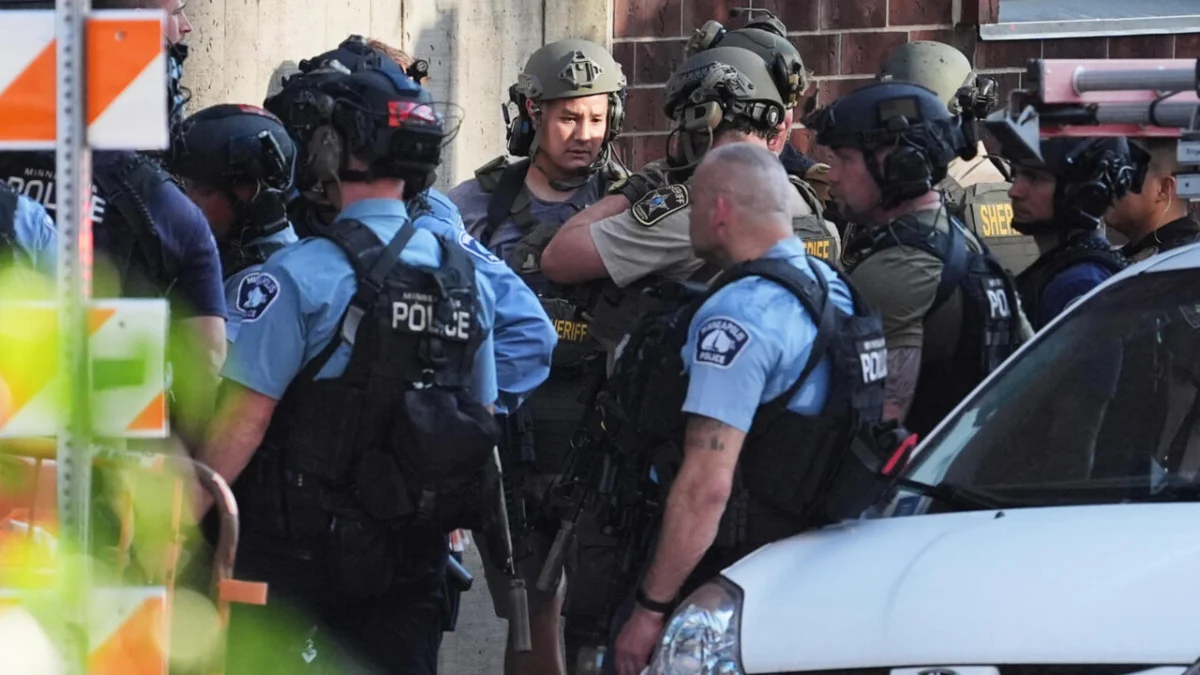
At this stage, the identity of the deceased and the perpetrator remains unconfirmed. The MPD has urged the public to maintain a wide berth of the downtown sector, as the investigation remains active and fluid. Social media footage captured the intensity of the scene, showing tactical units aiming rifles upward toward the upper floors of the apartment building, underscoring the severity of the threat posed by the assailant.
Chronology: A City Under Siege
The timeline of the Wednesday shooting reflects a rapid escalation of force and an equally rapid deployment of emergency resources.
The Initial Call
At approximately 2:00 PM local time, emergency dispatchers began receiving multiple reports of gunfire emanating from a high-rise residential complex in the Loring Park area. The neighborhood, typically known for its mix of dense apartment living and proximity to the Convention Center, was immediately cordoned off by local patrol units.
The Tactical Standoff
As the first wave of officers arrived, they were met with sustained fire, resulting in the wounding of two officers. The situation quickly transitioned from a standard disturbance call to an active-shooter barricade scenario. Strategic units from the MPD, supported by state and federal resources, established a perimeter. Video clips circulated on various social media platforms showed heavily armed officers taking positions on the pavement, their weapons trained on the upper levels of the structure.
The Medical Evacuation
By 3:30 PM, the focus shifted to the evacuation of the wounded. A fleet of ambulances was seen departing the scene under heavy police escort, heading toward the Hennepin County Medical Center. The hospital subsequently issued a brief statement confirming the arrival of seven patients, marking the official death toll at one.
Containment and Investigation
By evening, the area remained a "no-go" zone. While the immediate threat of gunfire appeared to have been contained, law enforcement continued to sweep the building. The presence of the FBI—as confirmed by Director Kash Patel—signaled the gravity of the situation, indicating that the investigation would move beyond the jurisdiction of local police into the federal sphere.
Supporting Data: Contextualizing the Violence
Minneapolis has been grappling with fluctuating crime rates in its downtown core over the past several years. While the city has implemented various community safety initiatives, the presence of violence near the Convention Center—a major hub for tourism and business—poses a significant challenge to the city’s economic and social stability.
The Loring Park neighborhood, where the shooting occurred, is one of the most densely populated areas of the city. The architectural profile of the area, characterized by older, multi-story brick apartment buildings, creates unique challenges for law enforcement during active-shooter incidents, specifically regarding sightlines and the difficulty of clearing high-occupancy structures.
The involvement of the FBI in this instance is a notable escalation. Typically, the FBI is brought in for specific high-level threats or when the nature of the crime suggests federal jurisdiction or a larger conspiracy. Their prompt deployment indicates that investigators are not ruling out any possibilities, including terrorism or a highly organized criminal act.
Official Responses: A United Front of Condolences and Resolve
The response from Minnesota’s political leadership was swift, characterized by a mix of mourning for the victims and praise for the "brave" actions of the first responders.
Governor Tim Walz
Governor Tim Walz took to the social platform X shortly after the news broke to express his solidarity with the victims. "Grateful to law enforcement actively working to ensure the safety of our neighbors in Downtown Minneapolis this afternoon," Walz wrote. "Minnesota is praying for our first responders." The Governor confirmed that the state government is providing all necessary resources to assist the local Minneapolis authorities in bringing the situation to a resolution.
FBI Director Kash Patel
In a direct statement regarding the federal response, FBI Director Kash Patel emphasized the importance of inter-agency cooperation. "The FBI is responding to the shooting and will offer any and all resources necessary to assist local authorities," Patel stated. His intervention suggests that federal investigators are already working closely with the MPD to piece together the motive behind the attack.
House Speaker Lisa Demuth
Minnesota House Speaker Lisa Demuth echoed the sentiment of the state’s executive branch, condemning the violence. "I’m incredibly thankful for the massive response of our brave law enforcement officers," Demuth stated. She labeled the event a "heinous crime," reflecting the bipartisan consensus that the shooting represents a severe breach of public safety that demands justice.
Implications: The Road Ahead for Minneapolis
The Wednesday shooting is likely to trigger a profound discussion regarding public safety policies in downtown Minneapolis. With two officers among the wounded, the incident underscores the physical risks inherent in modern urban policing.
Impact on Law Enforcement
The wounding of MPD officers will inevitably reignite debates regarding police training, equipment, and staffing levels. As the department undergoes intense scrutiny, the leadership will be forced to balance the need for aggressive tactical responses with the necessity of maintaining community trust.
Psychological and Economic Consequences
Downtown residents and business owners are now left to navigate the psychological toll of such a violent event. The Loring Park neighborhood, often seen as a cultural heart of the city, faces the challenge of recovering from the trauma. Economically, the proximity of the shooting to the Convention Center—a primary driver of local commerce—could lead to temporary disruptions in business and a lingering hesitation among visitors.
The Legislative Response
Expect the upcoming legislative session in St. Paul to feature heavy debate over crime prevention and law enforcement funding. While Governor Walz and Speaker Demuth have both expressed gratitude for the response, the political friction over how to address the root causes of urban violence—ranging from mental health services to criminal justice reform—will undoubtedly intensify.
Conclusion
As the sun sets over the Minneapolis skyline, the city remains in a state of watchful mourning. The investigation into the apartment tower shooting is far from over. As more details emerge regarding the shooter’s identity and the conditions of the surviving victims, the city will begin the difficult process of healing. For now, the focus remains on the safety of the residents, the recovery of the wounded, and the pursuit of truth in the wake of a tragedy that has shaken the foundation of downtown Minneapolis.
The community is encouraged to follow official channels from the Minneapolis Police Department for real-time updates and to avoid the downtown core while investigators continue to process the scene. The sacrifice of the officers wounded today serves as a stark reminder of the volatile landscape in which they operate, and the resilience of the community will be tested in the days and weeks to come.