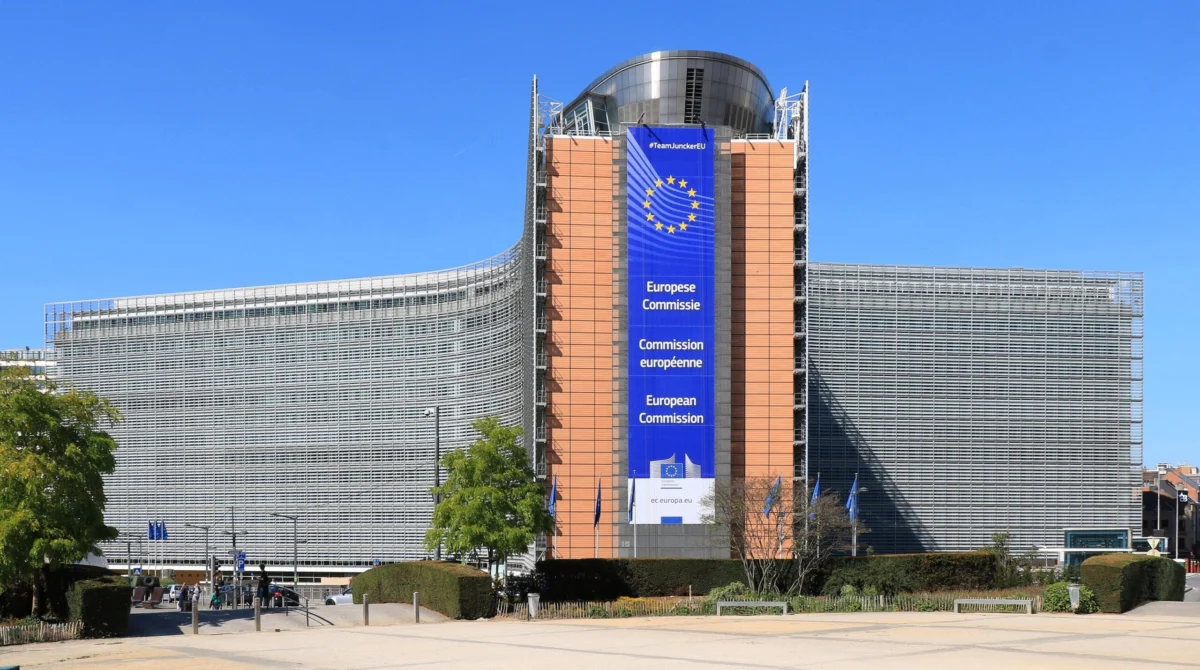
In a landmark decision that underscores the European Union’s unwavering commitment to consumer protection in the digital age, the European Commission has imposed a staggering €550 million fine on the Chinese e-commerce giant AliExpress. The penalty, announced this past Monday, marks one of the most significant enforcement actions to date under the European Union’s Digital Services Act (DSA). The Commission’s decision follows a protracted investigation into the platform’s systemic failure to mitigate the proliferation of illegal, unsafe, and counterfeit goods, signaling a new era of accountability for global tech behemoths operating within the Single Market.
The Core Allegations: Systemic Negligence
The European Commission’s investigation into AliExpress—a subsidiary of the Alibaba Group—uncovered a series of critical lapses in the platform’s operational integrity. Regulators found that the marketplace failed to establish adequate safeguards to prevent the sale of hazardous items, including counterfeit clothing, unsafe toys, and non-compliant cosmetics that pose direct health risks to European consumers.
Crucially, the investigation highlighted a lack of urgency in addressing flagged content. The Commission noted that identified illegal products often remained active on the platform for weeks, allowing them to reach consumers despite being flagged by internal or external monitoring systems. Furthermore, the company’s brand authorization verification—the digital barrier intended to keep counterfeiters off the platform—was deemed "not sophisticated enough" to withstand the influx of illicit listings. Perhaps most damningly, the Commission discovered that AliExpress failed to effectively enforce sanctions, allowing banned or penalized sellers to simply pivot and continue operating under different guises, effectively rendering the platform’s internal policing mechanisms toothless.
Chronology of Regulatory Scrutiny
The road to this historic fine was not an overnight development but the culmination of years of escalating tension between Brussels and major e-commerce platforms.
- Mid-2024: Following the full implementation of the Digital Services Act for Very Large Online Platforms (VLOPs), the Commission began a systematic review of major marketplaces to evaluate their risk assessment frameworks.
- Early 2025: Initial audits and user reports prompted the Commission to launch a formal inquiry into AliExpress, specifically targeting its supply chain verification processes.
- May 2026: The Commission sent a strong signal to the industry by fining Temu €200 million for similar failures, establishing a precedent that the EU would not tolerate the "fast-fashion" and "ultra-discount" model if it came at the expense of safety.
- Summer 2026: AliExpress was provided with a final opportunity to submit evidence of remedial action; however, the Commission found these measures insufficient to address the scale of the systemic risks identified.
- October 2026 (Upcoming): The platform is now under a strict mandate to submit a comprehensive remediation plan by October 20, 2026, to overhaul its compliance infrastructure.
Supporting Data: The Weight of the DSA
The Digital Services Act, which governs the behavior of digital services in the EU, imposes stringent requirements on platforms with over 45 million monthly active users in the Union. Under the DSA, these "Very Large Online Platforms" (VLOPs) must not only remove illegal content but proactively identify and mitigate systemic risks.
The financial penalty of €550 million is calculated based on the severity of the infringements and the company’s worldwide annual turnover. Under the DSA, the Commission has the authority to issue fines of up to 6% of a company’s total annual revenue. This level of punitive power is specifically designed to ensure that compliance costs are not treated as a mere "cost of doing business," but rather as a primary operational imperative.
The contrast between this penalty and previous enforcement actions is stark. While the €200 million fine for Temu earlier this year was seen as a warning shot, the €550 million assessment for AliExpress represents a shift toward aggressive, high-impact enforcement.
Official Responses and the "Tech Sovereignty" Mandate
The rhetoric from Brussels has been uncompromising. Henna Virkkunen, the European Commission’s Executive Vice-President for Tech Sovereignty, Security and Democracy, delivered a stern assessment of the situation.
"The spread of counterfeit clothing, unsafe toys, dangerous cosmetics and other illegal and harmful products is not an unavoidable cost of shopping online; it is a failure by AliExpress to comply with its obligations under the DSA," Virkkunen stated. She emphasized that the sheer scale of AliExpress’s operations cannot be used as an excuse for regulatory non-compliance. "Scale is not an excuse; risks must be identified and addressed systematically to ensure consumers can safely shop online. Today, we are holding AliExpress to this standard and request it to take action."
This language aligns with the broader EU strategy to reclaim "Tech Sovereignty." The Commission is increasingly wary of reliance on foreign e-commerce platforms that prioritize rapid expansion and low-cost logistics over the rigorous product safety standards that define the European Single Market.
Implications: A Shifting Digital Landscape
The implications of this fine are expected to ripple through the global e-commerce sector, forcing a fundamental reassessment of how platforms manage third-party sellers.
Impact on Consumer Safety
For the average European consumer, this move is intended to translate into a safer shopping environment. The mandatory remediation plan will likely require AliExpress to invest heavily in Artificial Intelligence-driven moderation tools, more robust identity verification (Know Your Business Customer, or KYBC), and a faster, more transparent dispute resolution process for users who unknowingly purchase unsafe goods.
The Future of the Single Market
The Single Market Policy remains the bedrock of the European economy, facilitating the free movement of goods, services, capital, and people across 27 member states. By cracking down on AliExpress, the Commission is protecting the integrity of this market. If unsafe, counterfeit goods are allowed to permeate the market freely, it creates an unfair competitive advantage against European manufacturers and retailers who abide by strict safety and quality standards. This enforcement action is, therefore, as much about economic protectionism as it is about public health.
A Pattern of Enforcement
This development is part of a broader, aggressive campaign by the European Commission. The trend began in earnest in 2025, when the Commission levied a combined €700 million fine against Apple and Meta for breaching the Digital Markets Act (DMA). By targeting both the "gatekeepers" of the app ecosystem and the "marketplaces" of physical goods, Brussels is demonstrating that no sector of the digital economy is immune to oversight.
Industry analysts suggest that this strategy is designed to create a "Brussels Effect," where global companies are forced to adopt European standards as their baseline, not just for the EU, but for their global operations. By setting the cost of non-compliance so high, the Commission is effectively mandating that companies re-engineer their business models to prioritize safety and transparency from the ground up.
Conclusion: The Path Forward
AliExpress now stands at a crossroads. The requirement to submit a remediation plan by October 20, 2026, is an ultimatum. Should the company fail to provide a robust strategy that satisfies the Commission, it risks further, potentially daily, fines that could cripple its operations in one of the world’s most lucrative consumer markets.
For the European Commission, the successful enforcement against a giant like AliExpress is a validation of the DSA’s design. It proves that the legislation is not merely a set of aspirational guidelines, but a functional, powerful tool capable of holding the world’s largest corporations to account. As the digital economy continues to evolve, the EU’s message remains clear: access to the European market is a privilege contingent upon the absolute prioritization of consumer safety and the rule of law.