Introduction: The Prehistoric Wanderer
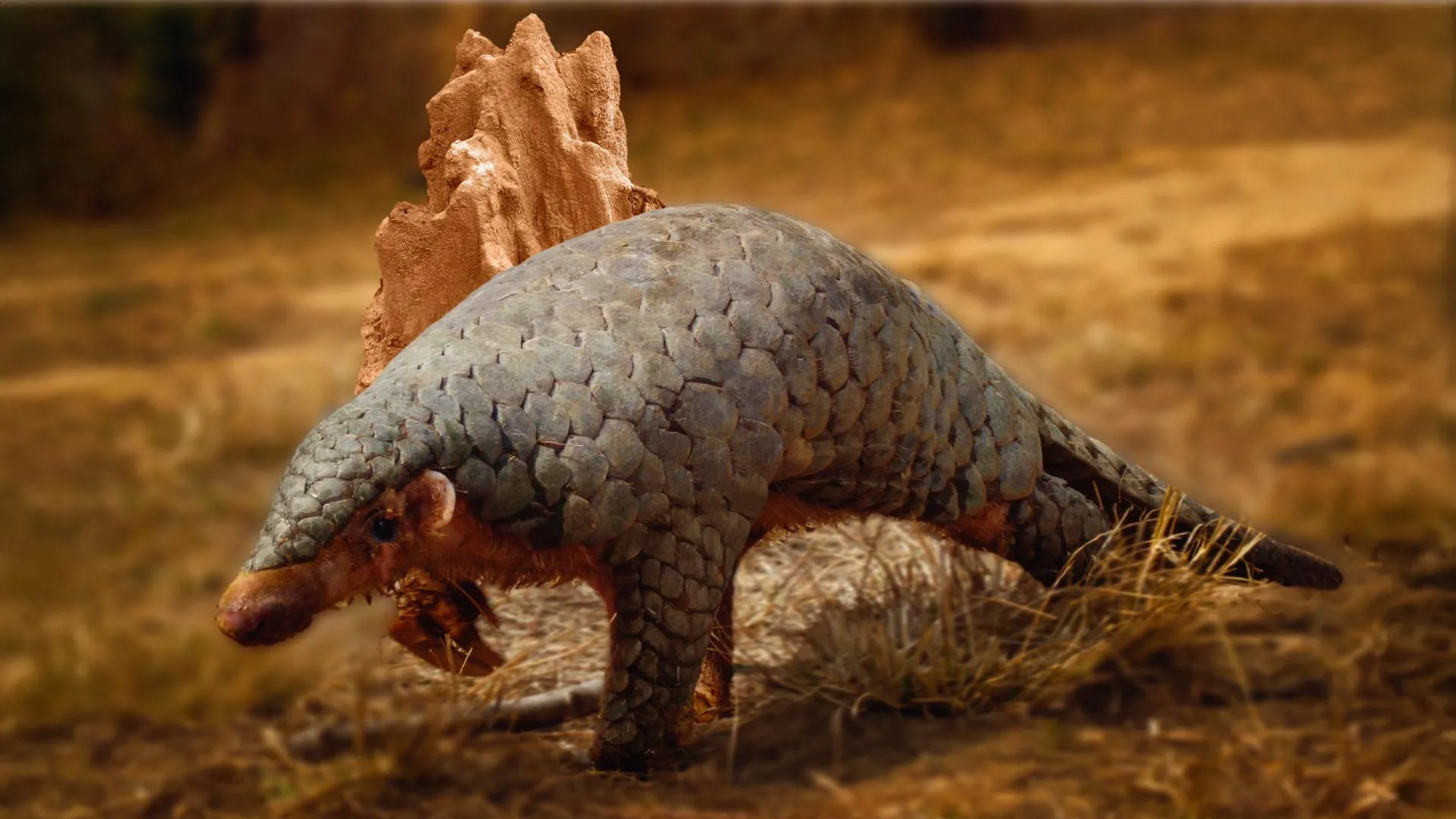
With their pinecone-like keratin scales, powerful curved claws for excavating termite mounds, and long, prehensile tails, pangolins are among the most distinctive mammals on Earth. Often described as "prehistoric" in appearance, these solitary, nocturnal creatures occupy a unique niche in the ecosystems of Africa and Asia. Yet, this evolutionary uniqueness has made them a target. As the most heavily trafficked mammals in the world, all eight species of pangolin face an existential threat from the illegal wildlife trade.
For conservationists, protecting these animals has always been an uphill battle, complicated further by a lack of clarity regarding their very identity. Now, a groundbreaking study published in the journal Communications Biology has finally untangled a complex taxonomic knot, confirming the existence of a distinct, previously unrecognized species: the Himalayan pangolin (Manis aurita). This discovery, powered by nearly two centuries of museum history and modern genetic sequencing, offers a new lifeline for a species that has long been hiding in plain sight.
The Taxonomic Riddle: A Chronology of Discovery
The path to identifying Manis aurita was not a linear one. It was a decade-long scientific detective story that required the fusion of ancient biological archives and cutting-edge forensic technology.
1836: The Initial Description
The story begins in the 19th century. In 1836, the scientific community first recorded the existence of Manis aurita. However, as taxonomic standards evolved over the next century, the species was relegated to a mere subspecies of the Chinese pangolin. For decades, it remained buried in the literature, its status as a distinct evolutionary lineage forgotten by the mainstream scientific consensus.
2025: The Re-emergence
The mystery resurfaced in 2025, when a research team identified that animals previously lumped under the umbrella of "Chinese pangolins" were, in fact, two different species. One group inhabited the forests of China, while another occupied the Himalayan foothills across Nepal, India, Bhutan, and Myanmar. The researchers proposed the name Manis indoburmanica, or the Indo-Burmese pangolin, for the mountain-dwelling variety.
The Conflict of Nomenclature
Scientific taxonomy is governed by a strict rule of priority: the earliest valid name assigned to a species must be the one retained. As researchers realized M. indoburmanica was a distinct species, they faced a critical question: did this newly described animal align with the historical records of M. aurita? If they were the same, the older name—aurita—would have to be resurrected.
The Smoking Gun: DNA from 1836
To solve the "taxonomic riddle," researchers led by the Field Museum, Guangzhou University, and Nepal Engineering College turned to the most reliable, albeit oldest, evidence available: the Natural History Museum in London.
The team obtained a historical "type specimen" of the Nepalese subspecies (aurita) collected in 1836. Sequencing the DNA of a 190-year-old specimen is a delicate, high-stakes operation. Any contamination or degradation could lead to false results. However, the team successfully extracted and mapped the genome, comparing it against modern samples gathered from Himalayan pangolins in Nepal and India.
The results were definitive. The modern populations matched the 1836 specimen perfectly. The species identified in 2025 as M. indoburmanica was, in fact, the long-lost Manis aurita. By restoring the original name, scientists have not only corrected a historical error but have also established a firm biological foundation for future protection.
Distinguishing the Himalayan Pangolin
The taxonomic clarification is more than just a matter of nomenclature; it highlights physical and ecological differences that are vital for field researchers. Anderson Feijó, the Negaunee Assistant Curator of Mammals at the Field Museum, notes that the Himalayan pangolin is physically distinct from its Chinese cousin.
- Morphology: The Himalayan pangolin is generally larger than the Chinese pangolin. It possesses a notably longer tail and smaller ears. Interestingly, the species name aurita is a nod to these specific ear characteristics.
- Geography: The two species do not share a range. The Chinese pangolin is largely confined to the landscapes of China, while the Himalayan pangolin is an inhabitant of the rugged, high-altitude foothills of the Himalayas.
Understanding these boundaries is crucial. For critically endangered animals, conservation efforts—such as reintroduction programs—must be precise. Releasing a Chinese pangolin into the habitat of a Himalayan pangolin, or vice versa, could have negative consequences for local gene pools or ecological stability.
Official Perspectives: Why This Matters
The international team of researchers emphasizes that this discovery is a triumph of interdisciplinary collaboration.
"We can’t protect what we do not know," says Anderson Feijó. "Now that we have confirmed that this other species of pangolin exists, we can use that information to help protect these endangered animals."
Narayan Koju, the study’s first author from Nepal Engineering College, highlights the importance of institutional resources. "The confirmation of Manis aurita as a valid species demonstrates the importance of long-term research, international collaboration, and museum collections. Most importantly, it provides a strong scientific basis for conservation planning, wildlife forensics, and efforts to protect one of the world’s most trafficked mammals from extinction."
Yan Hua of the Guangdong Academy of Forestry adds that this taxonomic work is a direct strike against illegal trade. By creating a clearer picture of species boundaries, researchers are providing law enforcement with the tools they need to track poaching hotspots.
Implications for Global Conservation
The illegal trade in pangolins is fueled largely by the demand for their scales, which are wrongly believed to possess medicinal properties in some traditional practices. Because pangolins are shy, elusive, and increasingly rare, poachers are rarely caught with live animals; instead, authorities encounter large stashes of confiscated scales.
Forensic Breakthroughs
Historically, identifying the origin of these scales was nearly impossible. With the genetic markers for M. aurita now clearly defined, conservationists can analyze confiscated material to determine which species is being targeted and, by extension, which geographic regions are experiencing the most intense poaching pressure. This allows authorities to work "backward" from the evidence to identify illegal poaching rings.
Refined Reintroduction Programs
As conservationists work to bring pangolin populations back from the brink, the potential for "wrong-species" reintroduction is a major concern. By clearly defining the limits of where M. aurita is found, scientists can ensure that conservation efforts are geographically and biologically appropriate.
The Role of Natural History Museums
Perhaps the most significant takeaway from this study is the indispensable value of museum collections. In an era where field samples are increasingly difficult to obtain due to the rapid decline of wild populations, museums serve as time capsules. They allow scientists to study animals from populations that may no longer exist or are too fragile to be sampled today.
As Feijó noted, the use of historical museum specimens provides a "big advantage" as a repository of material that allows researchers to "look back and keep learning." Without the 190-year-old specimen from London, the Himalayan pangolin might have remained an unrecognized, and therefore under-protected, species for decades to come.
Conclusion: A Future for the Himalayan Pangolin
The validation of Manis aurita is a beacon of hope in the otherwise grim landscape of pangolin conservation. It reminds us that science is not just about discovery, but about correction and refinement. By honoring the historical record and applying the rigor of modern genomics, researchers have given this mountain-dwelling mammal a formal identity.
The task ahead remains daunting. Poaching continues to ravage populations, and the demand for scales shows few signs of abating. However, with the Himalayan pangolin now recognized as a distinct species, conservationists have a more precise map, a sharper forensic tool, and a clearer mission. Protecting Manis aurita is no longer just about saving a generic animal—it is about preserving a unique, ancient lineage that has survived for millennia, and which now, with human intervention, might just survive into the next century.