For decades, the narrative of the “starving student” was treated as a rite of passage—a temporary, almost romanticized hurdle on the path to a degree. However, as the economic landscape shifts and the cost of living outpaces stagnant wages and limited financial aid, that narrative has been replaced by a harsh reality: a systemic crisis of basic needs insecurity that threatens the academic persistence and long-term futures of millions of college students.
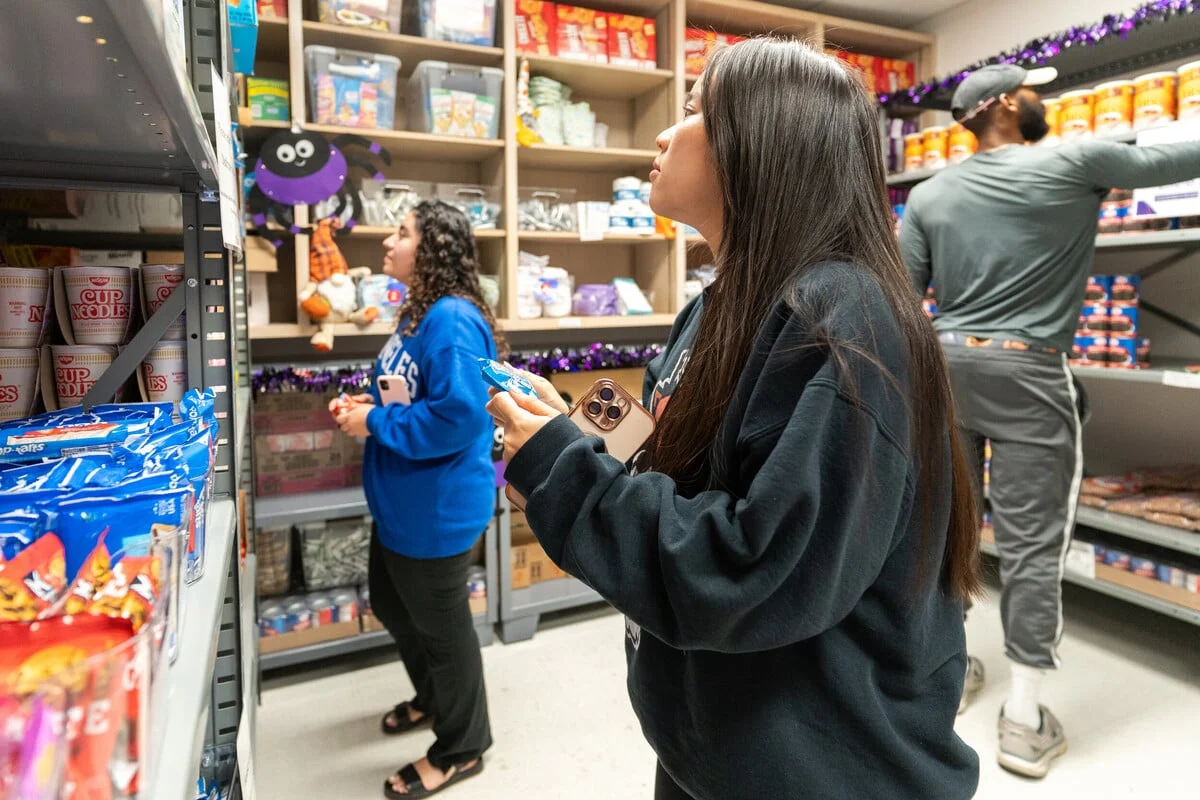
Across the United States, institutions are moving beyond the traditional role of “educator” to become essential safety nets. By addressing the fundamental requirements for survival—food, housing, and financial stability—colleges are attempting to bridge the chasm between enrollment and graduation.
The Data: A Stark Portrait of Insecurity
The scale of the problem is difficult to ignore. Recent analyses have illuminated the disproportionate burden carried by the most vulnerable student populations.
According to a report from the Institute for Higher Education Policy (IHEP), which synthesized data from the federal Beginning Postsecondary Students Longitudinal Study, Pell Grant recipients—who represent the lowest-income households in the country—are nearly twice as likely to experience food insecurity as their non-grant-receiving peers. The numbers are sobering: 42 percent of Pell recipients report food insecurity, compared to just 22 percent of non-recipients.
Housing instability presents an equally harrowing challenge. A collaborative study by New America and the Eviction Lab focused on student parents—a demographic often overlooked in traditional campus policy. The data shows that student parents between the ages of 35 and 39 with school-age children face an eviction-filing rate of 22 percent. To put this in perspective, this is double the rate experienced by their non-student peers in the same age bracket. This data suggests that the very act of pursuing a degree may be acting as a stressor on the stability of a family unit, rather than a ladder to prosperity.
Chronology of a Campus Shift
The transition toward "holistic student support" did not happen overnight. Historically, higher education institutions operated under the assumption that students arrived on campus with their basic needs met, or that these issues were purely private, personal matters.
- The Early 2010s: The rise of the campus food pantry model. Initially viewed as a radical or temporary solution, pantries became ubiquitous as the “hidden hunger” on campus became impossible to ignore.
- The Mid-2010s: The shift toward emergency aid. Colleges began creating small grant funds to help students cover sudden costs like car repairs or medical bills, which frequently caused students to "stop out" of their education.
- 2020–Present: The maturation of systemic support. The COVID-19 pandemic served as a massive accelerant, stripping away the thin veneer of stability for many students and forcing colleges to integrate basic needs support directly into their strategic planning and budgets.
Three Models of Innovation: Redefining Student Support
Recognizing that emergency fixes are insufficient to combat structural poverty, three institutions are pioneering unique, long-term models to sustain their students.
1. University of Mount Saint Vincent: Institutionalizing Housing
At the University of Mount Saint Vincent in the Bronx, the focus has shifted from short-term shelter to long-term stability. The institution’s "Dax House" program is a flagship initiative that repurposes former convent space into stable, year-round housing for women.
Operating in partnership with DePaul USA and the Sisters of Charity, Dax House charges students a nominal $250 in monthly rent. More importantly, it provides wraparound support and a permanent mailing address—a critical, often overlooked resource for students who lack a stable home and need to navigate government social services.
"This is not just an issue of providing a bed," says Susan Burns, president of the University of Mount Saint Vincent. "It’s about changing students’ trajectory and helping them prepare for the future beyond their time at the university." The results are statistically significant: students participating in the program maintain a 94 percent persistence rate, proving that housing stability is one of the highest-leverage investments a college can make in student success.
2. Generations College: Targeted Financial Intervention
Recognizing that the greatest barrier for adult learners is often the "opportunity cost" of their education, Generations College implemented the Single Parent Scholarship. This program fills the gap between federal grant aid and the actual cost of tuition, effectively making an associate degree free for eligible parents.
Launched in 2020, the program acknowledges that student parents are not just balancing coursework; they are balancing childcare, transportation, and full-time caregiving. By covering up to $3,500 per semester, the college removes the financial anxiety that forces many to choose between a shift at work and a lecture hall.
Chancellor Grace Alexis describes the intent behind the program as a reclamation of hope. "We just wanted to provide them with a sense of hope that, ‘Yes, you too can still obtain your college degree, despite the fact that you have all of these other obligations,’" she explains. With nearly 90 scholarships awarded this year, the demand continues to outpace supply, underscoring the necessity of such targeted aid.
3. Austin Community College: The "First-Dollar" Philosophy
In Central Texas, Austin Community College (ACC) is challenging the status quo of "free tuition" programs. Many such programs are "last-dollar," meaning they only kick in after all other federal and state aid has been applied. ACC, however, utilizes a "first-dollar" model for its Free Tuition Pilot Program.
Under the first-dollar model, ACC covers tuition and general fees before other aid is applied. This allows students to apply their federal Pell Grants and other scholarships toward their living expenses—rent, groceries, and transit—rather than toward tuition that is already covered.
Chancellor Russell Lowery-Hart has been a vocal proponent of this shift, arguing that tuition is only one part of the cost-of-attendance equation. By coupling this financial model with robust wraparound services—such as mental health counseling, food access, and childcare assistance—ACC is creating an ecosystem that accounts for the reality of a student’s life. "When we can remove basic needs barriers and make college affordable, students are much more likely to complete," says Lowery-Hart. "When you add free tuition on top of that, those two things become the most significant predictors of whether students will be successful."
Implications for Higher Education Policy
The shift toward these comprehensive support models suggests a profound transformation in how the American public views the "college experience." The implications of these programs are far-reaching:
- Retention as a Public Health Issue: When universities treat food and housing insecurity as obstacles to retention, they are essentially practicing public health. Improving student stability leads to higher completion rates, which benefits the local economy and the tax base.
- The Shift from "Student" to "Citizen": Institutions like the University of Mount Saint Vincent are acknowledging that students are citizens with complex lives. Providing a mailing address or childcare is not an overreach; it is a recognition of the student as a whole person.
- Redefining Value: The success of these programs forces a conversation about how colleges are funded. If a college’s success is measured by the graduation of its students—rather than just the recruitment of them—then the cost of a food pantry or a housing program is not an "expense," but an investment in the college’s primary outcome metric.
Conclusion: A New Standard for Persistence
As the data from IHEP and New America suggests, the challenges facing today’s students are systemic and deeply entrenched. For colleges and universities, the choice is becoming binary: either continue to operate under the archaic assumption that the student body is uniformly middle-class and stable, or evolve into the kind of institution that acknowledges the harsh realities of the modern economy.
The models implemented at the University of Mount Saint Vincent, Generations College, and Austin Community College provide a roadmap. By addressing the fundamental barriers of housing, financial support, and cost-of-living, these institutions are not merely helping students graduate; they are actively working to dismantle the cycles of poverty that have historically prevented millions from achieving the dream of a college degree.
The future of higher education success lies not just in the rigor of the curriculum, but in the strength of the foundation beneath the student. As more institutions begin to view basic needs as a central component of their educational mission, the hope is that the "starving student" will eventually become a relic of a less inclusive past.