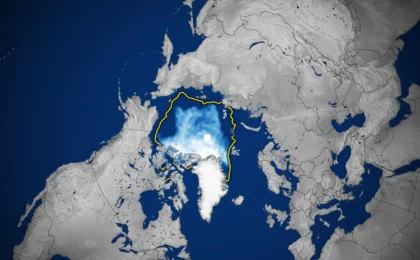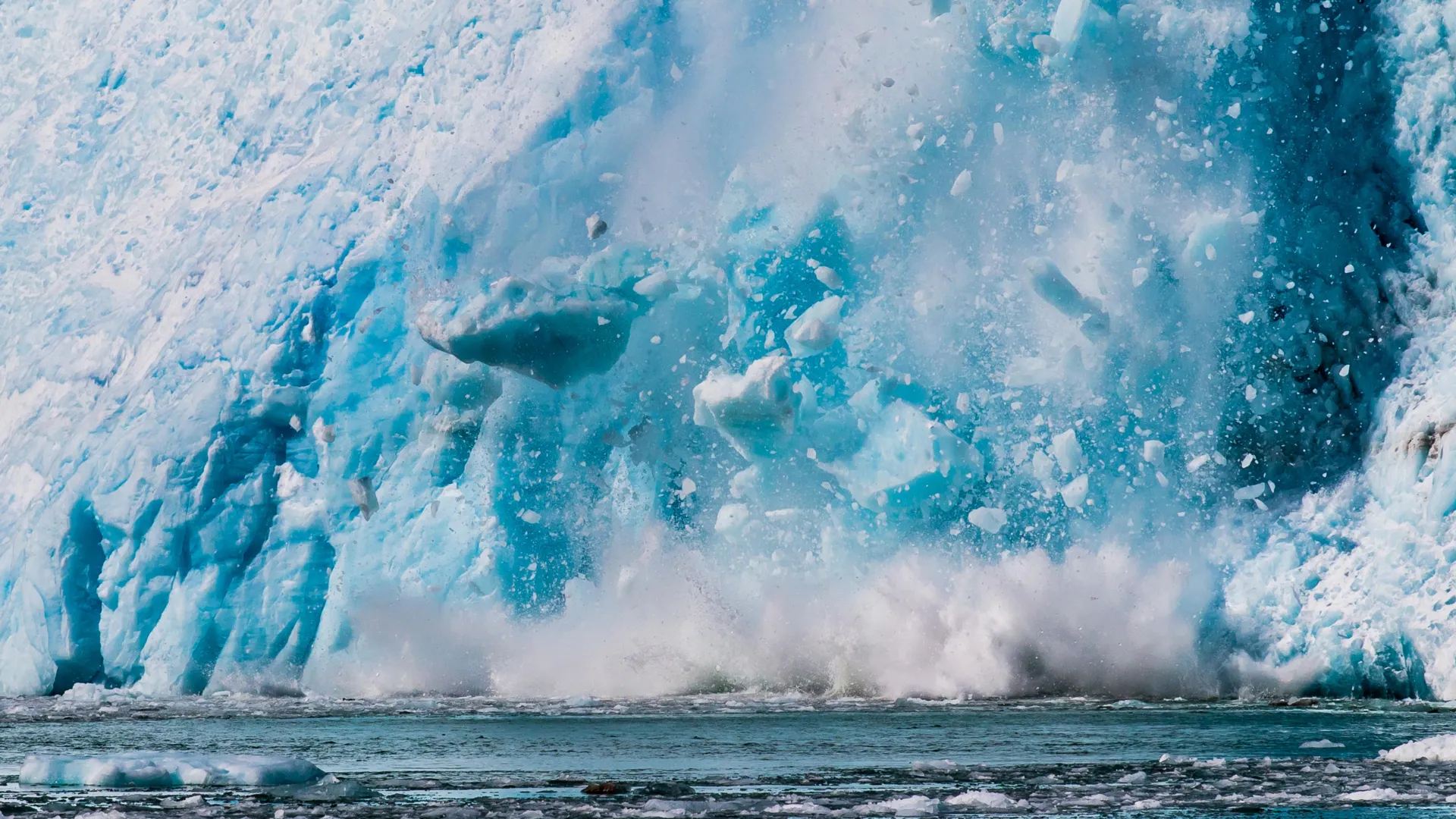
As the Arctic continues to warm at a rate nearly four times the global average, Alaska’s vast network of glaciers is undergoing a profound and rapid transformation. A landmark study published in the journal Nature has unveiled that these icy giants are far more sensitive to temperature fluctuations than previously understood. By leveraging cutting-edge satellite radar technology, researchers have quantified a chilling trend: for every 1 degree Celsius (1.8 degrees Fahrenheit) increase in average summer temperatures, the melting period for Alaska’s glaciers extends by approximately three weeks.
The study, led by Albin Wells—a recent Ph.D. graduate from Carnegie Mellon University—represents a significant leap forward in glaciology. By moving beyond traditional, limited observation methods, the research team has provided a high-resolution window into the precarious state of over 3,000 glaciers across the state.
The New Frontier: Synthetic Aperture Radar (SAR)
For decades, the monitoring of glacier health was tethered to the limitations of optical imagery. Glaciologists typically relied on satellite or aerial photography to track the "snowline"—the critical boundary between a glacier’s accumulation zone, where snow builds up and adds mass, and its ablation zone, where melting occurs. However, optical instruments are notoriously fickle. They require clear skies and adequate daylight, often failing to capture the dynamic, day-to-day shifts in snow cover.
"In optical data, the snowline can be really hard to observe," explains Mark Fahnestock, a co-author of the study from the University of Alaska Fairbanks Geophysical Institute. "If you’re a day late taking your picture, it might have snowed on the entire glacier, and you can’t see where the bare glacier ice is down below and where the snow and firn is above."
To solve this, the team turned to Synthetic Aperture Radar (SAR). Unlike optical sensors, SAR transmits microwave pulses from a satellite toward the Earth’s surface, synthesizing the returning signals into detailed imagery. Because these microwaves penetrate cloud cover and operate independently of sunlight, SAR provides a constant, reliable feed of data regardless of the weather or time of day.
Using data from Europe’s Sentinel-1 radar constellation, the researchers monitored nearly every Alaska glacier larger than half a square mile between 2016 and 2024. This consistent "bird’s-eye view" allowed them to track "melt days"—a metric defined as either a full 24-hour period of melting across a glacier or a cumulative period where disparate parts of the glacier melt until the total area equals the full surface. The ability to monitor this from space at 12-day intervals has essentially "operationalized" glacier tracking, turning what was once a sporadic assessment into a robust, continuous diagnostic tool.
Chronology of a Crisis: The 2019 Heat Wave
While the study provides a broad view of long-term trends, it also highlights the catastrophic impact of acute weather events. The most striking example occurred during the intense Alaska heat wave of June 23–July 10, 2019.
During this period, temperatures in many parts of the state soared 20 to 30 degrees Fahrenheit above historical averages. Anchorage, for instance, shattered records with a staggering 90-degree reading—a massive deviation from typical summer highs in the mid-60s. The research team meticulously mapped how this heat wave acted as a catalyst for ice loss.
The extreme temperatures pushed glacier snowlines nearly 350 feet higher in elevation. In a typical climatic year, these snowlines would not reach such elevations until two months later in the season. By stripping away the reflective, protective layer of seasonal snow, the heat wave exposed bare ice and "firn"—partially compacted, granular snow—to the sun. Once the protective blanket of snow is removed, the darker, underlying ice absorbs more solar radiation, accelerating the melting process in a vicious feedback loop. This single event affected almost every glaciated region in Alaska, with the notable exception of the Brooks Range, serving as a grim preview of what future, warmer climates will hold.
Supporting Data: Coastal vs. Inland Divergence
The study did more than just track melt; it provided granular insights into how geography dictates a glacier’s survival. Researchers observed distinct behavioral differences between glaciers located on the coastal side of Alaska’s mountain ranges and those situated further inland.
While both groups are experiencing significant mass loss, they do so at different rates and through different mechanisms. Coastal glaciers, often buffered by maritime climates, experience higher winter accumulation but also endure more intense summer melting. Inland glaciers, existing in a more continental climate, react differently to temperature spikes.
"This is an important finding," noted Wells, "because it corroborates prior knowledge that glaciers in Alaska on the coastal side of mountains have more melt in summer and more accumulation in winter than those on the continental side of the ranges." This regional nuance is essential for climate modeling; it suggests that a "one-size-fits-all" approach to predicting Alaska’s glacier future will be inherently flawed.
Official Responses and Scientific Implications
The significance of this research lies in its predictive power. By establishing a firm correlation between summer temperature increases and the lengthening of the melt season, scientists can now refine their projections for glacier mass balance—the critical metric that determines whether a glacier grows, remains stable, or shrinks.
"Our ability to quantify these changes is really important," said Wells. "Melt extents and snowlines are proxies for glacier mass balance. These correlations with temperature begin to give a sense for how much melt or snowline retreat we can anticipate under future, warmer climates across the region."
The research team, which also included Carnegie Mellon assistant professor David Rounce, emphasizes that these findings are not merely academic. They represent a warning. As the melt season continues to stretch—gaining three weeks for every degree of warming—the hydrologic impact on Alaska’s watersheds will be immense. Glacier melt feeds rivers, affects salmon habitats, and alters sea levels.
"What Albin has done is operationalize the tracking of surface conditions on the glaciers in a way that can be applied anywhere," Fahnestock added, highlighting that this methodology is now a blueprint for monitoring glacial health globally, from the Himalayas to the Andes.
The Future of the Arctic Landscape
The conclusions drawn from the Sentinel-1 data are stark. The sensitivity of Alaska’s glaciers to short-term climatic variability, such as the 2019 heat wave, underscores the precarious nature of these frozen reservoirs. When glaciers lose up to 28% more protective snow during warm periods than in typical years, they lose their defense mechanisms against the accelerating warming of the planet.
As the scientific community continues to digest these findings, the message is clear: the pace of change in the Arctic is outstripping previous estimates. The transition from traditional, manual observation to automated, radar-based monitoring provides the data necessary to understand the gravity of the situation, but it also paints a sobering picture of an environment struggling to maintain its equilibrium.
For policymakers and climate scientists alike, the study offers a vital data point in the ongoing effort to manage the impacts of global warming. The question is no longer whether Alaska’s glaciers will change, but how quickly they will retreat and how the downstream ecosystems will adapt to the inevitable loss of these massive, ancient structures. With the satellite data now flowing in, the world has a clear view of the decline—the task now is to decide what that information means for the future of the Arctic.