WASHINGTON — U.S. Agriculture Secretary Brooke Rollins has publicly distanced herself from President Donald Trump’s unilateral proposal to boost duty-free beef imports, deflecting questions about secret international trade deals to the Office of the U.S. Trade Representative (USTR) while attempting to soothe mounting anger from domestic cattle producers and conservative lawmakers.
The diplomatic and political rift follow a surprise announcement by President Trump, who disclosed that his administration had negotiated agreements with unnamed foreign nations to flood the U.S. market with temporary, tariff-free beef. The initiative, aimed at tackling persistent consumer inflation at the grocery store, immediately ignited a firestorm within the American agricultural sector. Cattle advocacy groups and key Republican allies from ranching states warned that allowing cheaper foreign beef into the domestic supply chain could crater live cattle prices, squeeze domestic margins, and dismantle long-term incentives for U.S. ranchers to rebuild the national herd.
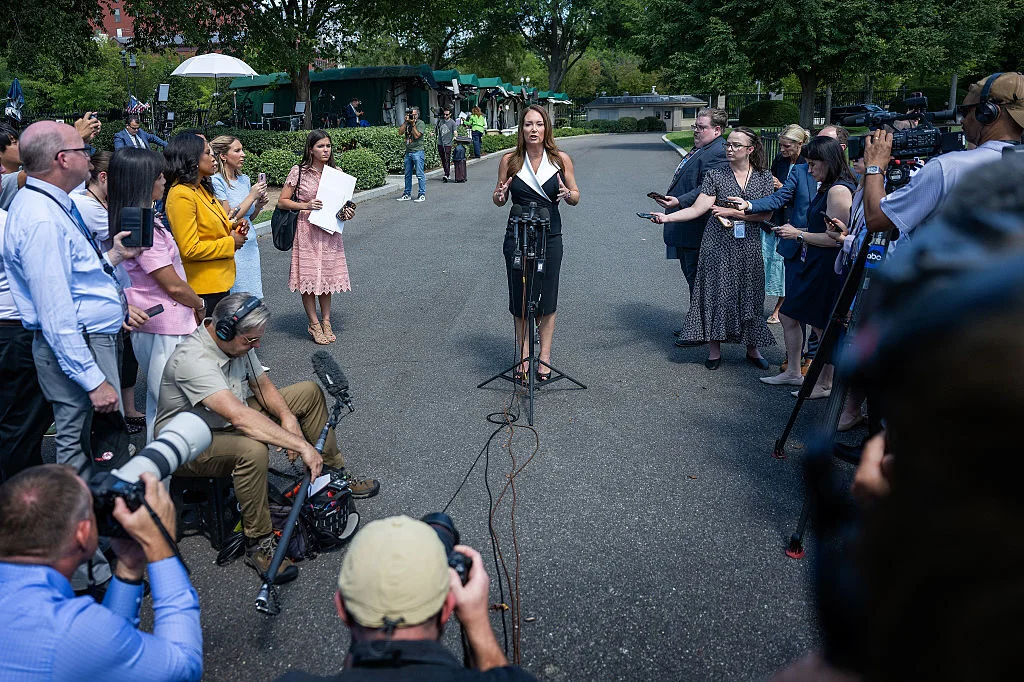
Appearing outside the West Wing following a television interview, Secretary Rollins repeatedly dodged specific details regarding which nations were involved in the plan, emphasizing that trade negotiations were being managed exclusively by U.S. Trade Representative Jamieson Greer and the President himself. While defending the administration’s intent to lower food costs for working families, Rollins underscored that her long-term focus remains focused on domestic production and expanding federal grazing access for American cattlemen.
Main Facts: Tariff Relief Meets Agricultural Protectionism
At the heart of the emerging policy battle is a fundamental tension between the Trump administration’s promise to curb consumer prices and its long-standing commitment to economic nationalism and domestic production.
Key Takeaways of the Controversy
- Unilateral Policy Shift: President Trump announced on Truth Social that the U.S. would temporarily grant tariff-free market access to select foreign beef producers to reduce domestic prices, particularly for ground beef.
- Cabinet Deflection: USDA Secretary Brooke Rollins confirmed she was not involved in drafting the specific import arrangement, referring inquiries regarding foreign negotiating partners to USTR Jamieson Greer.
- Bipartisan & Industry Backlash: Prominent cattle industry groups, led by the National Cattlemen’s Beef Association (NCBA), alongside key Senate Republicans such as Sen. Tim Sheehy (R-MT), aggressively pushed back against the plan, cautioning that foreign dumping will undercut American producers.
- Secret Foreign Partners: Neither the White House nor the USDA has formally disclosed which nations have signed on to the agreement, though market analysts speculate traditional exporters like Australia, New Zealand, Brazil, or Mexico could be involved.
- Domestic Herd Contraction: The policy dispute comes as the United States faces its smallest cattle inventory in decades, driven by years of severe drought, elevated feed costs, and supply chain bottlenecks.
       U.S. ANNUAL BEEF CONSUMPTION BREAKDOWN
  ┌─────────────────────────────────────────────────────────┐
  │ Domestic Production (U.S. Raised): 11.0M Metric Tons    │
  ├─────────────────────────────────────────────────────────┤
  │ Foreign Imports (Existing Need):    2.0M Metric Tons    │
  └─────────────────────────────────────────────────────────┘
  Total Annual Demand: ~13.0M Metric Tons
Chronology of Events: How the Beef Dispute Unfolded
The rapid rollout and subsequent damage control surrounding the administration’s beef import strategy highlights a breakdown in coordination between trade officials, the Department of Agriculture, and key Congressional stakeholders.
  FRIDAY MORNING               FRIDAY AFTERNOON             TUESDAY MORNING
  Trump posts on Truth         Trump speaks to press        Rollins dodges specific
  Social proposing tariff-     en route to SC rally;        import questions; defers
  free foreign beef imports.   refuses to name partners.    trade logistics to USTR.
       │                            │                            │
       ▼                            ▼                            ▼
  ┌──────────┐                 ┌──────────┐                 ┌──────────┐
  │ Timeline │────────────────>│ Timeline │────────────────>│ Timeline │
  └──────────┘                 └──────────┘                 └──────────┘
       ▲                            ▲                            ▲
       │                            │                            │
  INDUSTRY REACTION            CAPITOL HILL REVOLT          USDA COUNTER-STRATEGY
  NCBA issues swift            GOP Sen. Tim Sheehy          Rollins advocates for
  statement opposing           opposes move over US         expanding federal public
  cheap foreign imports.       rancher profit margins.      grazing lands instead.
Friday Morning: The Truth Social Announcement
The saga began when President Trump posted a statement on Truth Social, declaring that his administration had secured agreements with international partners to ramp up shipments of tariff-free beef into the United States. Trump framed the move as an emergency intervention to bridge a severe gap in the domestic ground beef supply and deliver swift price relief to American consumers suffering from elevated grocery bills.
Friday Afternoon: Cryptic Remarks on Air Force One
Departing Washington later that afternoon for a political rally in South Carolina supporting Sen. Lindsey Graham, President Trump was questioned by reporters underneath the wing of his Boeing aircraft—a luxury jet previously gifted by Qatar and repurposed for presidential transport.
When pressed to identify the nations participating in the deal, Trump remained tight-lipped. "I don’t wanna say which countries," Trump stated. "But there are a few countries. But they’re going to be sending in the highest-quality beef, and it’s something that we need."
Weekend Pushback: Lawmakers and Industry Sound the Alarm
Over the weekend, news of the pending imports met widespread hostility across rural America. The National Cattlemen’s Beef Association issued a critical response, arguing that market intervention via tariff waiving distorts price signals and penalizes domestic producers who operate under strict environmental and labor standards.
Republican Sen. Tim Sheehy of Montana, a close political ally of the President, publicly broke ranks with the White House, asserting that rural cattle ranches could not sustain a flood of subsidized or lower-cost foreign beef at a time when input costs for U.S. operations remain near historic highs.
Tuesday: USDA Deflection at the White House
By Tuesday morning, Agriculture Secretary Brooke Rollins was forced into damage control mode during a media gaggle outside the West Wing. Attempting to balance loyalty to the President’s anti-inflation goals with her mandate to protect domestic agriculture, Rollins distanced herself from the operational mechanics of the deal.
"You know, [Trump] and I have talked a lot about this for a very, very long time. I have not talked to him specifically about this specific announcement and what that looks like," Rollins told reporters. "I am not privy to talk about that. I think the conversations are still going on. And that’s Ambassador Greer, who’s finalizing what exactly that looks like."
Supporting Data and Economic Context: The U.S. Beef Supply Deficit
To understand the friction between the White House and domestic cattle producers, one must examine the delicate economics of the U.S. beef market. The dispute centers heavily on lean ground beef manufacturing and the structural contraction of the national herd.
Domestic Supply vs. Import Dynamics
According to figures provided by the USDA, domestic consumption of beef in the United States hovers around 13 million metric tons per year. Of that total:
- 11 million metric tons are produced domestically from U.S.-raised cattle.
- 2 million metric tons are routinely imported from overseas trade partners to meet domestic shortfalls.
Rollins noted that importing roughly 15% of the national supply is "nothing unusual." However, the specific structural bottleneck facing processors involves lean manufacturing beef, which is blended with higher-fat trimmings from domestic grain-fed cattle to produce standard ground beef.
       GROUND BEEF BLENDING SUPPLY CHAIN
  ┌────────────────────────┐      ┌────────────────────────┐
  │ Domestic Grain-Fed     │      │ Imported Lean Beef     │
  │ Cattle Trimmings       │  +   │ (Grass-Fed / Foreign)  │
  │ (High Fat Content)     │      │ (Low Fat Content)      │
  └───────────┬────────────┘      └───────────┬────────────┘
              │                               │
              └───────────────┬───────────────┘
                              │
                              ▼
               ┌─────────────────────────────┐
               │  Standard Retail Ground     │
               │  Beef Market Supply         │
               └─────────────────────────────┘
The Shrinking National Herd
The driver behind elevated retail prices is a drastic reduction in the American cattle inventory. Multi-year droughts across the High Plains and Western states destroyed pastures, forcing ranchers to liquidate herds rather than buy expensive feed.
| Metric | Historical Baseline | Current Market State | Economic Impact |
|---|---|---|---|
| U.S. Cattle Herd Size | ~94 Million Head (2019) | ~87 Million Head (2024–2026) | Multi-decade low in domestic supply |
| Retail Ground Beef Price | ~$3.80 / lb (Pre-2020) | ~$5.40+ / lb (Current Avg.) | Heightened consumer budget stress |
| Feeder Calf Prices | Moderate | Record Highs | High entry cost to rebuild herds |
| Import Tariff Rates | Out-of-Quota: ~26.4% | Proposed: 0% (Temporary) | Foreign suppliers undercut local prices |
Both Trump and Rollins attributed the current supply crunch to the previous administration’s regulatory policies and land management practices. "For the short term, the president felt very convicted that as American consumers are paying more for beef — not our fault, our administration’s fault — but as they are, that short temporary fix was important," Rollins explained.
Official Responses and Political Reaction
The policy proposal has exposed a sharp divide between retail-focused economic messaging and rural political constituencies.
The Agriculture Department’s Stance
Secretary Rollins sought to pivot the discussion away from trade concessions and toward long-term domestic capacity building. She reiterated that while the President views tariff suspensions as a temporary patch for consumer prices, the administration’s core agricultural agenda relies on expanding access to federal assets.
"So that’s why when the president announced… specific to ground beef, he is working to fill a gap, a pretty big gap in the supply chain… [His] long-term fight was to open up more grazing land to ensure that our ranchers have what they need to build their herd to make sure that we’ve got a stable market."
— Brooke Rollins, U.S. Secretary of Agriculture
Congressional and Industry Pushback
Ranching advocacy organizations and Western GOP lawmakers argue that emergency tariff suspensions create severe market instability.
- Sen. Tim Sheehy (R-MT): Warned that bypassing domestic production channels sends a discouraging signal to young ranchers looking to reinvest in livestock. Sheehy noted that artificially suppressing market prices through foreign imports prevents domestic operations from capturing the profit margins needed to finance herd expansion.
- National Cattlemen’s Beef Association (NCBA): Asserted that American producers already operate under strict regulatory, environmental, and traceability standards. The association expressed concern that granting tariff-free access to foreign exporters—without requiring reciprocal market access—permanently undermines domestic competitive advantage.
- Trade Negotiators (USTR): Office of the U.S. Trade Representative Jamieson Greer has declined to issue public statements detailing which countries are seeking tariff waivers, fueling further anxiety among domestic agricultural lobbies.
Broader Policy and Economic Implications
The feud over foreign beef imports holds significant policy implications that reach beyond the agricultural sector, touching on foreign trade, federal land management, and midterm electoral dynamics.
1. Protectionism vs. Inflation Controls
The administration’s willingness to unilaterally drop tariffs on agricultural imports illustrates how consumer-facing inflation can force compromises in protectionist trade agendas. While high tariffs remain a cornerstone of the White House’s foreign policy framework, high food prices present an immediate political vulnerability. Temporarily lifting tariffs on ground beef demonstrates that trade barriers may be selectively lowered when domestic capacity fails to match basic consumer demand.
2. Public Land Grazing and Federal Land Use
Rollins’ focus on opening public lands to private livestock grazing signals a forthcoming regulatory push within the Department of the Interior and the Forest Service.
- Policy Mandate: Expect executive orders aimed at streamlining grazing permits on Bureau of Land Management (BLM) property.
- Environmental Opposition: Conservation groups are anticipated to file legal challenges against expanded grazing rights, citing soil erosion, water contamination, and threats to native wildlife habitats.
3. Diplomatic and Trade Secrecy
By keeping negotiating partners confidential, the administration avoids early pushback from international trade bodies like the World Trade Organization (WTO). However, granting preferential, zero-tariff quotas to select nations—such as Brazil or Argentina—without offering equal access to traditional allies like Australia or Canada risks sparking formal trade disputes and accusations of arbitrary market manipulation.
4. Electoral Strain in the Farm Belt
The controversy places Midwestern and Western Republicans in an uncomfortable position. Ranch-state senators and representatives must choose between defending the President’s consumer inflation strategy or aligning with their core rural farming constituencies. If cattle futures slump as a result of foreign import surges, the White House could face diminished support across key agricultural states where livestock production forms the backbone of the regional economy.