Main Facts: A Precarious Majority at the Brink
Despite an adverse political environment, national Republicans maintain a viable pathway to retain control of both the House of Representatives and the Senate this fall. However, political strategists across the spectrum warn that the floor could drop out from underneath the party, exposing incumbent Republicans to a severe midterm wave reminiscent of the historic 2006 realignment.
Currently, baseline projections point toward hyper-competitive, tight majorities in both chambers. Inside Elections projects a net Democratic pickup of two to four seats in the Senate and two to ten seats in the House. Up to this stage, Republican incumbents and battleground candidates remain competitive across key swing districts and battleground states, with very few uncontested pickups or guaranteed flips for Democrats outside of seats altered by redistricting.
+-----------------------------------------------------------------------+
|                 INSIDE ELECTIONS MIDTERM PROJECTIONS                  |
+-----------------------------------------------------------------------+
| Senate Net Shift:  +2 to +4 Democratic Seats                          |
| House Net Shift:   +2 to +10 Democratic Seats                         |
| Baseline Dynamics: Highly competitive, paper-thin majorities          |
| Tail-Risk Event:   Late-breaking wave driven by undecided voters      |
+-----------------------------------------------------------------------+
Yet underneath this apparent stability lies deep vulnerability. Key GOP candidates across high-stakes districts are polling in the low-to-mid 40s. In midterm cycles, incumbents hovering below 50 percent face heightened risk if undecided voters break against the governing party.
Public discontent is fueled by a convergence of policy and economic pressures:
- Elevated cost of living and volatile gas prices
- Foreign policy friction regarding the conflict with Iran
- Trade disputes and tariffs impacting traditional U.S. allies
- Controversial domestic measures, including aggressive immigration enforcement
- Localized friction over the rapid expansion of data centers
Compounding these policy headwinds, a sequence of high-profile ethics investigations and candidate controversies involving current and former Republican lawmakers—such as Reps. Max Miller of Ohio, Tony Gonzales of Texas, Cory Mills of Florida, and Chuck Edwards of North Carolina—has added conduct-related vulnerabilities to the party’s platform.
While the GOP retains the capacity to defend its majorities by attacking the Democratic brand, political history suggests that when dissatisfaction crosses a critical threshold, individual candidate strengths and opposition research lose their efficacy against a broad public demand for change.
Chronology of Vulnerability: From 2006 Lessons to Modern Parallels
The Anatomy of the 2006 Political Avalanche
To understand the structural risk currently facing the Republican Party, analysts point to the mechanics of the 2006 midterm elections. Two decades ago, the political climate was similarly defined by sustained public dissatisfaction. An unpopular Republican president, George W. Bush, occupied the White House, while two-thirds of the American electorate consistently expressed frustration with the trajectory of the country, driven primarily by the ongoing war in Iraq.
2006 ELECTORAL CASCADE
 ├── Unpopular War in Iraq & Katrina Response
 ├── Jack Abramoff Lobbying Scandal
 ├── Rep. Mark Foley Capitol Hill Page Scandal (September 2006)
 ├── Sen. George Allen "Macaca" Controversy
 └── OUTCOME: Democrats gain +31 House seats, +6 Senate seats (Control of both chambers)
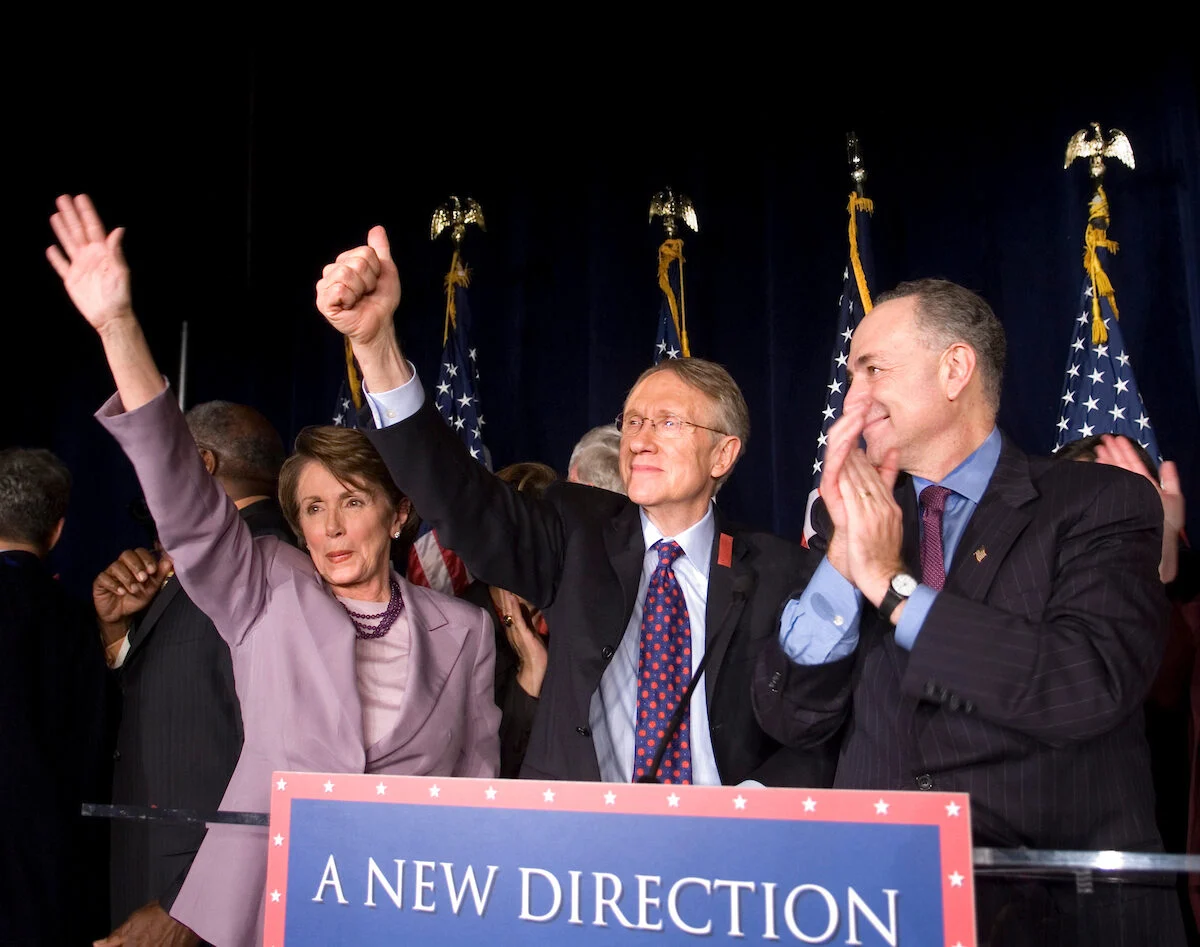
For months, Republican strategists anticipated a challenging election but maintained that individual seat defenses could insulate their majorities. That calculus dissolved in September 2006, when Rep. Mark Foley of Florida became entangled in a severe scandal involving inappropriate, sexually explicit electronic communications sent to teenage congressional pages. Media coverage intensely focused on what House leadership knew and when they knew it, leading to Foley’s eventual resignation at the end of the month.
The Foley scandal did not occur in isolation; rather, it served as a catalyst that bound separate issues into a single national narrative:
- Disparate Crisis Points: The war in Iraq, the federal response to Hurricane Katrina, the Jack Abramoff lobbying scandal, and Virginia Sen. George Allen’s controversial "macaca" remark were functionally unrelated events.
- The Cumulative Narrative: Because every incident occurred under single-party GOP governance, voters aggregated them into a unified conclusion that Washington was careening out of control under Republican management.
- The Result: The cycle snowballed beyond the control of GOP strategists. Democrats swept the midterm elections, netting 31 seats in the House of Representatives and six seats in the Senate to claim majorities in both legislative bodies.
The Modern Sequence: Accumulating Friction in the Current Cycle
A similar pattern of non-sequential, cumulative friction is visible in the current electoral cycle. Rather than a single dominant crisis, the ruling party faces a stack of disparate vulnerabilities that threaten to coalesce in the minds of swing voters.
CURRENT CYCLE CUMULATIVE HEADWINDS
 ├── Economic Pressure: Cost of living, gas prices, localized infrastructure strain
 ├── Foreign Policy & Trade: Confrontation with Iran, tariffs on allied nations
 ├── Congressional Ethics Friction: Allegations & actions surrounding House members
 └── Executive Wildcards: High-visibility statements by Donald Trump; leadership absences
Over the past year, voters have voiced persistent frustration over persistent inflation, energy costs, and the localized economic impact of industrial policy, such as the strain placed on power grids and land use by data centers. Internationally, lingering military engagements involving Iran and trade friction resulting from tariffs on long-standing allies have complicated the administration’s foreign policy narrative.
Concurrently, a series of ethics troubles and interpersonal controversies involving House Republicans have emerged:
- Max Miller (OH) & Cory Mills (FL): Sustained scrutiny surrounding personal conduct and ethical oversight.
- Tony Gonzales (TX): Internal party friction and strategic departures amidst changing district dynamics.
- Chuck Edwards (NC): Formal house proceedings, culminating in a censure over workplace harassment allegations.
Individually, none of these incidents carries the structural weight to sink a national party. However, as in 2006, the cumulative impact of these distinct issues—combined with wildcards such as sudden executive policy shifts from Donald Trump or uncertainty regarding Senate leadership, including Sen. Mitch McConnell’s absences—creates a fragile environment where a single additional scandal could break the electoral dam.
Supporting Data and Electoral Metrics
An analysis of top-line polling and district-level metrics illustrates the conditional nature of the Republican Party’s current hold on Congress. While Republicans remain competitive in headline matchups, underlying indicators show significant vulnerability in base and swing-voter support.
Incumbent Polling Ranges and Undecided Dynamics
Data compiled across battleground House districts and Senate contests indicates that a substantial tier of GOP incumbents is performing well below the 50 percent safety mark in head-to-head polling.
+-----------------------------------------------------------------------+
|            BATTLEGROUND INCUMBENT POLLING DISTRIBUTION                |
+-----------------------------------------------------------------------+
| Polling Range           | Status / Risk Level                         |
+-------------------------+---------------------------------------------+
| 50% or above            | Relative Safety Zone                        |
| 46% - 49%               | Moderately Competitive / Vulnerable         |
| 40% - 45% (GOP Tier)    | High Risk (Dependent on Undecided Break)    |
+-----------------------------------------------------------------------+
Historically, when national general-seat preference or presidential approval leans negative, undecided voters in the final two months of a cycle break toward the challenging party by a ratio of roughly two-to-one. In districts where GOP candidates are stuck in the low-to-mid 40s, an overwhelming break of undecided voters toward Democratic challengers would put dozens of seats at immediate risk.
Projections and Structural Comparison
The table below contrasts the baseline conditions of the 2006 wave election with current structural metrics heading into the final stretch of the current campaign cycle:
| Metric / Indicator | 2006 Midterm Cycle | Current Midterm Cycle |
|---|---|---|
| National Right/Wrong Track | ~65-68% Wrong Track | ~62-66% Wrong Track |
| Primary Economic Driver | Stagnant Wages / Gas Prices | Inflation / Housing / Gas Prices |
| Primary Foreign Driver | Iraq War | Iran Escalation / Allied Tariffs |
| Senate Baseline Shift | +6 Democratic Pickup | Projected +2 to +4 Democratic |
| House Baseline Shift | +31 Democratic Pickup | Projected +2 to +10 Democratic |
| Decisive Electoral Mechanism | Mass break of undecideds late in cycle | Undecided break vs. GOP turnout defense |
While a 31-seat pickup for Democrats would require an extraordinary shift under current district maps, political analysts emphasize that structural redistricting and geographic sorting narrow the field of competitive seats, making smaller numerical shifts equally decisive in determining legislative control.
Official Responses and Strategic Orientations
The GOP Defense: Exploiting Opposition Flaws and Base Mobilization
In response to challenging macro-environmental conditions, Republican campaign committees and strategists are focusing their resources on defining the Democratic opposition rather than selling an incumbent policy platform.
GOP campaign operatives acknowledge that elevating the national popularity of top leadership is unlikely in the short term. Instead, the party’s defense strategy rests on three operational pillars:
REPUBLICAN MIDTERM STRATEGY
 ├── 1. Brand Devaluation: Framing national Democrats around left-leaning platforms
 ├── 2. Factional Polarization: Highlighting the influence of the Democratic Socialists of America
 └── 3. Candidate Matching: Exploiting specific flaws and local record gaps of Democratic challengers
"Voters may have frustrations with the current climate, but when presented with the contrast of the opposition’s platform, they consistently pull back from handing over uncheck-and-balanced power," noted one senior Republican strategist. "Our path to holding these majorities depends on keeping the focus squarely on candidate contrast and the ideological risks of a Democratic-controlled Congress."
Furthermore, Republicans continue to rely on former President Donald Trump’s distinct ability to generate high turnout among non-traditional and rural voters, hoping this mobilization will offset suburban soft-support and counter historical midterm drag.
The Democratic Push: Capitalizing on the Cumulative Weight
Conversely, Democratic strategists are focusing on aggregating individual voter grievances into a unified argument against Republican governance. Rather than treating economic concerns, foreign policy disputes, and ethics controversies as separate debates, Democratic campaign arms are executing a strategy designed to highlight broad legislative instability.
Democratic leaders argue that the ongoing ethics investigations and internal leadership disputes on Capitol Hill prove the current majority is structurally incapable of addressing working-class priorities.
"What we are seeing is not a set of isolated incidents; it is a systematic failure of leadership," said a national Democratic campaign spokesperson. "Whether it is rising costs at home, destabilizing foreign policy, or a constant stream of personal conduct scandals in Congress, the common denominator is Republican control. Voters understand that changing the direction of the country requires changing the party in charge."
Democratic pollsters also point to lessons from 2006, emphasizing that once a national "time for change" narrative takes hold, voters frequently tune out opposition research and negative advertising deployed by the ruling party.
Implications for Governance and the Future of Capitol Hill
The potential outcomes of the upcoming midterms carry severe consequences for the balance of power in Washington, shaping executive oversight, legislative productivity, and party leadership dynamics.
                          MIDTERM OUTCOMES & IMPLICATIONS
                                         │
                 ┌───────────────────────┴───────────────────────┐
                 ▼                                               ▼
     [ Narrow GOP / Dem Margin ]                         [ Democratic Wave Sweeps ]
     • Severe intra-party friction                       • Complete committee re-organization
     • Minimal legislative output                        • Aggressive oversight & subpoena usage
     • Frequent procedural stalemates                    • Immediate blockade of executive agenda
Scenario A: Paper-Thin Majorities and Governance Paralysis
If Republicans manage to defy historic trends and retain control by narrow margins—or if Democrats secure only the baseline +2 to +4 House seats projected by current models—the outcome will yield an extremely volatile legislative environment.
Under paper-thin majorities:
- A small faction of ideological dissidents in either party can stall priority legislation.
- Speakership elections and committee appointments become drawn-out, contentious battles.
- Major fiscal deadlines, such as debt ceiling caps and discretionary appropriations, face elevated risks of brinkmanship and government shutdowns.
Scenario B: The "Dam Breaks" Wave
Should the accumulated weight of economic dissatisfaction, foreign policy friction, and ethics controversies trigger a late-breaking wave, a broader Democratic takeover would fundamentally alter the federal landscape.
A sweeping Democratic victory in both chambers would lead to:
- Oversight and Subpoena Power: Immediate control over House and Senate committee gavels, shifting legislative priorities from policy passage to rigorous executive branch oversight and investigations.
- Legislative Blockade: The complete shutdown of judicial confirmations and key policy initiatives favored by the conservative base.
- Internal Party Realignment: A wave loss would trigger severe post-election recriminations within the Republican Party, escalating intra-party debates regarding messaging, leadership structures, and the long-term electoral impact of the MAGA platform.
As the campaign enters its final stretch, the fundamental question facing both parties is whether current battleground boundaries will hold, or if 2006 serves as an accurate blueprint for an electorate ready to clear out the governing party.