Main Facts: HHS Re-evaluates Childhood Immunization Framework
In a move that marks a fundamental shift in federal immunization policy, the U.S. Department of Health and Human Services (HHS) published a comprehensive Request for Information (RFI) outlining sweeping potential alterations to the nation’s childhood vaccination schedule. Released on August 21, 2026, the federal document signals an intent to space out childhood vaccine doses across longer intervals, directly challenging longstanding guidance established by leading medical organizations, including the American Academy of Pediatrics (AAP).
The RFI directly executes directives stemming from an executive order signed by President Donald Trump on August 10, 2026. Beyond exploring staggered administration, the federal inquiry solicits public and expert input on whether to establish entirely new regulatory categories for childhood immunizations. Among these proposed designations is a category titled “recommended, but not in infancy,” which would formally defer several early childhood immunizations to older age brackets.
A central component of the HHS inquiry centers on altering the language and implementation of “shared clinical decision-making”—a framework in which patients or parents consult directly with healthcare providers to evaluate the risks and benefits of a vaccine before administration. While shared decision-making has historically been reserved for specific, high-risk, or non-routine vaccines, HHS is questioning whether it should become the default posture for all childhood immunizations.
In the official text, federal officials explicitly query whether the current terminology creates confusion that depresses overall vaccination rates:
"Since shared decision-making describes a clinical process applicable to all vaccine decisions, should the Department reserve that phrase for use across all categories and instead adopt ‘conditional recommendation’ or ‘recommendation based on individualized assessment’ for recommendations whose expected benefit varies materially among individuals?"
This operational re-alignment reopens a decades-old debate regarding federal authority, pediatric standard-of-care practices, and the balance between individualized clinical consultation and standardized public health protocols.
Chronology: From Executive Directives to Federal Register Notice
The August 21 information request represents the latest step in a rapidly unfolding restructuring of federal public health guidance throughout 2026:
[January 2026] ────> CDC reduces recommended childhood vaccines from 17 to 11
[August 10, 2026] ──> President Trump signs Executive Order mandating staggered schedules
[August 21, 2026] ──> HHS releases Request for Information (RFI)
[August 24, 2026] ──> Scheduled publication of RFI in the Federal Register
[September 20, 2026]─> Deadline for public and expert comment submission
[November 2026] ───> U.S. Midterm Elections- January 2026: The Centers for Disease Control and Prevention (CDC) initiated an unprecedented overhaul of its immunization recommendations, taking steps to reduce the total number of vaccines on the standard childhood schedule from 17 down to 11.
- August 10, 2026: President Trump formalized this effort by signing an executive order directing federal health agencies to study and implement staggered childhood vaccination protocols, endorsing the reduction of early childhood shots.
- August 21, 2026: HHS issued its formal Request for Information, establishing a structured mechanism to gather feedback on restructuring vaccine classifications and spacing out dosage delivery.
- August 24, 2026: Official publication of the RFI in the Federal Register, initiating a formal public comment period.
- September 20, 2026: The closing deadline for public health agencies, academic researchers, medical associations, and private citizens to submit public comments regarding the proposed framework.
- November 2026: The public comment window and subsequent policy decisions land directly ahead of the U.S. midterm elections, turning federal vaccine policy into a key point of political debate.
Supporting Data and Scientific Consensus on Childhood Vaccines
The proposed restructuring of federal vaccine schedules arrives amid sharp resistance from state health authorities and mainstream scientific institutions. The core argument put forward by the administration centers on President Trump’s long-standing assertion that administering multiple vaccines simultaneously during early infancy poses safety risks, specifically linking high-density vaccine schedules to developmental disorders such as autism.
However, decades of global peer-reviewed scientific literature contradict this premise:
Scientific Consensus on Autism and Vaccine Combination
- No Causal Link: Robust, large-scale epidemiological studies encompassing millions of children across the United States, Europe, and Asia have consistently demonstrated no causal link between the Measles, Mumps, and Rubella (MMR) vaccine, or any combination of childhood vaccines, and autism spectrum disorders.
- Immunological Capacity: Modern infant immune systems are exposed to hundreds of environmental antigens daily. Epidemiological data published by the Institute of Medicine (now the National Academy of Medicine) confirms that the total antigenic load from today’s routine childhood vaccine schedule is vastly lower than it was decades ago, despite protecting against more diseases.
State-Level Divergence and Clinical Impact
- Rejection of Federal Revisions: More than two dozen states and the District of Columbia have formally rejected the CDC’s January reductions, opting instead to maintain state public health guidelines anchored to the traditional recommendations set by the American Academy of Pediatrics.
- Risks of Delayed Schedules: Epidemiological data from public health agencies indicate that staggering or delaying childhood shots increases the window of vulnerability during which infants are susceptible to life-threatening infections, such as pertussis (whooping cough), Haemophilus influenzae type b (Hib), and invasive pneumococcal disease. Extended schedules also require significantly more pediatric office visits, introducing logistical barriers for lower-income families and historically leading to lower overall completion rates for multi-dose vaccine series.
| Metric / Dimension | Traditional AAP Schedule | Proposed Federal Staggered Framework |
|---|---|---|
| Primary Goal | Early-life protection against 17 infectious diseases | Spaced-out administration; lower early antigenic exposure |
| Early Infancy Doses | Timed to match maternal antibody waning | Deferred or classified as "not in infancy" |
| Decision-Making Basis | Standardized universal recommendation | Expanded "shared clinical decision-making" / conditional |
| State Adoption | Adopted by >24 states & Washington D.C. | Promoted via CDC guidance & Federal Executive Order |
Official Responses and Political Scrutiny
The administration’s efforts to alter vaccine policy have drawn immediate scrutiny from lawmakers, public health leadership, and scientific regulatory figures, highlighting tensions within the government’s medical infrastructure.
       [Executive Branch / White House]
                      │
           (Executive Order: Aug 10)
                      │
                      ▼
         [HHS / Federal Regulators]
         ┌────────────┴────────────┐
         ▼                         ▼
   [CDC Director]           [FDA Nominee]
 Dr. Erica Schwartz       Dr. Heidi Overton
         │                         │
         └────────────┬────────────┘
                      │
                      ▼
        (Senate HELP Committee Oversight)
          Sen. Bill Cassidy (R-LA)
Congressional Pushback
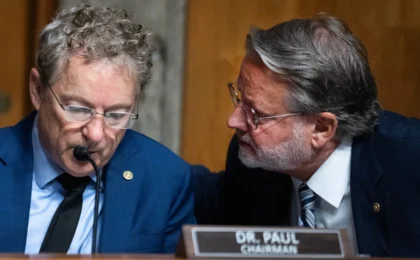
Senate Health, Education, Labor and Pensions (HELP) Committee Chairman Bill Cassidy, R-La., a physician by training, has emerged as a central critic of political intervention in established medical science.
Cassidy vigorously questioned newly appointed CDC Director Dr. Erica Schwartz—who had been in her role for just over a week when the RFI was issued—demanding guarantees that she would resist administrative directives that lack rigorous empirical backing. While Cassidy ultimately voted to confirm Schwartz, he expressed ongoing concern regarding political influence over public health agencies.
The nomination of domestic policy adviser Dr. Heidi Overton to serve as Commissioner of the Food and Drug Administration (FDA) drew even stronger pushback from Capitol Hill. Overton appeared alongside President Trump during the August 10 signing of the vaccine executive order. Cassidy publicly criticized her involvement, declaring that her explicit endorsement of the staggered vaccine order was "almost disqualifying" for an official tasked with leading an agency grounded in rigorous scientific evaluation.
Institutional Silence
When asked whether Dr. Schwartz or internal CDC staff scientists were directly involved in drafting or reviewing the HHS Request for Information, HHS representatives declined to comment, leaving the degree of expert career-scientist involvement in the document unclear.
Under standard regulatory procedures, vaccine recommendations are forged through a dual-agency mechanism:
- FDA & VRBPAC: The Food and Drug Administration, in consultation with its Vaccines and Related Biological Products Advisory Committee (VRBPAC), evaluates clinical trial data to grant market clearance and licensure.
- CDC & ACIP: The Centers for Disease Control and Prevention, acting on formal votes from its Advisory Committee on Immunization Practices (ACIP), establishes the detailed annual clinical immunization schedules for the American public.
By initiating an administrative Request for Information directly out of the HHS secretarial level, the executive branch has bypassed traditional committee-driven deliberation, generating concern among public health policy analysts.
Implications for Public Health, Insurance, and School Mandates
The potential adoption of staggered schedules and revised recommendation categories carries significant administrative, financial, and legal ramifications across the American healthcare ecosystem.
                            [Proposed HHS Changes]
                                       │
            ┌──────────────────────────┼──────────────────────────┐
            ▼                          ▼                          ▼
   [Insurance Coverage]      [State Mandates & Schools]     [Clinical Workflows]
 ACA copay-free mandates    State-level jurisdiction vs.   Increased visits, confusion
 jeopardized by re-class    federal guidance divergence   over conditional terminology
1. Insurance Coverage and the Affordable Care Act
Under the Affordable Care Act (ACA), private health insurers are legally obligated to cover all immunizations recommended by ACIP without patient cost-sharing (copays or deductibles).
If the federal government reclassifies essential infant vaccines into secondary categories—such as "conditional recommendations," "shared decision-making," or "recommended, but not in infancy"—insurers may no longer be statutorily required to provide fully funded coverage during early childhood. This shift could introduce significant out-of-pocket costs for families seeking early protection for their children.
2. State Authority and School Enrollment Mandates
While federal bodies like the CDC and HHS set national recommendations, statutory authority over vaccine mandates for school entry and child care attendance rests entirely with individual states.
The expanding divergence between federal recommendations and state-level requirements threatens to create a fragmented patchwork of public health law:
- Families in states adhering to AAP guidelines will continue under traditional mandate schedules.
- Families in states aligning with the new CDC guidance may encounter lower vaccination thresholds, potentially lowering community immunity (herd immunity) thresholds for highly contagious pathogens like measles, which requires a ~95% vaccination rate to prevent community transmission.
3. Clinical Workflows and Patient Trust
For pediatricians and family medicine physicians, replacing definitive, universal recommendations with complex "conditional" classifications adds administrative burden to routine well-child visits. Practitioners will be required to navigate lengthened clinical discussions to fulfill "shared clinical decision-making" mandates for routine shots. Public health experts warn that framing standard immunizations as conditional risks inadvertently signaling to the public that routine shots are unsafe, potentially increasing vaccine hesitancy and lowering overall child immunization rates.
As the September 20 deadline for public comments approaches, the medical and policy communities remain braced for a prolonged conflict over the future of federal public health guidance, scientific integrity, and state regulatory autonomy.