Executive Summary & Main Facts
Tuesday’s Democratic primary elections across Massachusetts delivered a nuanced, multi-layered verdict on the internal state of the Democratic Party. As national political strategists sought clear signals regarding the party’s direction in the post-2024 political landscape, the Bay State provided results that defied simple categorization. Rather than a sweeping victory for either establishment centrists or insurgent progressives—or a simple mandate for generational replacement—voters evaluated candidates through a complex matrix of ideology, district delivery, and perceived authenticity.
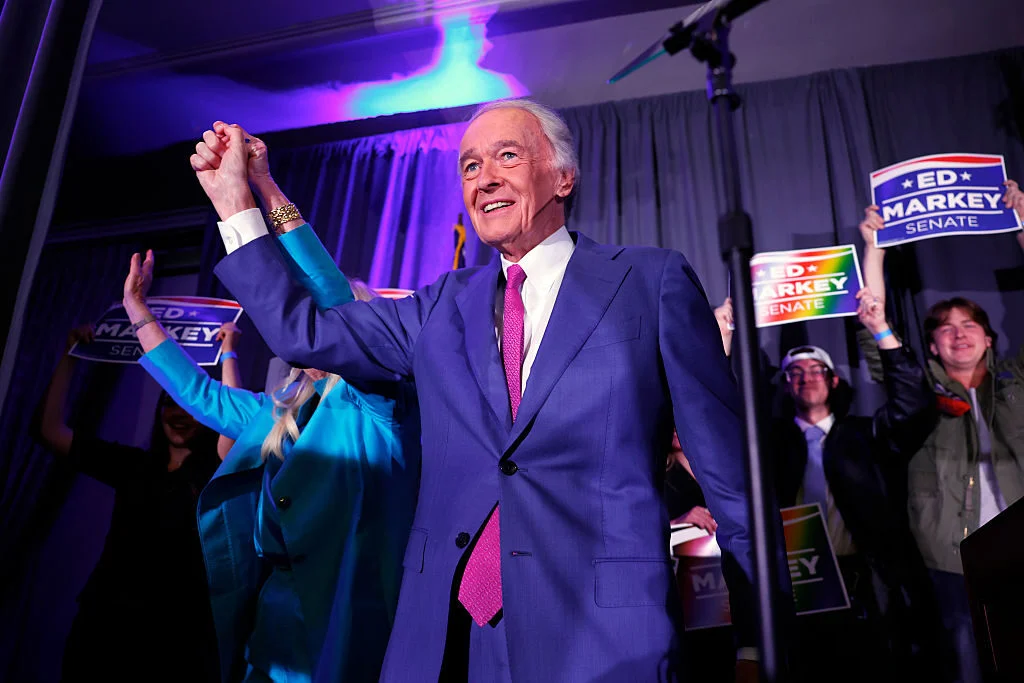
The night’s headline race saw 80-year-old incumbent U.S. Senator Edward J. Markey comfortably defend his seat against Rep. Seth Moulton, a 47-year-old Marine veteran who centered his campaign on a explicit call for "a new generation of leadership." Markey, a fixture in Congress for nearly five decades, secured a decisive 30-point victory by leaning heavily into his progressive record, advocating for "Medicare for All," championing the Green New Deal, and forcefully backing transgender rights.
Further down the ballot, two long-serving septuagenarian House Democrats successfully fended off younger, left-leaning primary challengers, though under vastly different circumstances:
- House District 1: Rep. Richard E. Neal, 77, the powerful ranking member on the House Ways and Means Committee, narrowly defeated 39-year-old high school teacher Jeromie Whalen. Despite outspending his challenger by millions, Neal’s single-digit victory margin represented the closest primary contest of his nearly 40-year tenure in Congress.
- House District 8: Rep. Stephen F. Lynch, 71, a former union ironworker, turned back a challenge from 39-year-old voting rights attorney Patrick Roath, winning by 11 percentage points by emphasizing his deep working-class roots and district presence.
- House District 6: In the open primary to succeed Moulton in the North Shore-based 6th District, Dan Koh—a former adviser in the Biden White House and top aide to former Boston Mayor Marty Walsh—won a crowded primary after securing endorsements from high-profile national figures, including former President Joe Biden and former Vice President Kamala Harris. Koh defeated state Rep. Tram Nguyen, who had drawn strong backing from progressive icons like Rep. Ayanna S. Pressley.
The results highlight a Democratic electorate focused less on chronological age and more on whether a representative can effectively deliver resources or champion a clear, affirmative agenda against national Republican opposition.
Chronology of the 2026 Democratic Primary Cycle
The Massachusetts primary unfolded against a backdrop of heightened intraparty tensions across the United States. Following the turbulent 2024 presidential cycle, Democratic voters and advocacy groups engaged in a nationwide debate over how to modernize the party’s platform and leadership structure.
[Early 2026] -----------------------> [Mid-Summer 2026] ------------------> [September 2026]
National anti-gerontocracy            Progressive & Moderate Upsets        Massachusetts Primary
movement gains momentum              CT-01: Bronin def. Larson (78)      MA-Sen: Markey (80) def. Moulton
in aftermath of 2024 elections.      Insurrections in NY, MI, CO.        MA-01: Neal holds off Whalen
                                                                          MA-08: Lynch def. Roath
MA-06: Koh wins open primary- Early 2026: The Anti-Gerontocracy Push Gains Steam. In the wake of President Joe Biden’s departure from elective politics and subsequent party soul-searching, political action committees such as Justice Democrats and centrist reform groups increasingly targeted long-serving incumbents. Primary challenges were launched across the country under the banner of generational renewal.
- Late Summer 2026: Incumbent Vulnerabilities Emerge. The narrative of a shifting tide gained traction when 78-year-old Rep. John B. Larson was defeated in neighboring Connecticut’s 1st District primary by 47-year-old former Hartford Mayor Luke Bronin. Larson became the seventh House Democrat to lose renomination in 2026. Simultaneously, democratic socialist challengers unseated veteran incumbents in urban districts across New York, Michigan, and Colorado, while centrist incumbents held firm in states like North Carolina and Hawaii.
- Late August 2026: The Massachusetts Campaign Climax. Rep. Seth Moulton intensified his statewide media campaign against Sen. Ed Markey, framing the election as a critical juncture to retire long-time Washington figures. Simultaneously, progressive challenger Jeromie Whalen launched an aggressive, low-budget mobile campaign across Western Massachusetts, targeting Rep. Richard Neal’s reliance on corporate political action committee (PAC) donations.
- Primary Night (Early September 2026): Election Verdict. Voters delivered a mixed result. While Markey scored a sweeping landslide and Lynch maintained a clear buffer, Neal barely survived an under-funded grassroots insurgency, and establishment-backed Dan Koh captured the open 6th District seat.
Supporting Data: Breakdown of Key Races and Campaign Finance Metrics
An examination of precinct-level returns and federal campaign finance disclosures reveals stark operational contrasts between establishment incumbents and insurgent candidates across Massachusetts.
Key Primary Outcomes in Massachusetts
| Race / District | Candidate (Incumbent status) | Age | Primary Performance | Key Campaign Theme / Focus |
|---|---|---|---|---|
| U.S. Senate | Edward J. Markey (W) | 80 | ~65% (+30 pts) | Progressive policy, Medicare for All, Green New Deal |
| Seth Moulton | 47 | ~35% | Generational change, pragmatic leadership | |
| MA-01 | Richard E. Neal (W) | 77 | ~54% (+8 pts) | Seniority, federal funding, Ways & Means power |
| Jeromie Whalen | 39 | ~46% | Grassroots activism, anti-corporate PAC platform | |
| MA-08 | Stephen F. Lynch (W) | 71 | ~55% (+11 pts) | Working-class roots, union labor, district service |
| Patrick Roath | 39 | ~44% | Reform advocacy, voting rights, progressive alignment | |
| MA-06 | Dan Koh (W) | 41 | Plurality Win | Establishment backing, executive experience |
| Tram Nguyen | 38 | Second Place | Progressive coalition, legislative record |
Financial and Structural Dynamics
-
The MA-01 Financial Disparity:
- Rep. Richard Neal: Entered the primary cycle with several million dollars in his campaign chest, heavily supported by federal leadership PACs, labor unions, and corporate donors tied to his leadership role on the House Ways and Means Committee.
- Jeromie Whalen: Managed a modest, grassroots-funded operation conducted primarily out of a yellow Toyota cargo van. Despite Whalen being outspent by an estimated margin of more than 10-to-1, Neal won by less than 10 percentage points—marking the tightest race of his career since entering Congress in 1989.
-
National Incumbent Defeats:
- Prior to the Massachusetts primary, seven sitting House Democrats nationwide lost their renomination bids in 2026.
- The defeat of Rep. John Larson (CT-01) by Luke Bronin highlighted the potential power of generational arguments when paired with well-funded, executive-level municipal opponents. However, Massachusetts demonstrated that such arguments fail to take hold without a compelling, district-specific alternative vision.
Official Responses and Strategic Statements
Reactions to the Massachusetts primary outcomes underscored broader tactical and philosophical disagreements within the national Democratic coalition.
The Establishment and Pragmatist Perspective
Political strategists aligned with the party establishment argued that primary voters prioritised tangible outcomes and effective opposition to the conservative agenda over ideological purity or candidate age.
"The assignment is to take back the House and the Senate and have it filled with fighters who are going to stop Donald Trump," said Mary Anne Marsh, a Boston-based Democratic strategist. "That’s it… There’s no other common denominator."
Marsh further noted that the national dialogue surrounding the age of lawmakers was largely detached from voter priorities on the ground, calling the topic "a media narrative, but not the voters’ narrative."
Defending Rep. Stephen Lynch’s victory against attacks from the left, centrist allies stressed the value of authentic local connections:
"There was a lot of money spent against Stephen Lynch and a lot of advertising saying that he was MAGA’s favorite Democrat, and clearly that just didn’t work," said Scott Ferson, a longtime political adviser to Lynch, speaking to Welcome PAC co-founder Liam Kerr. "Voters are pretty grounded in Massachusetts, and if you give them… an authentic take on where things are, they’ll vote for you."
Addressing supporters in Springfield following his narrow victory, Rep. Richard Neal doubled down on the power of legislative seniority:
"There is not a family in Western or Central Massachusetts that has not benefited from my work or been impacted by my influence in Congress," Neal told his victory rally.
                       DEMOCRATIC PRIMARY STRATEGIES
                                     │
           ┌─────────────────────────┴─────────────────────────┐
           ▼                                                   ▼
  PROGRESSIVE / INSURGENT                             ESTABLISHMENT / CENTRIST
  ───────────────────────                             ────────────────────────
  • Focus on policy vision (Medicare for All)         • Focus on seniority & funding delivery
  • Rejection of corporate PAC funding              • Pragmatic opposition to GOP/MAGA
  • Anti-gerontocracy framing                         • Localized authenticity & deep ties
The Progressive and Reformer Perspective
Progressive advocacy groups rejected the notion that the night represented a wholesale endorsement of the status quo. Representatives from groups like Justice Democrats and Our Revolution pointed to Markey’s commanding win—and Neal’s unexpectedly close call—as proof that voters respond to bold, policy-first platforms regardless of candidate age.
"It’s never been about just older versus younger candidates," said Usamah Andrabi, spokesperson for Justice Democrats. "If that was the case, the most popular politician in our party wouldn’t be an octogenarian talking about oligarchy across the country," he added, referring to Vermont Sen. Bernie Sanders.
"Voters are not looking to replace their old corporate shills with young corporate shills. They’re looking to replace their corporate shills with fighters for the working class."
Robert Dempsey, political director for Our Revolution, emphasized that progressive policy demands remain the primary engine driving voter engagement:
"It’s certainly a component, but as Sen. Markey’s overwhelming victory proves, people are voting based on support of a progressive agenda," Dempsey stated.
Commenting on Whalen’s strong performance against Neal in MA-01, Dempsey added: "It’s proof positive that people are voting on our issues. Maybe not enough to carry them to victory this time, but laying the groundwork for future victories."
Structural Implications and Future Outlook
The outcomes in Massachusetts provide key lessons for both major factions of the Democratic Party as the campaign season transitions toward the general election and future primary cycles.
1. Age is Secondary to Ideological Alignment and Delivery
The contrasting fates of Ed Markey, Stephen Lynch, Richard Neal, and Connecticut’s John Larson demonstrate that age alone is an insufficient wedge issue. Markey insulated himself against generational attacks by maintaining strong credibility with young climate activists, progressive organizers, and social movement leaders. Conversely, incumbents who are perceived as disconnected from their district’s changing demographics or overly reliant on corporate backing remain vulnerable to well-organized challenges, regardless of their opponent’s youth.
2. The Limits and Possibilities of Grassroots Insurgencies
Jeromie Whalen’s ability to pull within single digits of Richard Neal—one of the most powerful figures in Capitol Hill fundraising—demonstrates growing voter fatigue with corporate influence in Democratic politics. However, the inability of progressive challengers to cross the finish line in MA-01 and MA-08 highlights the persistent strength of incumbent constituent services, localized labor support, and institutional name recognition.
3. Emerging Battles: The California Horizon
The debate over the party’s future now moves west. Attention turns to high-profile intraparty general election contests in states with top-two primary systems, most notably California’s 7th Congressional District.
In Sacramento, 81-year-old Democratic Rep. Doris Matsui—who has served in the House since 2005 after succeeding her late husband, Robert Matsui—faces a formidable intraparty general election challenge from Sacramento City Councilmember Mai Vang. Vang, who holds the endorsement of Justice Democrats, represents the exact structural challenge that succeeded in Connecticut and nearly pulled off an upset in Western Massachusetts.
Looking toward future electoral cycles, advocacy groups signal that resisting the conservative platform is no longer a sufficient campaign strategy for Democrats.
"We’ve been a party against Donald Trump for the better part of a decade rather than for something," said Justice Democrats’ Usamah Andrabi. "The candidates we’ve run this cycle are winning because, for the first time in a long time, Democratic voters have leaders who are actually building… an affirmative vision."
As the 2026 midterms approach, the Massachusetts primaries demonstrate that while the Democratic establishment retains structural dominance, the demand for clear, policy-driven legislative action continues to reshape intraparty competition across the nation.