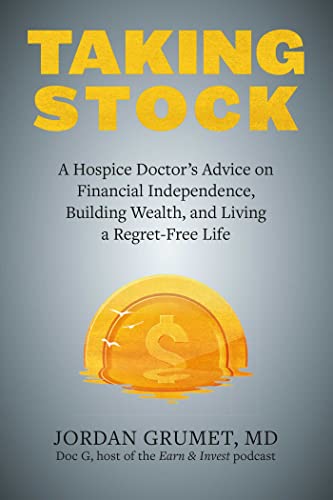
Adapted from "Taking Stock" by Dr. Jordan Grumet. Copyright © 2022 by Ulysses Press.
In the sterile, quiet halls of a hospice ward, the usual metrics of success—portfolio diversification, real estate holdings, and quarterly earnings—tend to dissolve. As a physician who has spent his career in the intimate company of those facing their final days, I have come to a stark, perhaps counterintuitive, realization: the most significant investments a human being makes are rarely found on a balance sheet.
I once worked alongside an undertaker, a man whose daily reality required a perspective most of us spend our lives avoiding. We would sit and discuss the philosophy of a life well-lived, and it became clear that there is a profound, unvarnished truth found at the intersection of life and death. When the undertaker speaks, you should listen. Through these experiences, I have learned that while we obsess over financial growth, we often neglect the compounding interest of our humanity.
The Foundation of Non-Monetary Wealth
Many assume that those of us who work with the dying spend our time cataloging the regrets of the wealthy. While the dying do offer a unique masterclass in perspective, their insights aren’t about the secrets to a high-yield savings account. Instead, they center on the "investments" that actually hold value when the clock is winding down.
The primary lesson is that money is merely a tool—a foundational requirement—but it is not the architecture of a meaningful life. True wealth is an audit of your time, your relationships, and your self-perception.
The Necessity of Self-Forgiveness
The most common psychological burden I witness at the end of life is not a lack of assets, but an excess of remorse. Humans have a limitless capacity for self-blame, fixating on roads not taken or relationships left fractured.
Take the case of Gerald, a patient I treated for chronic liver disease. His medical decline was preceded by a collapse in his personal life, triggered by a job loss that spiraled into alcoholism and estrangement from his daughter, Sandy. While he eventually achieved sobriety, the physical toll and the emotional distance from his child remained. In his final days, the social work team helped him navigate this grief. Gerald realized that had he prioritized self-forgiveness years earlier, he might have broken the cycle of addiction long before the irreversible damage was done. Self-forgiveness is not an indulgence; it is a vital investment in your ability to move forward.
Strategic Pillars for a Life Well-Lived
To build a legacy that transcends a bank account, one must treat non-monetary assets with the same rigor as a retirement portfolio.
1. The Power of Slow, Incremental Gains
In our modern, high-speed culture, we are conditioned to demand immediate results. However, the tortoise still beats the hare. Whether you are cultivating a skill or mending a relationship, slow, incremental progress—even a one-percent improvement per month—yields phenomenal returns over a lifetime. Do not let limiting beliefs prevent you from starting simply because you cannot finish immediately.
2. Investing in Experiences and Education
Knowledge is your ultimate emergency fund. In an unpredictable world, your ability to adapt, learn, and reason is the only asset that cannot be liquidated by market volatility. Whether through formal degrees, online courses, or the simple act of reading, education compounds.
I urge you to say "yes" to the unfamiliar. When you engage with new activities, you expand your intellectual capital and open doors to connections you never anticipated. Inquisitive people, even in their final days, tend to remain vibrant and engaged. They die as they lived: full of questions.
3. The Multiplier Effect of Human Connection
If you want to measure a person’s true success, look at who stands by them at the finish line. When I enter a patient’s room, I can immediately gauge their "relational investment." If the room is filled with laughter, photos, and cards, I know I am looking at a person who invested heavily in others.
These connections provide the "compound interest" of a life. Long after you are gone, your essence survives in the memories and character of those you loved. I personally found my own tribe only after I stepped outside my comfort zone to share my journey through writing and podcasting. Those connections redefined my purpose and gave me the courage to pivot my career.
4. The Legacy of Progeny
Investing in children—not just with money, but with time, virtue, and mentorship—is perhaps the most enduring legacy one can leave. My own father’s influence on my career remains palpable decades after his passing; colleagues still occasionally call me by his name. By investing in the next generation, you ensure that your values, kindness, and lessons continue to ripple through time.
Integrating Physical and Mental Health
Financial independence is meaningless if your physical and mental framework is crumbling. Your health is the infrastructure upon which all other success is built.
Mental health, in particular, requires active management. Seeking professional counseling or engaging in meditation are not signs of weakness; they are acts of stewardship for your mind. Similarly, physical health doesn’t require training for an ultra-marathon. It requires consistency. Thirty minutes of movement a day—something you enjoy enough to sustain—is infinitely better than an aggressive fitness regimen you abandon in a week.
The Role of Financial Literacy
While this philosophy emphasizes the non-monetary, we must be pragmatic. A portion of Taking Stock is dedicated to the mechanics of money, and for good reason: Financial stability buys you the freedom to invest in the things that matter.
- Diversification: Spread your risk to protect your future.
- Cost Management: Lowering your overhead increases your capacity to live freely.
- Long-term Horizon: Markets, like life, reward those who play the long game.
My goal is to provide the tactical knowledge to "get the money right" so you can move on to the much harder work of living a meaningful life. Money is necessary, but it is not sufficient.
Implications: The Non-Monetary Investment Inventory
To put these principles into practice, I challenge you to perform an audit of your life. Set aside time to reflect, away from the distractions of technology, and create a "Non-Monetary Investment Inventory."
Divide a sheet of paper into three columns and list your assets in:
- Relationships: Who do you love, and who loves you?
- Experiences: What have you learned, and where have you been?
- Personal Growth: What habits or skills define your character?
When you add these non-financial assets to your net worth calculation, you finally arrive at a true picture of your total resources. If these assets allow you to spend your time in pursuit of your true identity, you have reached a state of genuine financial and personal independence.
Final Thoughts: The Time to Start is Now
We often wait for a crisis—a diagnosis, a job loss, or a loss of a loved one—to take stock of our lives. But by then, the runway is often short. Building a life of purpose takes time, energy, and the discipline to prioritize what truly lasts.
The "undertaker’s perspective" is a sobering one, but it is also liberating. It strips away the pretense and the trivial, leaving only the essentials. Your life is an investment. You are the portfolio manager. Ensure that when you reach the end, you have a ledger filled with more than just currency—fill it with memories, connections, and the legacy of a life intentionally lived.
Be as prepared for life as you are for death. Invest wisely, love deeply, and start today.